


O’Neil declined to say whether he was surprised by the PIF exit, but said “it was very clear 18 months ago that for this to be a growing concern, we would have to make significant and fundamental changes to the way we do business.”
Speaking of growing concerns, a veteran pro told me on Tuesday that there is a sense of “worry” among LIV players, especially those less established players who, if LIV didn’t survive, could find themselves with nowhere to play, at least in the short term. There is also a possibility that the league will continue, but with smaller purses and contracts. “I believe that for the business plan to change, whatever they come up with, there will have to be some concessions on our part.” Jon Rahm said at his press conference on Tuesday with his three Legion XIII teammates, Tyrrell Hatton, Tom McKibbin and Caleb Surratt.
When Surratt, who is 22, was asked if he would be willing to make concessions, he said: “I don’t think any of us know what those concessions might be or if there will be any, right? I think there’s a lot of ways it could go. For me, when I say I’m looking forward to the future, I’m just thinking about my career and my best path.” No matter what the tour involves, my goal is to be in the majors and win the majors one day, and I know that when I get there, I’ll be more prepared for that moment because I’ve spent so many years out here, no matter what happens or what concessions I have to make.”
;)
Alan Bastable
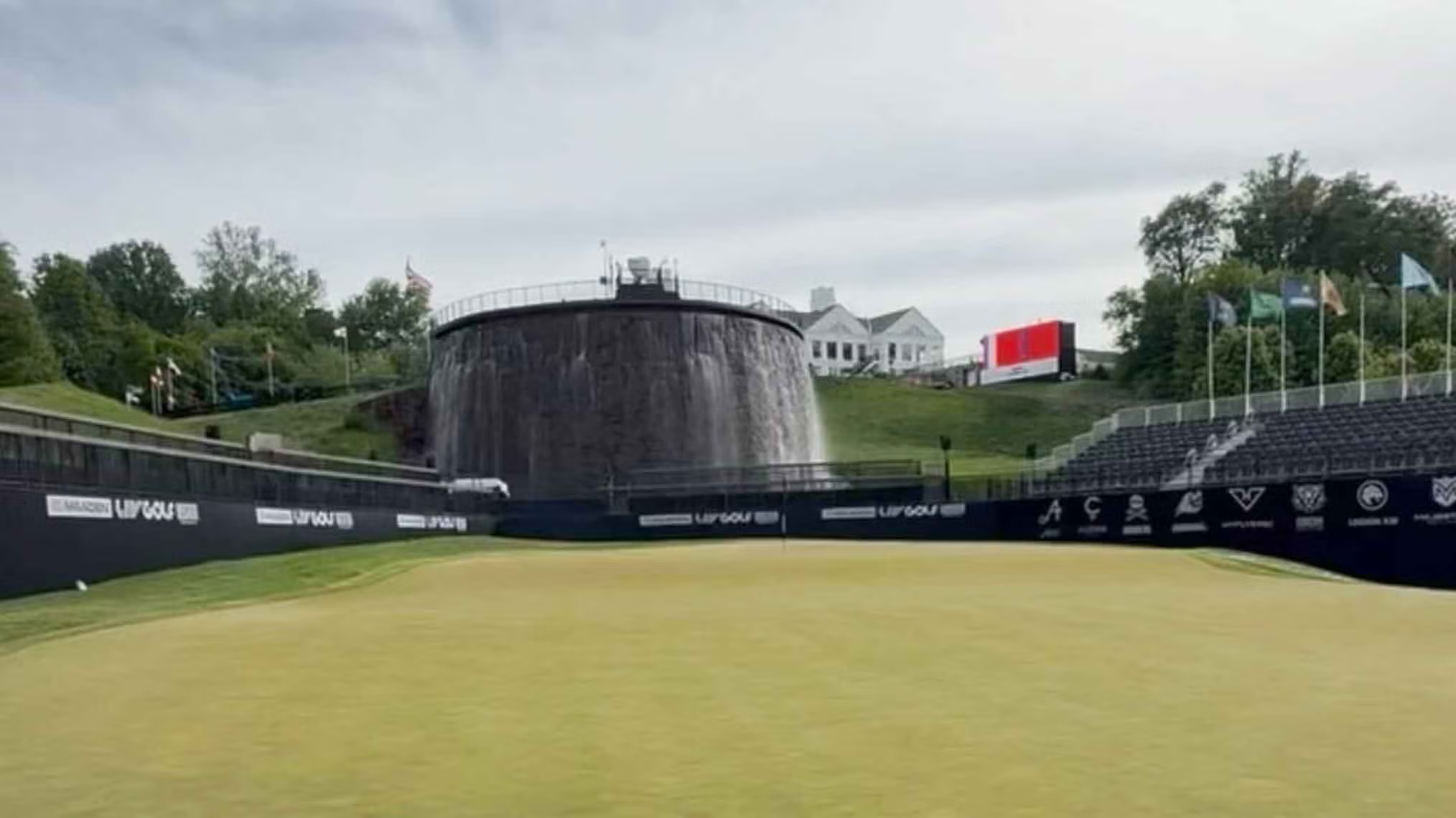
Out hereon Tuesday, it looked much the same as past LIV events; there were no visible signs of financial obligation. DeChambeau, hot off a morning visit to the White House, entertained LIV’s partners with a shoot session on the range; the short game practice area was surrounded by signage from league supporters (HSBC, Maaden and Trackman among them); and two-story corporate suites lined the 18th fairway leading to a green backed by a 100-foot man-made waterfall.
As the afternoon melted into evening, DeChambeau was still on the practice green, but most of his peers had left. Duty called, in the form of an off-site meeting of the players on Tuesday evening.
I asked DeChambeau if the energy around LIV and its tournaments feels different with so much uncertainty about the future of the league.
“You can always look at it a lot of ways; I see it as an opportunity,” DeChambeau said. “Every time one door closes, another one opens. I don’t think if one door closes, you’re just closed forever. For us, that’s the opportunity we have in this country and also internationally, the freedom and the opportunity to build businesses. If it’s restructured the right way and people see the value of team golf and I want to be part of something special there.”

