




Trainer Stephen “Breadman” Edwards addressed this directly in his latest mailbag at Boxingscene, drawing a line that cuts through the noise surrounding style debates. “The only time I’ll ever criticize a ‘boxer’ is when the ‘boxer’ loses and he doesn’t take a chance to try and win, and he lets himself be pointed out because he’s not willing to risk being stopped.
This is a different standard. It does not penalize movement, defense, or control. It targets passivity under pressure.
Boxing has always had pure boxers. Pernell Whitaker has built a career on control and defense. Floyd Mayweather did the same in a different era, against a different level of scrutiny. None of them were consistently criticized for being “boring” when in command of battles. The response changes when control disappears, and nothing replaces it.
Edwards pointed out the difference through examples that still apply. Hector Camacho had the skill to compete at the highest level, but when he felt he was outmatched against Oscar De La Hoya, Julio Cesar Chavez and Felix Trinidad, he let those fights run their course. No adjustment, no urgency, no belated attempt to change the result. The outcome felt decidedly decided before the final bell.
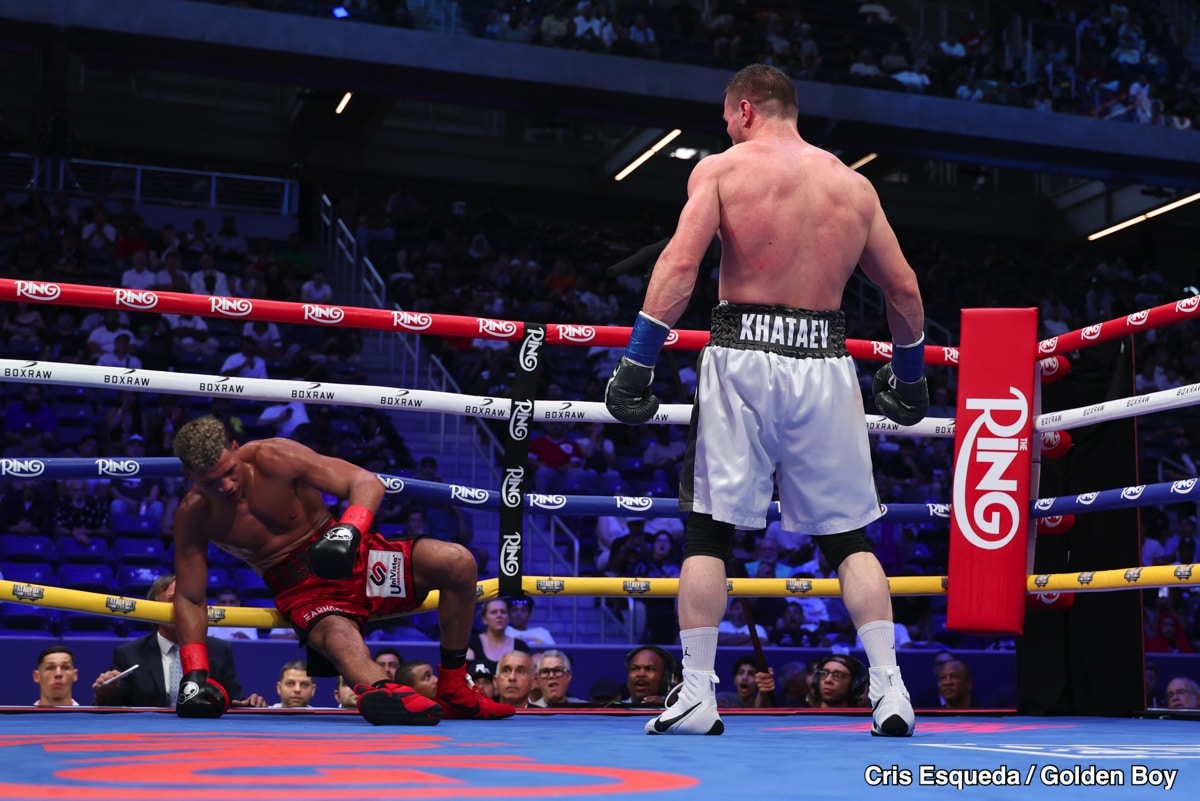
There are recent examples that cut the other way around. David Morrell was dropped by Imam Khataev early in their July fight last year, but he adjusted, steadied himself and worked his way back into the fight to secure victory rather than let the early momentum decide it.
On the other hand, he highlighted fighters who refused to let that happen. Whitaker, even on a tough night against Diosbelys Hurtado, kept pushing for a stop when boxing didn’t work. Sugar Ray Leonard, who said he was behind against Tommy Hearns, chose to attack the most dangerous puncher in the division rather than settle for a decision loss.
That difference is where the fan reaction actually resides. It comes down to whether a fighter accepts to lose or tries to force the issue.
The current era has not changed that standard, even if the conversation about it has grown louder. Fighters who control distance, limit exchanges and win rounds cleanly will always have a place. But once the scorecards start slipping away, the expectation shifts. At that point, the job is to try to win. Staying safe doesn’t get you there.
This is where frustration builds, and this is where the label of “boring” is attached, fair or not. Not because of style, but because of lack of action when the fight calls for something else.
The line Edwards draws is simple, and it holds up across eras. You can box. You can move. You can win rounds as you like. But if you lose and you don’t try to change it, that’s when the criticism lands.

