


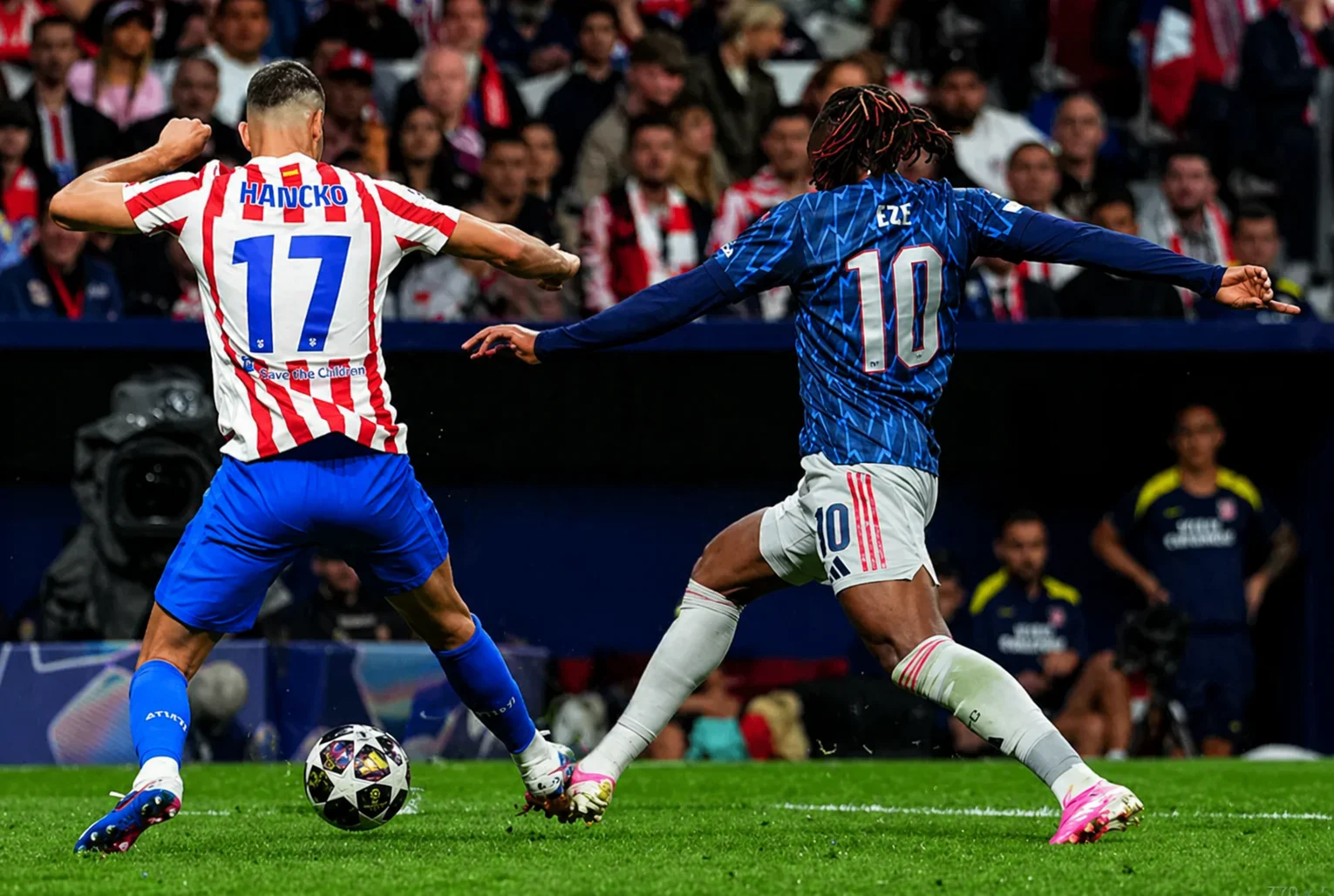
when arsenal traveled to the Spanish capital to assume Atlético Madrid waiting for Champions League semi-final defined by the tactics, intensity and brilliance of two well-coached sides, few could have predicted that the headlines would be almost entirely about the men in the middle. The Gunners returned home with a 1-1 draw, with both goals coming from penalties. A result that, on paper, represents a respectable platform for next week’s second leg at the Emirates. However, the scoreline tells barely half the story of a night dominated by refereeing drama, with three penalty incidents reshaping the contest and gone. Mikel Arteta visibly seething.
A day later Paris Saint-Germain i Bayern Munich produced a classic loaded with goals in the other semi-final, this tie offered something entirely different: a forensic, frustrating and sometimes bewildering examination of how VAR continues to divide opinion in European football.
A game of three spot kicks
The first penalty went to Arsenal before the break, and there was little dispute about it. Viktor Gyokeres, leading the line with characteristic physicality, latched onto the box and dusted himself off to send the keeper the wrong way from twelve yards. The Premier League side had the lead they deserved on the balance of play.
Atlético’s response also came from the starting point, but with more controversy attached. Julian Alvarez tied the score after a controversial handball decision against Ben Whitethe kind of call that sparks furious debate the moment it hits the big screen. Diego Simeone’s side had been given a way back into a game in which they had been struggling to make an impact.
The decisive moment, however, came later. Eberechi Eze, who had injected genuine threat into Arsenal’s attack, was caught out by David Hancko’s challenge in the box. Referee Danny Makkelie pointed to the spot without hesitation. The Arsenal bench rose in unison. Then came the VAR call, the long walk to the pitch monitor, and the setback that erased their lead for the visitors.
Arteta’s fury
The Arsenal manager made no attempt to hide his anger afterwards. Insisting that there was no clear and obvious error that warranted overturning the on-field decision, he argued that interventions of this magnitude, at this stage of the competition, simply cannot be tolerated. He claimed no proper explanation had been given and questioned how a referee could need more than a dozen viewings of an incident before changing his mind. If something requires this level of scrutiny, logically, it cannot be clear and obvious.
Their frustration is rooted in something more substantial than recent bias. Just last month, Arsenal benefited from a remarkably similar incident in their last 16 tie against Bayer Leverkusen. Noni Madueke went down with minimal contact from Malik Tillman, who landed on the forward’s boot as he fell. The penalty was upheld. Senior figures in UEFA’s refereeing structure later admitted that, while they would have preferred no kick-off to have been given on the pitch, the contact left VAR with no reason to intervene.
Apply the same standard to the Eze incident: Hancko clearly grabs his boot after playing the ball, and the conclusion writes itself. Soft, certainly. But a clear and obvious mistake? It’s hard to argue the case. Under Premier League protocols, which follow comparable principles, the original decision would have been almost certain. Arsenal have every right to feel they have been judged inconsistently in the space of a few weeks.
The headache of handball
If the Eze penalty highlighted the subjectivity of foul detection, the white handball exposed the equally murky territory of arm position decisions. Two consecutive nights of European football have produced controversial handball penalties, and in both cases the ball deflected off the body before hitting the arm.
For a long time fans have been led to believe that any previous deviation automatically rules out a handball award. The reality is more nuanced. The umpires are looking for a clear change in the trajectory of the ball. If the ball continues approximately on its original path after the deflection, arm contact takes precedence in decision-making. The reasoning is simple enough: an outstretched arm in such circumstances functions as an unnatural barrier.
By this measure, White’s attack was reasonably clear. His arm was extended significantly away from his body and he moved toward the ball to make contact. There is some discretion in defenders carrying an arm to reduce their silhouette, but White’s initial position was simply too expansive to fall under this protection. UEFA’s interpretation makes this a final penalty.
The Premier League takes a more lenient approach, particularly when it comes to previous deviations. Whether White’s shin bounce would have been enough to keep VAR out of the decision in England is debatable, but the conspicuous arm movement could still have been adjudged to have overruled it. The previous night’s header against Alphonso Davies for Bayern Munich would almost certainly not have survived the scrutiny of the Premier League – his arm was simply too close to his body.
looking ahead
For Arsenal, the consolation is that the tie is still alive. The 1-1 draw away from home, with an away goal no longer carrying any special weight, gives them a real platform for next week. However, Arteta’s fury is unlikely to dissipate quickly, and the wider conversation about the consistency of VAR, particularly the gulf between interpretations in Europe and the Premier League, will continue long after this tie has been resolved.
If the Emirates produce another tight contest, the officials may once again find themselves the protagonists of a drama that nobody wants them to lead.


