


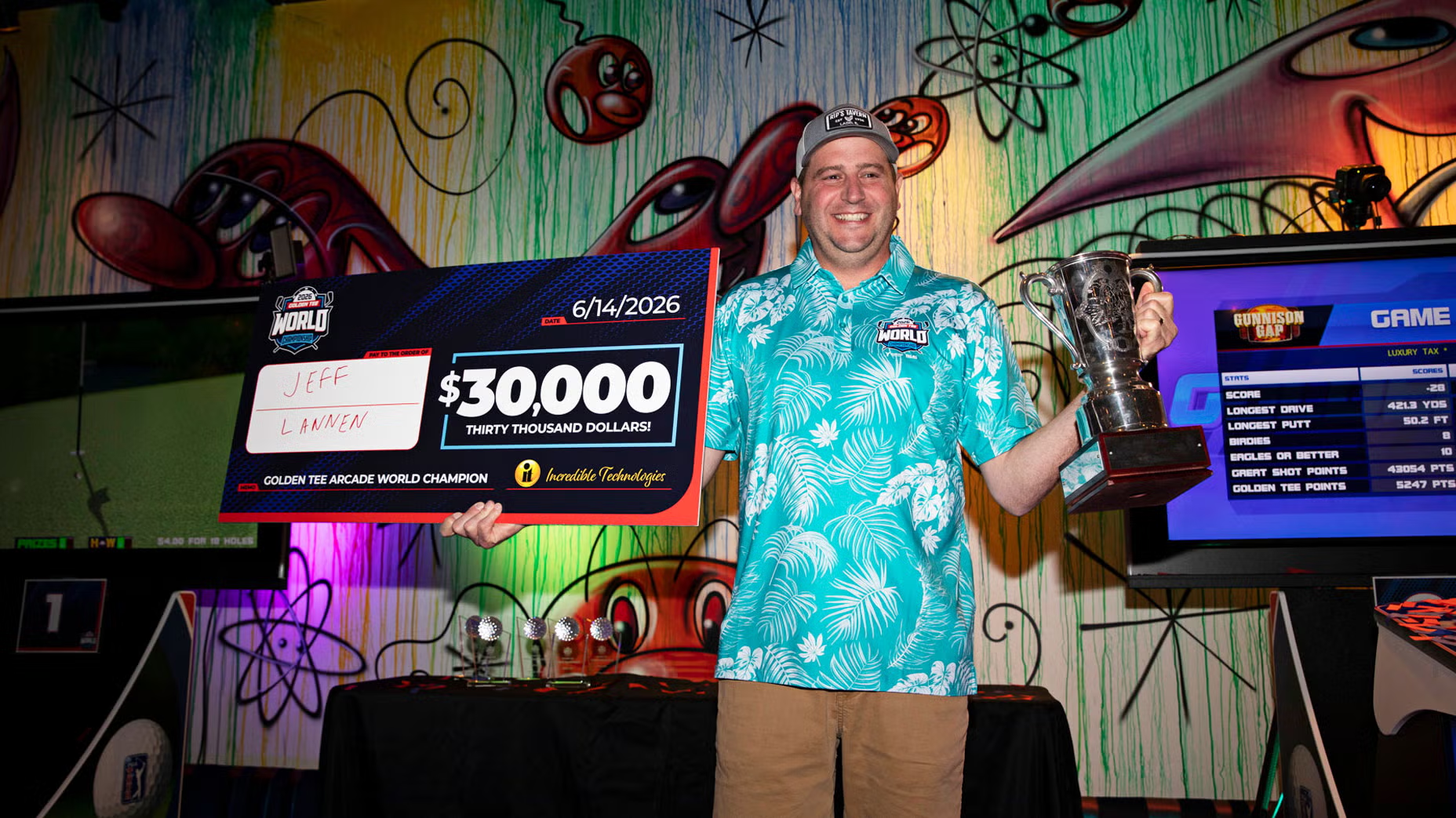
LAS VEGAS – Jeffrey Lannen plays arcade golf for a living. On Sunday, that life got a healthy boost.
With a dramatic eagle on the 18th hole of Gunnison Gap, a virtual course filled with wind and water, Lannen won the 2026 Golden Tee World Championship, defeating friend and fellow finalist Andy Fox in a tense closing match before a lively crowd at the nearby Palms Casino Resort. Strip. The win came with a $30,000 first-place check — and a promise from Lannen to treat Fox to dinner and drinks.
“We’d both be happy no matter who wins,” a smiling Lannen said, standing next to Fox, his head and shoulders dusted with red and blue confetti that rained down after his shot. “But I will definitely buy tonight.”
A 42-year-old from Ladd, Illinois — a village of just over 1,000 people about 100 miles southwest of Chicago, with no stoplights and a Golden Tee machine at Rip’s Tavern two blocks from his front door — Lannen hardly counts as a Cinderella story. He has five wins on the Golden Tee National Tour and he entered the event among the sportsbook favorites. But it was his first world title in a game he has turned into a full-time career.
“There were some concerns very early on,” he said. “But from then on, I felt good. I was just playing a game.”
And a popular one at that.
With apologies to Ms. Pac-Man, Golden Tee claims to be the most successful arcade game in history, measured by both longevity and usage. Released in 1989, it also helped computerize traditional golf in barrooms and restaurants across the country. Though it wasn’t the first golf game to populate those spaces—Birdie King debuted in 1982—Golden Tee quickly surpassed its competition through inventive course design, evolving graphics, and a tracking ball that allows players to execute a full swing with surprising fidelity, no matter how surreal their avatars may look.
About 200 million players have taken a turn over the years. Today, about 25,000 machines remain in commercial and home circulation, including at Rip’s Tavern, where Lannen worked while working as a UPS driver before realizing he could make a better living playing Golden Tee, with greater flexibility.
While national tournaments offer five-figure purses, much of the money at the top of the game comes through prize play contests, in which players contribute to a pool and the top finishers split the payout.
Of the legions of Golden Tee fans, skill sets vary greatly. Top performers play a game the average golfer is unfamiliar with, routinely driving par 4s, hitting with 5 seconds in deuces and trading aces in par 3s. Scores in the 30-under range through 18 holes are not uncommon.
The 2026 World Championships drew the crème de la crème to Las Vegas, most of them pre-qualified through regional results or year-long rankings in the 112-player field, although a handful of spots were available by Friday’s qualifiers. Saturday was reserved for the opening rounds, with 32 players advancing to Sunday’s championship bracket.
Among those who advanced was Andy Haas, the consistent Golden Tee flag-bearer. A two-time world champion and the most decorated player in the history of the game, Haas entered Sunday as the leader, although his last world title came a decade ago in 2016, a dry spell in Rory McIlroy’s major championship. Haas acknowledged the impact of that drought. “I put a lot of pressure on myself in this event,” he said.
It was shown, and it was not done. Heading into his opener against Justin Seeley of Texas, Haas looked determined but relaxed, nodding along to the tool pulsing through his headphones. The Ohio player plays with a single-digit handicap at Firestone Country Club in real grass, but it is something closer to plus-30 on the screen. He opened with an open eagle from the green and appeared in perfect rhythm until an uncharacteristic error left his ball in the water and Haas barked at the drive in disbelief.
“How come you don’t bite?” he said. “No way that’s happening.”
After his upset loss to Seeley, Haas survived two more rounds before Burak Temel ended his run. The wait continues for another year.
Sunday’s bracket show began shortly after 11 a.m. and stretched for nearly 12 hours in 18 cars arranged around a ballroom at the Palms, two of them set up on a stage for marquee matches. Players competed in multiple divisions, including silver and bronze brackets with smaller purses and cheaper stakes. The scene reflected the democratic scope of the game. Some contestants walked nervously between shots. Others laughed with matches with beers in hand.
The further one progressed in the tour, the lower the blood alcohol level seemed to drop. Near the top of the standings, bottles of water replaced cocktails as players studied digital wind readings and yards with near-ritual intensity.
The championship itself was played in a two-elimination format. Lannen excelled in his matches undefeated, while Fox, already on one loss, had to beat his friend twice to win the title.
He managed the first game, forcing an all-conquering final.
In the deciding round, Fox and Lannen made eagles as casually as Tour pros make pars. They reached the 18th hole tied at 27-under par, facing a devilish par 4 with water guarding the green. Both players found it tough off the tee.
Hitting first, Lannen played a 90mph thumb drive with a 7-iron that landed just above the flagpole, bounced back and into the cup on the final spin.
The ballroom erupted. When Fox’s approach found the green but not the cup, the championship was decided. Confetti burst from an air cannon near the stage.
Moments later, Lannen, holding a trophy and a large check, spoke modestly about his victory in a way that would have made a PGA Tour media coach proud. “I just tried to play my game, take it one at a time,” he said. Sounding tired but happy, he revealed his holiday plans: dinner with Fox; a flight home to his wife and kids in Ladd, and then, he allowed, “I’ll probably take a few days off.”

