


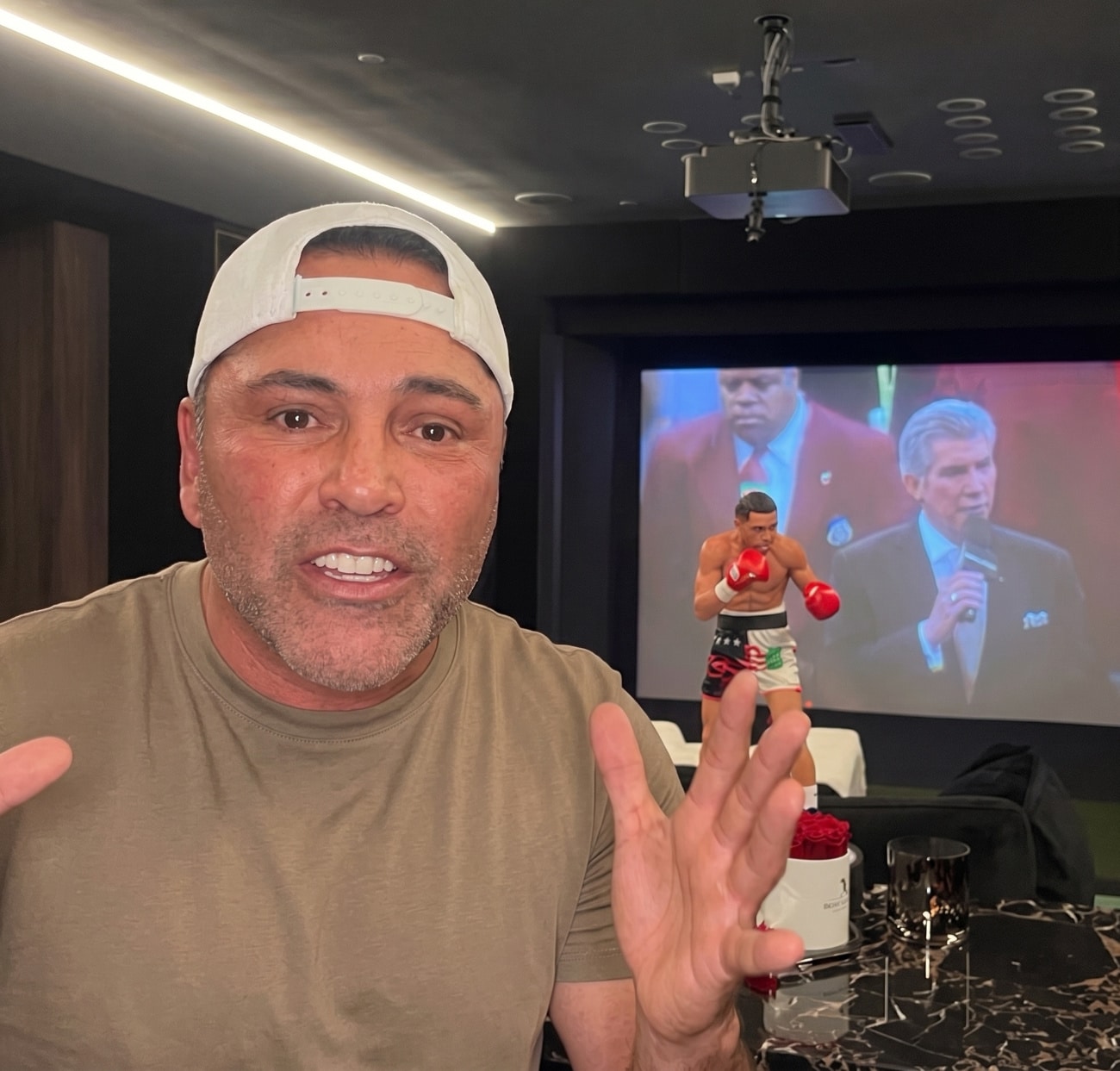


“Well, it looks like the Saudi money is drying up,” De La Hoya said during his “Clapback Thursday” segment, referring to multiple reports that Saudi Arabia’s sovereign wealth fund is reconsidering high-cost ventures. He cited golf as the clearest example.
“The league is struggling to get a foothold and there has been little return on investment,” he said, adding that the fund is now “regrouping and cutting the investments that are bleeding cash.”
Oscar basically argues that the era of blank check international sports spending is ending in favor of more sustainable, domestic projects.
That point led directly to boxing, where De La Hoya argued that spending levels outweighed any clear return. He pointed to large wallets and major deals as evidence of a system built on heavy spending rather than revenue
“They paid a lot of money. How they paid $100 million for Canelo alone? It’s a loss,” De La Hoya said, referring to Canelo Álvarez. He also referenced recent purses paid to other fighters and the overall cost of large-scale events.
De La Hoya’s criticism went beyond individual payouts. He questioned the sustainability of the entire model, arguing that traditional revenue streams did not match the level of spending. “Where are they earning that investment? In ticket sales and pay-per-view,” he said. “The pay-per-views are a small fraction of revenue. No profit, no product.”
From there, his focus shifted to structure and control, with a direct shot at Zuffa Boxing. “Again, the Saudis are fully funding Zuffa 100%,” De La Hoya said, framing the venture as dependent on the same pool of money he believes is being reconsidered. He accompanied this with a warning aimed at fighters entering into long-term deals. “Fighters, beware and make sure you read the fine print. You may have to get out of your ZUFA contracts in a few months,” he said, suggesting that any tightening of funding could leave fighters tied to deals that no longer carry the same financial backing.
The final part of his argument moved away from spending and toward regulation, where De La Hoya confirmed he planned to travel to Washington, DC, to oppose proposed changes to the Muhammad Ali Act. He framed the issue as a direct threat to combatant protections that have been in place for more than two decades. “It’s been in place for 26 years and has protected fighters,” De La Hoya said. “TKO needs this to change so they can renegotiate and pay you less, just like they do in the UFC.”
Connecting these points, De La Hoya’s message centers on two linked pressures facing the sport. He argues that if outside funding is reduced while regulatory safeguards are weakened, fighters may find themselves exposed to both sides of the business, tied to contracts in a market where the financial support is no longer guaranteed, and the legal protection is reduced.


