


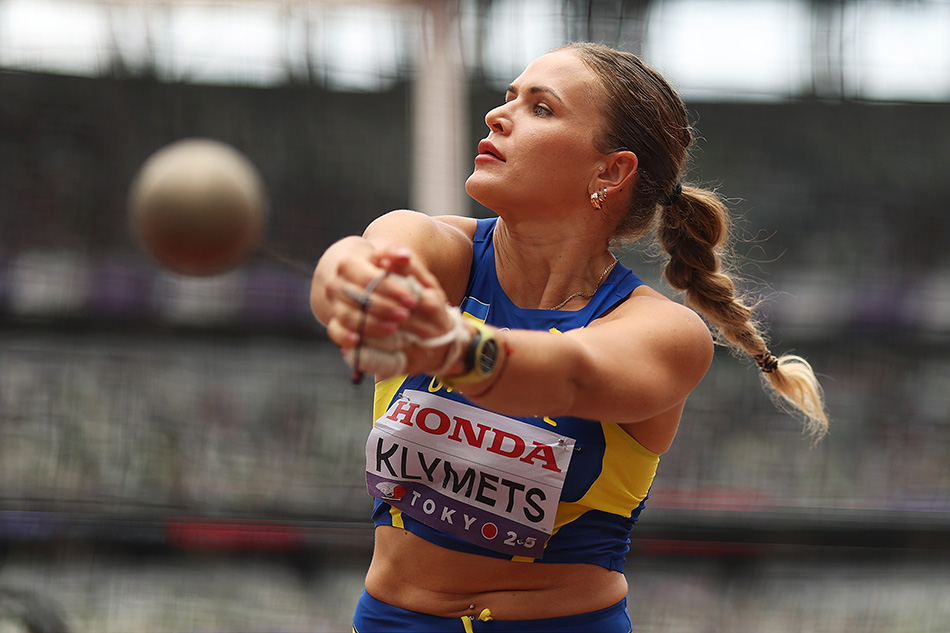
Matt Majendi talks about the challenges of trying to stay on top while being in conflict with three rivals.
Irina Klimets was in the corridor of the neighborhood where she lives when she was hit by Russian rocket fire at night. An alarm had just been sounded about an imminent attack, and now when any alarm goes off it immediately strikes fear into the Ukrainian hammer thrower.
For four years since the Russian invasion began, she has continued to train and somehow qualify for the Paris Olympics, sealing her place just days after her father’s death, and last year’s world championships in Tokyo. That he is able to withstand adversity, let alone train at all and be mentally and physically ready to compete, is nothing short of a miracle.
“The worst thing for me is when the alarm is at night,” he says about his life in Ukraine. “Now, any anxiety is stress for me, and this winter, due to the shelling of power plants, we had no light for 16 hours a day, we had no heating, it’s very difficult when it’s minus 20 degrees outside.”
Also, her coach was in the military, meaning he couldn’t leave the country to support her for any significant amount of time. “Also, all the financing of the country is aimed at the war, so I don’t have the opportunity to go somewhere to train in hot countries,” he adds. “And due to constant anxiety and enemy attacks, training is often interrupted. There are constant warnings of power outages and severe winters with severe frosts. There is fear when there is an air raid and we are attacked. We don’t sleep at night.”
Klimetz’s rival athletes rushed to offer help when the war broke out, while World Athletics organized training camps where possible ahead of major championships for him and the Ukrainian national team. He readily admits that the hardships have made him stronger, but claims that the lack of training opportunities has also reduced his results. And, despite peace talks between Russia and Ukraine, both his fear and expectation is that the war, and thus the shelling, will continue for some time to come.
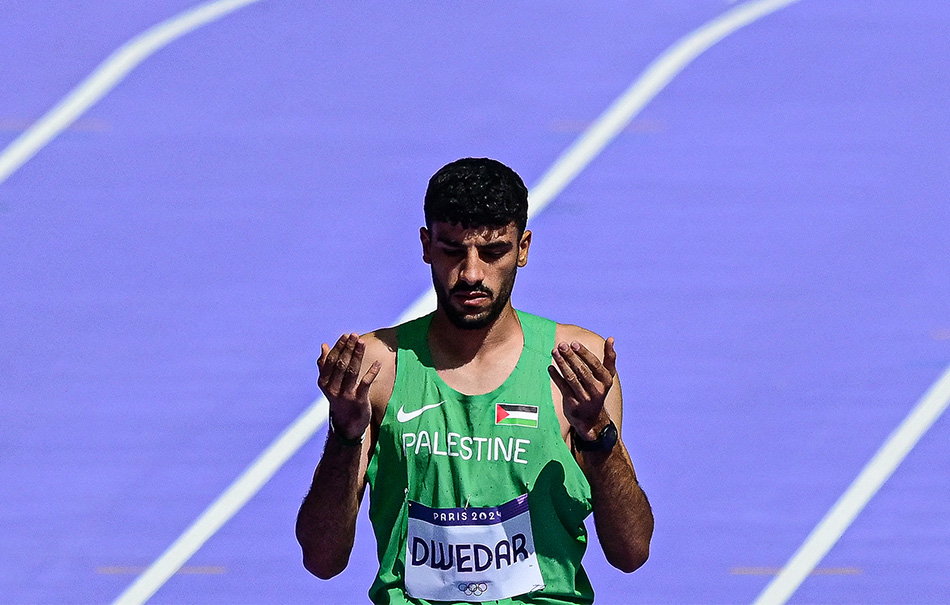
For 800m runner Mohammad Dwedar in the West Bank, where the Palestinian lives, his training takes to the streets.
“Let’s go back home, we don’t have a run, we don’t have anything,” he says. “So I train on the street with cars, motorcycles and people. It’s not the right training for the 800m because you need spikes and a track, but people really support me at home. Life in Palestine and the West Bank is not easy because the occupation is very difficult.”
His federation has supported him for overseas training camps, including one in Germany in early 2026, which was cut short when he suffered a foot injury. While away from home, Dvedar finds it difficult to read about issues at home.
“It’s very difficult for me and my life when I see this,” he says, “and I don’t feel good.” But, at the same time, he says that he prefers to focus on the good rather than the bad.
“Representing Palestine is very special for any athlete and any Palestinian people,” he says. “You know what’s going on, and I have a lot of feelings when I’m doing races, camps and training with my body, because I’m happy to be doing what I love and I’m sad about what’s happening in Palestine. Going away from family for three or four months is not easy. But dreams need a lot of sacrifice.”
And, having enjoyed life-changing experiences at the Paris Olympics and also at the most recent world championships, the university student dares to dream of making the ultimate appearance on the world stage in the future.
“Really in my life I want to do everything in Palestine. I want to give all of myself to Palestine. I wish I could get one medal for Palestine in my life. This is very important to me, thinking.
Otherwise, he studies physical education and wants to master it so he can shape the next generation of athletics at home.
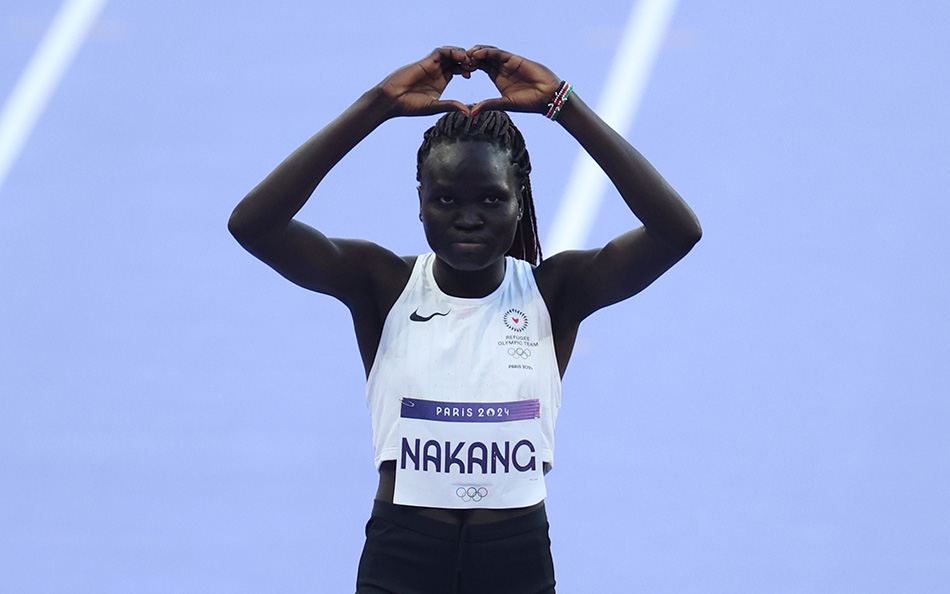
Like Dwedar, Perina Lokure Nakang competes over 800 meters, but in her case, she knows she will never return home to South Sudan, where she fled the conflict there as a youngster. It is not yet safe for him to return to his birthplace.
He was seven years old when he crossed the border into Kenya with his aunt at the behest of his parents, who stayed behind with his other siblings.
Tragically, her father was later killed, while she was not reunited with her mother and siblings until years later. Now in her early twenties, she partially remembers the journey and life in the Kakuma refugee camp, and the rest comes from stories told to her by her aunt.
“We traveled for days, there was no food,” he says. “Many people died, but I was able to come to Kenya.”
At the camp, he played football and basketball, but also took up track and field for the first time, encouraged to do so in the 100m and 200m, initially by a coach who noticed his running talent. It was once suggested that he step up to the 2007 world 800m champion Janet Jepkosgei, who would in turn become his coach, and still holds that role.
“It was God who said: “Perina, you like to run, go and run,” I said. “And now run for refugees around the world.”
Like middle distance runner Dwedar, she has competed in both Paris and Tokyo over the past two seasons as part of the refugee team at both the Olympics and the world championships. He competed in both heats, including a race against Olympic champion Keely Hodgkinson in Paris in the summer of 2024.
He also trained at Eliud Kipchoge’s base in Kenya and readily admits: “Athletics has come to change your life. For me, athletics is good, you can go far with it.”
Along with running, he also studies and goes through high school. His favorite subject is biology. As for his ambitions, he says: “Let me finish school, but I would also like to train with Janet to train athletes and help her. But first, I want to run to make the most of this opportunity.”

