


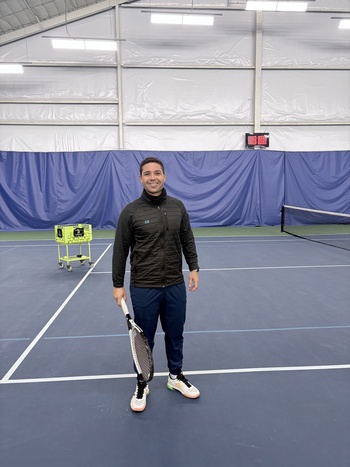
The player does not need more information. They need better silence.
by Eduardo Santana
In many tennis courts today, there is neither talent, nor training hours, nor technical knowledge. What is missing is silence. A silence that allows the player to listen to their experience, organize their sensations and construct responses from within. In an age defined by information overload, the most sophisticated act of coaching may be knowing when not to speak.
Modern tennis is surrounded by constant noise. Guides, fixes, tips, reminders, motivational phrases, stats, workouts and opinions follow the player everywhere. From the coach’s voice on the field to endless online content off the field, the player is rarely left alone with the game itself.
The issue is not information. The issue is interference. Learning does not happen through accumulation, but through integration. What the player hears must be processed, tested, felt and ultimately mastered. When too much information is added, the learning system becomes saturated and loses clarity.
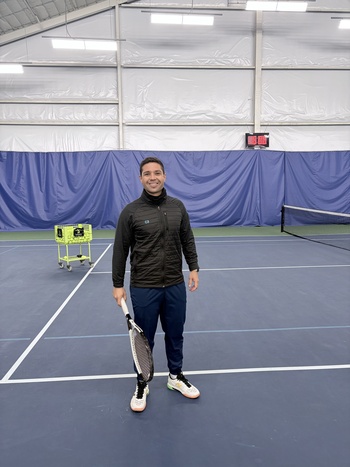
A true coach is one who has the sensitivity to understand what to say and, above all, when to say it. Timing is not a soft skill in training; it is a performative skill. A well-timed sentence can unlock learning, while a poorly timed sentence can block it completely.
If we talk constantly, our voice loses value. Words become background noise instead of points of reference. Silence, on the other hand, creates contrast. He gives weight to the moments when guidance is actually needed.
In this context, silence is not absence. It’s space. Space for perception, adaptation and decision making. Silence is not a training absence; it is refined training. It is the trust to allow the player to fight productively instead of bailing them out prematurely.
Great players are not built through constant instruction, but through repeated moments of self-organization. When the coach pulls back at the right time, the player steps forward. They begin to recognize patterns, trust sensations and make decisions in real competitive conditions.
Today, the coach’s role is no longer to show every point, but to edit the process. To remove what is unnecessary so that what really matters can emerge. The coach is not the author of the player’s game, but the editor who helps clarify it.
My job is not to say more, but to ensure that what is said can actually be heard. Sometimes the most impactful intervention is content. When the noise dies down, tennis appears. And when tennis shows up, development can finally begin.
Eduardo Santana is a professional tennis coach focused on long-term player development. His work emphasizes clarity, content, and individualized processes over volume-based training models. He currently develops players through a boutique training approach focused on consistent performance and independent athletes.

