


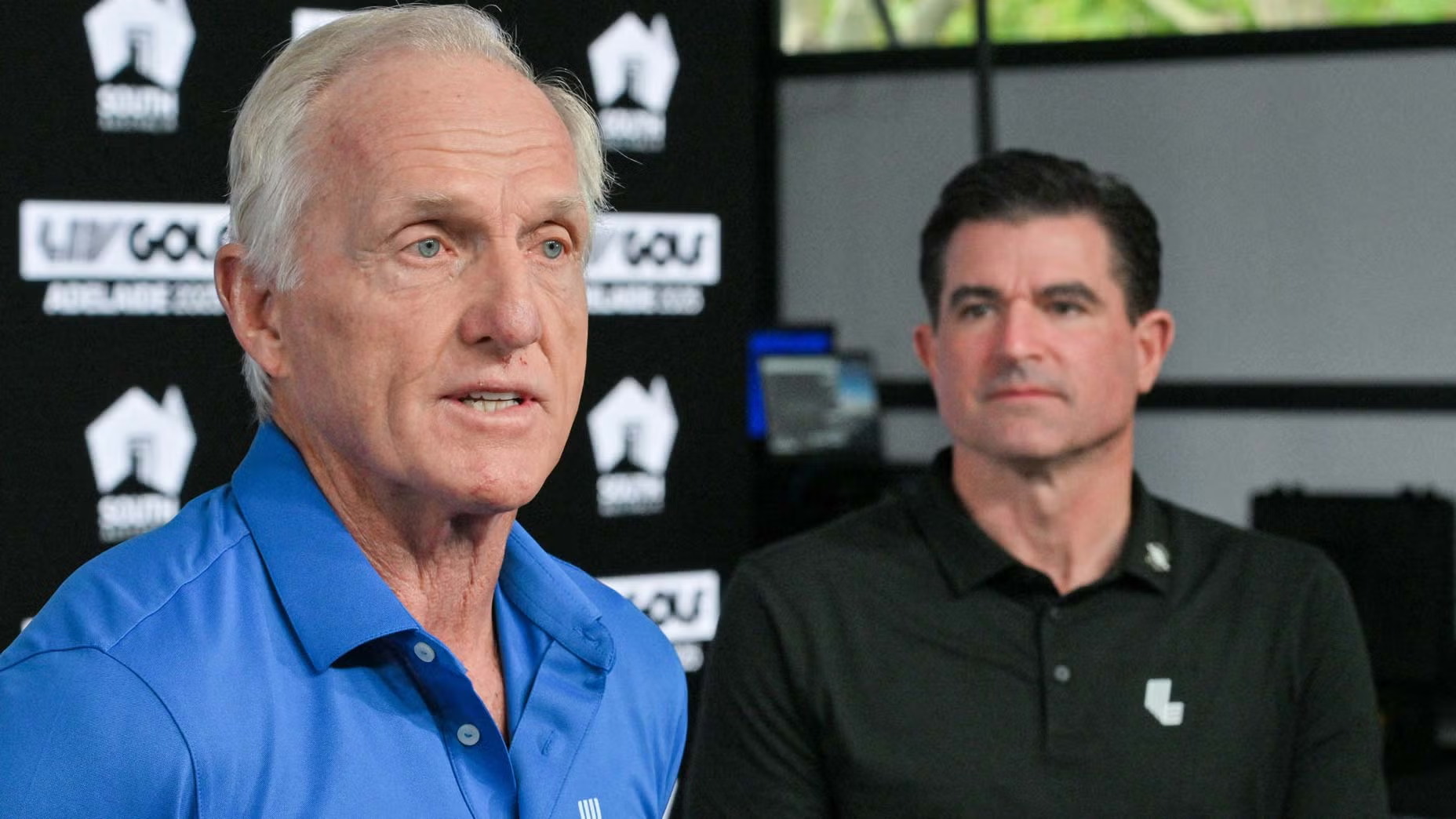
LIV Golf’s announcement that it will change its tournaments from 54 to 72 holes was met with mixed reactions – and a slight joke.
“So is it the LXXII Golf now?”
LXXII Golf doesn’t have the same ring to it… The Saudi-backed tour has been a 54-hole event since its inception in 2022, but will switch to four days of competition in 2026 ⛳ pic.twitter.com/Ah3WfLoXrr
— Sky Sports Golf (@SkySportsGolf) November 5, 2025
You get the idea. Since its inception, LIV’s name had functioned as a Roman numeral reference to the number of holes — 54, three rounds of 18 — that was a key part of its disruptive identity in a world of 72-hole stroke-play tournaments. But LIV has also always had a second meaning, too; the chairman of its board and the Saudi Public Investment Fund, Yasir Al-Rumayyan, has referred 54 as a “perfect score” in golf, the score a player would shoot if he made 18 birdies on a par-72 course. (That ignores eagles and par-71s, among other things, but we get the idea.) There’s also a $54 million prize waiting for any LIV golfer to shoot that number. Bryson DeChambeau has arrived the closest with 58. So there is a part of “54” that will continue.
Why 72 holes?
Several factors likely contributed to LIV’s decision to go 72 holes. The league has reshaped itself this offseason as it seeks legitimacy, both in the public eye and through recognition from Official World Golf Rankingwith whom he has been communicating about getting points as he heads into season five. Earning OWGR points would theoretically help attract talent from other tournaments and increase potential paths to major championships — currently a sticking point for players reluctant to jump into the league.
It’s part of a shift away from the pirate ship mentality that initially brought in Greg Norman as commissioner. And as new LIV CEO Scott O’Neil takes over from Norman in the summer of 2025, he has taken a more public diplomatic approach to the league’s place in the golf ecosystem, expressing a desire for common ground with PGA Tour CEO Brian Rolapp and working to improve his league in the world of sponsors and partners. The move to 72 holes offers a touch more familiarity and dismisses a slight criticism – that 54 holes is not a “real tournament” – and potentially makes it more compatible with the OWGR. Revolution was one of the fundamental principles of LIV; now it seems to be heading back towards the mainstream.
It is worth noting that there is also a possible financial increase from the fourth day of the competition, which would expand the broadcasting possibilities as well as the income from the participants in person. However, this is hardly a guarantee; another round of the tournament is also extremely expensive on stage, and Norman warned about the “economic impact” of the fourth day.
The real danger comes from similarity. Some people are rolling their eyes at LIV’s claim that it is “continuing to innovate and evolve their product” given that LIV is just returning to the global 72-hole standard. It’s not clear how fond the players are of the change; Tyrrell Hatton said that while he approves four rounds, only three of the LIV’s 48 players voted for him a year ago, and Phil Mickelson admitted it was “I’m honestly not sure” in X. Rory McIlroy called movement “special”, given the 54 holes didn’t seem to be a sticking point in the OWGR discussions. “It brings them back to not really being a disruptor and kind of falling more in line with what everyone else is doing,” he said.
So what does LIV stand for?
Since LIV has (or at least HAD) two meanings, we will give two more answers to this question.
LIV still literally stands for 54, which they say stands for the perfect golf score.
The lingering question is what LIV stands forlike, from the fans’ point of view. What are its distinguishing factors? What gap does it fill? The most obvious difference is his teams. It is also the beginning of the rifle. There’s also Bryson DeChambeau, and Jon Rahm, and Brooks Koepka. But its tour structure (14 events, 72-hole stroke play, $20 million individual purses) is nearly identical to that of the PGA Tour’s Signature Events (12 events, 72-hole stroke play, mostly $20 million individual purses).
LIV’s press release came with the statement that it is “the first true global golf league,” another possible point of differentiation. This continues to feel like a blow to the DP World Tour, which describes itself as the “global golf tour.” There is an unresolved conflict throughout the pro golf landscape, but this is a turf war to watch: If the PGA Tour dominates the US market, how do LIV and DPWT coexist abroad?
A final note on abbreviations: Jokes aside, how important is this? Maybe not that much. The “PGA” in “PGA Tour” as I understand it officially stands for nothing (it originated in the Professional Golfers Association of America, but I don’t think you’ll find it spelled out in full anywhere else). TGL, another spoiler, unofficially stands for TMRW Golf League, but mostly just stands for TGL. For what it’s worth, the SAT doesn’t stand for anything anymore either; it just is. And LIV mostly just stands for LIV.
Although LIV continues to change.
“>

