


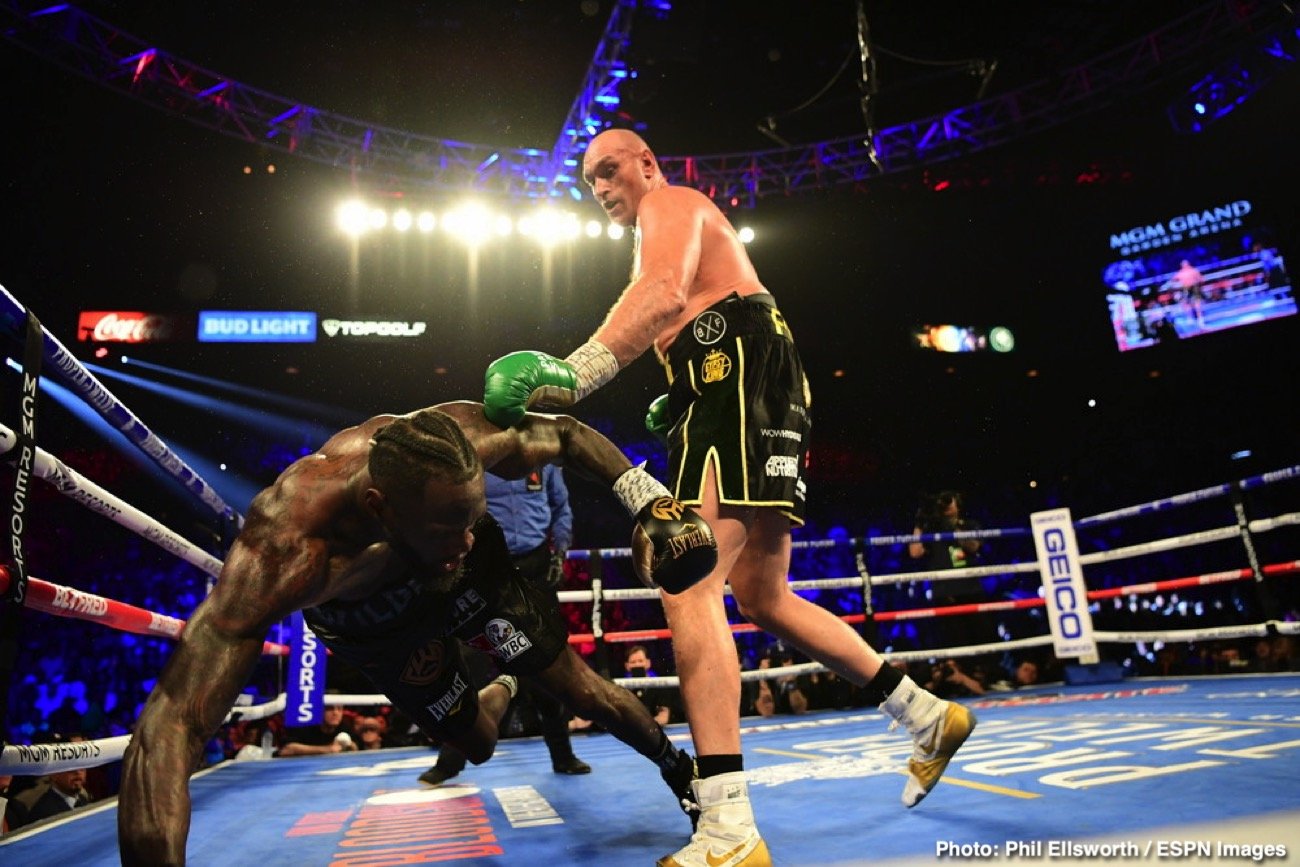
“I’m in my prime now,” Wilder continued Cigar talk. “I started boxing very late. I started at 21.”
At this point in his career, that argument has become his main defense against the idea that time has caught up with him. Unfortunately, the problem is not trust. The problem is that the ring no longer supports the claim.
Wilder’s recent run has been defined by long stretches where his right hand never arrives. In four of his last six fights, he lost, and the defeats were clear rather than competitive.
In December 2023, Joseph Parker controlled him over twelve rounds, managing distance and pace as Wilder followed without solutions. Six months later, Zhilei Zhang applied steady pressure and stopped him in the fifth round. In both fights, Wilder was slower to react and unable to change direction once the pattern was set.
The victory over Tyrrell Herndon did little to change that picture. Wilder scored two knockdowns and finished the fight in the seventh round, but the performance did not look like a return to elite form. In earlier years, that fight would not have made it past the middle rounds.
That gap has been widening for a while.
At his peak, Wilder only needed one opening. When the power arrives now, it is usually too late.
That reality matters when discussing a possible fight with Usyk. Usyk does not wait for mistakes. He drains fighters, takes their timing and forces them to work at his pace for every minute of every round. Against that kind of opponent, Wilder’s reliance on a single release point becomes a weakness.
Wilder’s career doesn’t need saving. The title run mattered, the knockouts were real, but insisting he’s still in his prime no longer sounds like confidence. It sounds like resistance.
If this battle takes place, faith will not decide it.

