


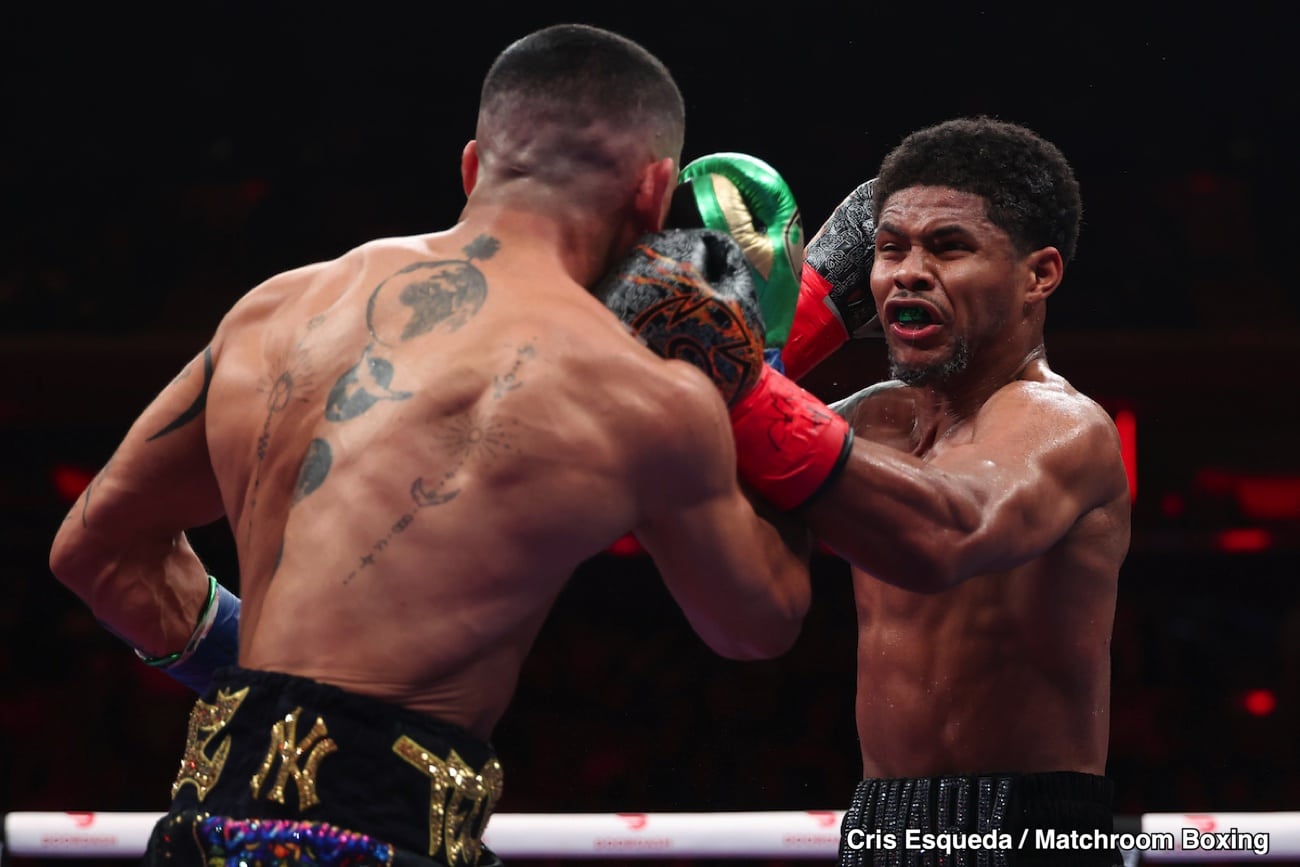


By the time Stevenson moved into position for a super lightweight title fight, Teofimo Lopez had already been through enough uneven performances to give any elite analyst a useful blueprint. The 12-round decision loss to George Kambosos Jr. completely shattered the aura, and the close decision over Jamaine Ortiz raised questions about control and tempo that only reinforced the contested win against Sandor Martin. Even the win over Steve Claggett, a tough but limited pressure fighter, showed how uncomfortable Lopez can look when asked to solve problems round after round.
None of this makes Lopez a bad fighter, but it does make him a documented one whose tendencies have been exposed in ways that can be delayed, interrupted, and repeated. His habits have been pressure-tested and televised, and for a fighter like Shakur Stevenson, who builds fights on pattern recognition and control, that kind of information is currency.
The contrast becomes sharper when you look at the fighters Stevenson didn’t pursue. Richardson Hitchins is still largely untouched at world level, and his flaws have not been tested at the greatest elevated stress. Gary Antuanne Russell brings sustained pressure and physicality that doesn’t come with the same catalog of television stops, while Dalton Smith continues to build and remains opaque in key areas. Those fighters may or may not be better than Lopez, but the point is simpler: they were harder to study because they didn’t offer years of visible narratives and documented declines.
This is exactly why the quote lands as it does with ultra hardcore fans. This feeds the belief that Stevenson chose the champion whose weaknesses were already on file, rather than the one who posed the most unanswered questions. This is tactical choice, not as an accusation, but as a description of how elite battles are now chosen.
In another era, champions chased uncertainty, but now uncertainty is something to avoid when titles can be won through preparation rather than confrontation. Stevenson’s comment pulls back the curtain on that reality by presenting the fight as the performance of a prolonged study rather than a clash of the best at 140. That doesn’t diminish the victory, but it does explain it. Stevenson did exactly what his career had always suggested he would do by choosing the opponent he understood best and trusting his discipline to execute the plan.
The rule about studying tape was neither modesty nor filler; it was a silent acknowledgment of how the battle was chosen in the first place. In that sense, the quote is revealing without being dramatic. Stevenson did not stumble into Teofimo Lopez. He got there on purpose because Lopez was the champion whose flaws had already been shown to the world, making him the safest problem to solve.

