


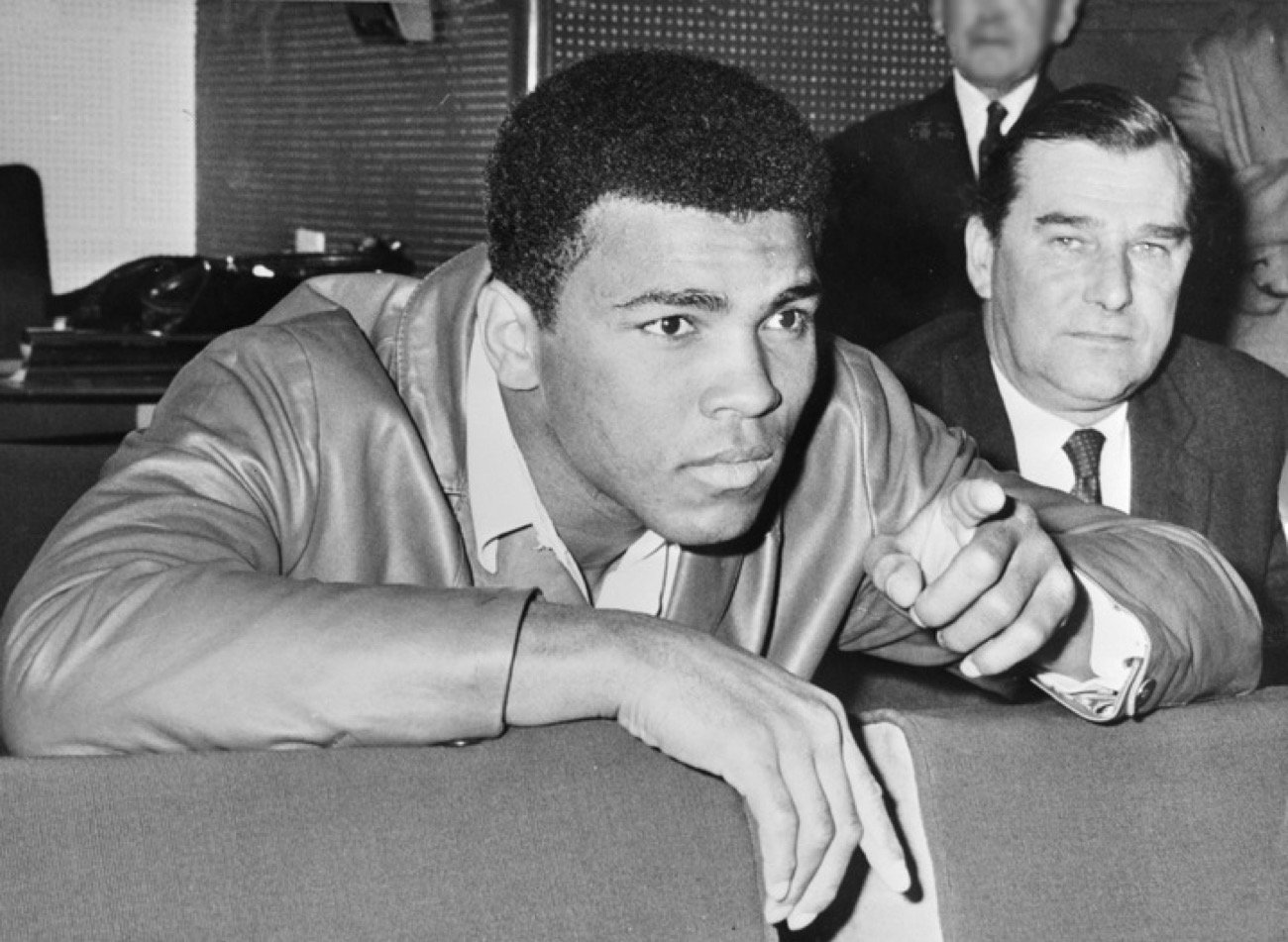
They called him the greatest. But Muhammad Ali was not just a fighter with a nickname. He was a man who turned a sport into a stage for humanity, who wore more than gloves in the ring. He carried the weight of the principle, the fire of rebellion and the hope of millions.
Others may win belts. Others can retire unbeaten. Others can even be remembered as legends. But Ali’s greatness was bigger than boxing. It was not only written in victories, but in sacrifices, in resistance, in the way he changed the world outside the ropes.
The boxer who danced with giants
Ali was poetry in motion where there was only power. Heavyweights are built to march forward – Ali is hovering. They were taught to grind – Ali slipped. They are expected to endure – Ali dared to blind.
He conquered Sonny Liston when he was told that he was too young, too hard, too fast. He faced Joe Frazier three times in wars that broke the body beyond, but still lifted the sport in the myth. He tamed George Foreman in the heart of Africa and transformed the Rumble in the jungle into one of the greatest evenings of history.
Ali not only fought against men. He fought Eras. And he beat everyone.
The rebel who refused to bend
At the peak of fame, when silence would have made him rich, Ali spoke.
He rejected the concept, stood against the Vietnam War and told a truth that shook America: “I have no quarrel with their Viet Cong.” For this he was stripped of his title, banned from his craft, forced to trade his lead for his principles.
Most champions protect their records. Ali protected his soul. He did everything – money, freedom, glory – to stay true to himself. The kind of grandeur cannot be measured on scorecards.
The voice that spoke for the world
Ali was more than America’s champion. He was the world.
He carried the pride of Black America during the civil rights struggle. He carried the dreams of Africa when he fought in Zaire. He carried the spirit of resistance everywhere where oppressed people heard his name.
In Manila, in Kinshasa, in London, in Mecca, Ali was not just cheering as a fighter. He is embraced as a brother, a symbol, a beacon. He showed that a boxer could be more than an athlete. He can be a mirror of a people fight.
The man who gave back
Even when Parkinson took his body, Ali’s presence still spoke. His trembling hands relieved the Olympic torch in Atlanta in 1996 and had more power than any knockout. It was not the weakness that the world saw, but courage – the courage to stand before millions when his body no longer obeyed, and still said without words: I am here. I’m uninterrupted.
He gave his later years to charity, to peace, unity. He put his fame into use, his platform in a bridge. Ali’s final fight was not in a ring. It was in his lasting belief that he could still inspire.
Beyond the Ring
This is why Ali is untouchable.
A man can unite belts, but Ali -united people.
A fighter can defend titles, but Ali has defended principles.
A boxer can win hearts, but Ali has changed it.
He wasn’t just the face of boxing. He was the face of courage, of resistance, of greatness himself.
They said he spoke too much – but history has not closed him yet.
He didn’t just like a bee – he left honey for the world to taste.
Ali may be gone, but he is not quiet. His words still echo, his courage is still inspiring, and his smile still illuminates the memory of those who loved him. He left the ring, but he never left us.
He was and will always be the greatest.
Last updated on 10/03/2025

