


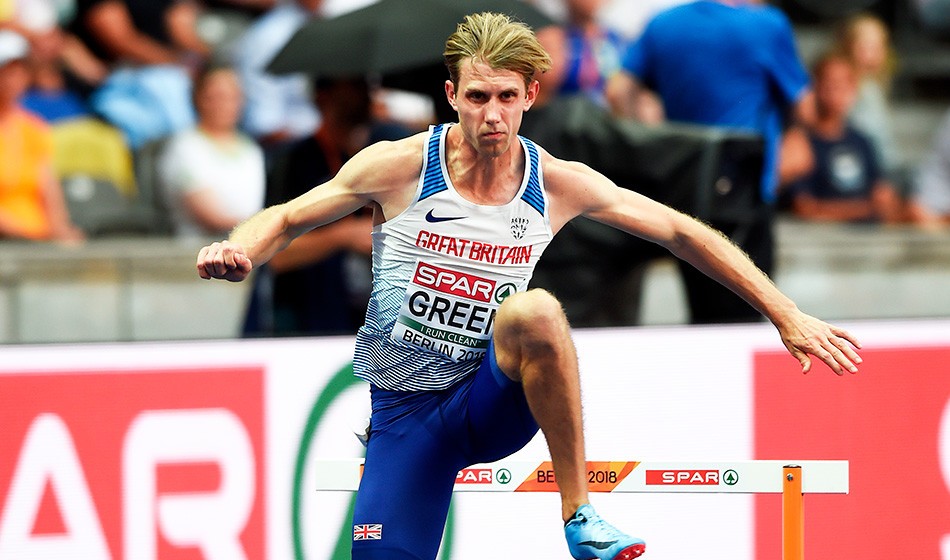
After mental health struggles contributed to his early retirement from top-level athletics, former Olympic hurdler Jack Green talks about how he now uses the lessons he learned to help others excel.
Jack Green is in his car heading north towards Loughborough. The departure was slightly delayed as his lunch was overrun after his daughter’s morning trip to Whipsnade Zoo, but he still has plenty of time before his evening engagement as keynote speaker for the latest cohort of the Future of British Athletics programme.
The 34-year-old has done this a lot. Since his first keynote speech exactly a decade ago, he estimates he has spoken to more than 500 organizations. The clients are usually large businesses or corporations, so it’s nice to have the rare opportunity to talk to people he considers his own; those who hope to follow in his too-short-trodden footsteps.
Public speaking is a common assignment for retired athletes, allowing those who have reached the pinnacle of their field to earn money for sharing the wisdom they’ve learned along the way. Green has done so much because he is better at it than most; he still has a lot to say.
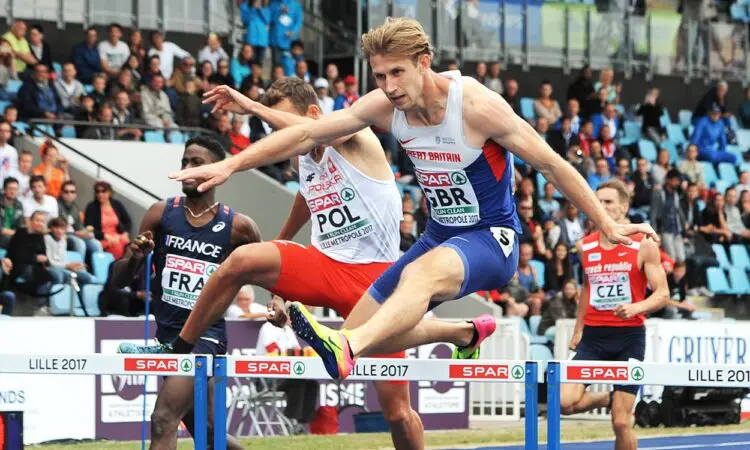
During her running career, she reached two Olympic 400m hurdles semi-finals and two World Championship semi-finals. He also won world and European 4x400m medals, missing out on the Olympic relay podium by just one place when he finished fourth at London 2012. But he contested his last race, the 2018 European Championships, aged just 26, before finally calling time on professional running.
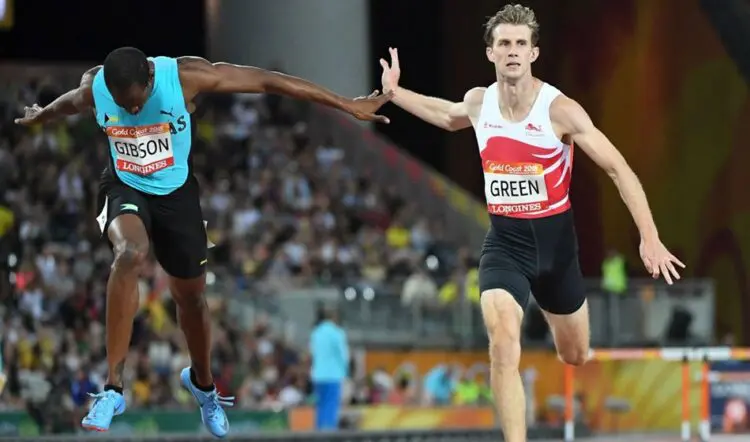
“At the end of the day, you might see my career as a bit of a failure,” he admits. “I’m fine with that because I accomplished a lot too. But overall, it’s a shame. I definitely had the potential physically to achieve more. But it didn’t happen. So I ended up having a very short career. Very sad, really, but I’m happy enough with it. There was definitely more there.”
Green had no shortage of physical ability, reaching his first two global semi-finals at the age of 20. His mental health deteriorated to the point where he “didn’t want to live” in the winter after falling over a hurdle at the London Olympics.
“I couldn’t finish the training, but to be honest, running wasn’t really a priority at the time,” he says. “But I couldn’t understand what was happening because I didn’t believe in mental health. It wasn’t something I was exposed to, so I didn’t think it existed. I thought it was for people who needed an excuse not to be successful. It wasn’t until 2013 when I started competing that I really broke down.”
Barely able to finish a race (she finished just two of the five 400m hurdles events she attempted in 2013), Green was diagnosed with depression and an anxiety disorder, prompting her to retire from athletics. Considering it involved giving up both British Athletics funding and his Nike contract, it was a brave decision for such a young man.
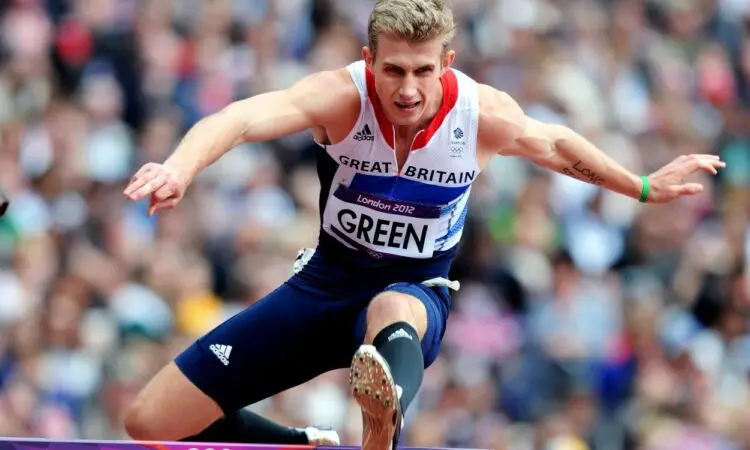
“I didn’t know if it would be a day, a month, a year or forever,” he recalls. “I renounced everything, as well as the damage to my reputation. It was a big decision, but I just didn’t want to run. I couldn’t keep doing the same thing over and over and expect myself to get better.
“The idea was to have a break, learn more about myself and make a decision from there. But really, and with the benefit of hindsight, I just escaped the pressure and the expectations, so I started to feel a little bit better because nobody expected anything from me. I just ran away from the things I was struggling with. Then I went back to sports because it was all I knew I could do.”
Having been sidelined for the best part of 20 months, he quickly picked up where he left off in 2015, regularly making international squads over the next few years, despite his mental health deteriorating again.
“At that point, after returning to sports, I became an advocate for mental health, but I still struggled to accept the stigma around it,” she says. “Also, I became quite successful quite quickly, which led to me not learning. I learned nothing about myself afterwards. I just fell back into the same routine and the same habits.”
The initial plan was to take another vacation at the end of 2018 and return for the Tokyo Olympics. But when her therapist asked her why she wanted to run again, she “couldn’t find a single reason.” Instead, he decided to retire. At an age when many runners haven’t even reached their prime, Greene is gone for good.
With bills to pay, she used her steadily-acquired mental health experience to find work in a number of corporate roles, most notably as Global Wellbeing Lead at BBC Studios. In addition to his mainstream speaking career, he also embarked on a coaching career, working across football, rugby and cricket, as well as managing Italy’s multiple Olympic sprinter Gloria Hooper.
Having retired from coaching three years ago, he recently made the decision to return to athletics in October after coaching a number of elite hurdlers reignited his appetite.
“I spent a lot of time on the phone supporting athletes and coaches, and I could see how much more fulfilled and happy I was,” she says. “The big question was how could I make it my full-time gig, because that’s what I do best and what I think I’m the best at.”
The intention was to create a development group of promising young athletes and build from there until British 400m hurdles champion Lina Nielsen reached out and asked if she was available to coach her. For the past few months, the pair have been based in Lee Valley, east London, where Green hopes this year could be a springboard to bigger things.
“If you have a world-class athlete like Lina Nielsen come and approach you, you don’t say no,” Green says. “I made him very aware of my shortcomings: my lack of experience, my age, my family commitments, work commitments. This was as big a decision for him as it was for me. We both went into it with our eyes wide open.
“I presented what I could do for him and how I envisioned the bigger picture. My relationship with Lina is a partnership. We will never do anything without him understanding why we are doing it. That’s important to me.
“The long-term plan is to create a center for the best 400m hurdlers in the world to come and work with our group. I just have to get it right with Lina.”
His coaching approach is closely guided by his own experience. Don’t expect his duties to be limited to the stopwatch.
“I’m very good at looking at the bigger picture,” he explains. “Relationships are very important to me. Where I specialize, compared to other coaches, is how people think and support them in doing so. The emotional side of it and putting it into performance.
“You’re a human being 24 hours a day and an athlete for some of that, so why don’t we focus on the bigger picture? If you are struggling financially, struggling with relationships, family or otherwise, outside of sports, it will affect your performance. It’s actually very simple stuff.
“At the same time, I’m incredibly tough. But I know when to push and when not to. I’m just looking at the bigger picture in a way that coaches don’t usually think of as their responsibility.”
All of this begs the question of what his own running career would have been like if Green the athlete used current coach Green in his corner.
“I wouldn’t have retired at 28 if it was up to me,” he says firmly. “I didn’t have a bad career, but if I were coaching myself now, I would expect much more achievements. We could have gotten more from that man.”

