


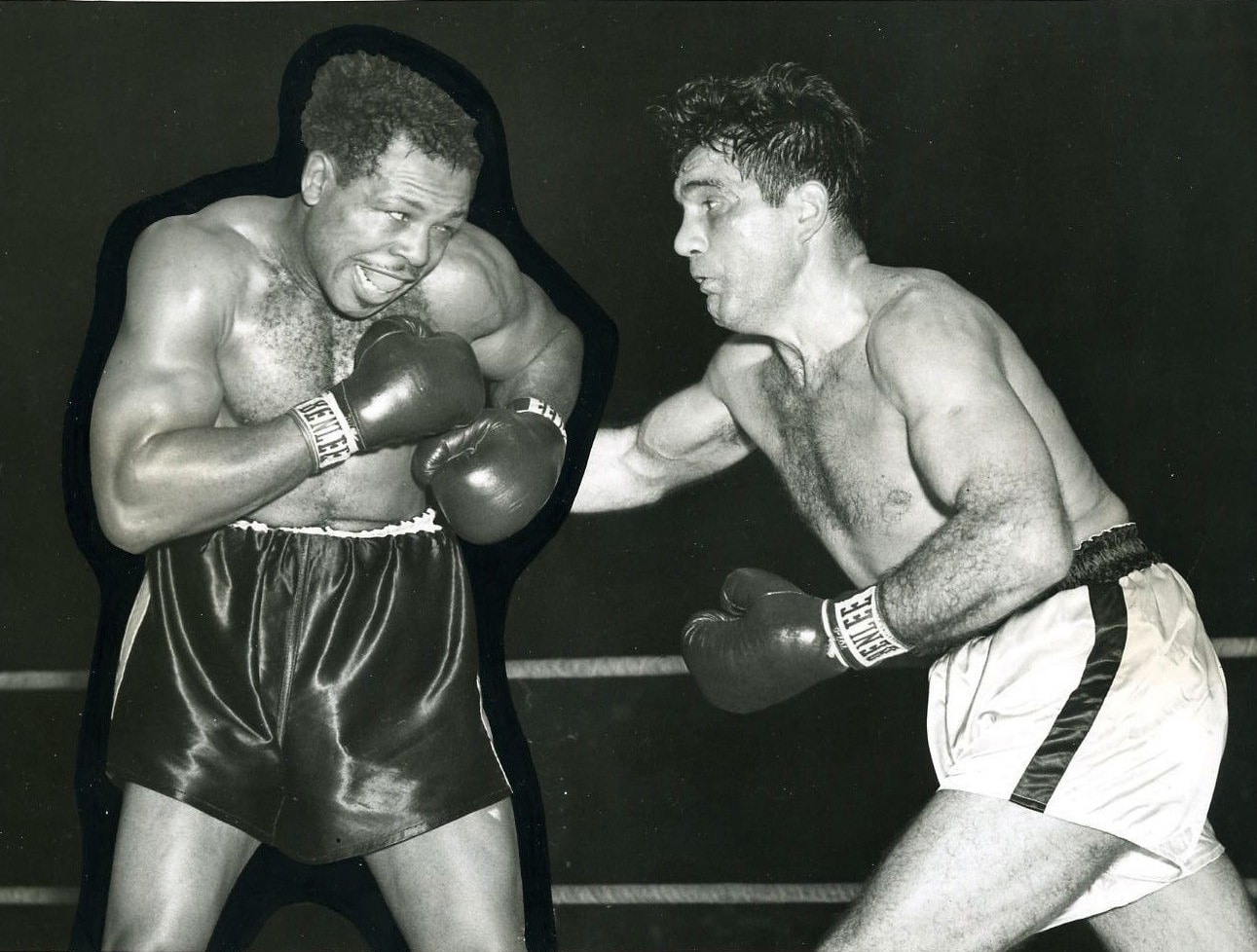


History provides enough examples to keep the argument alive. George Foreman regained the heavyweight title at 45 when he stopped Michael Moorer, while Archie Moore remained competitive at the highest level into his mid-40s.
In lower weight classes, fighters have also extended their careers beyond the expected range. Roberto Duran won a middleweight title at 37. Azumah Nelson and Eder Jofre both won titles at 37. Daniel Zaragoza and Gianfranco Rosi still won belts at 37 and 38 respectively.
Bernard Hopkins toppled younger, faster champions like Jean Pascal and Tavoris Cloud well into his late 40s. By winning a world title at 49, he pushed back the “Foreman Line” even further.
Hopkins proved that if a fighter mastered the “Old Man” style, which relies on economy of movement, psychological warfare and defensive fundamentals, they could effectively “bend time,” as he often put it.
However, for every Hopkins or Voorman, there are hundreds of fighters whose names are not in those history books because the sport’s lack of a fixed limit has caught up with them.
Other champions have found success in their 30s, reinforcing the idea that age does not affect every fighter in the same way. Sugarboy Malinga won a super middleweight title at 36.
Juan Martin Coggi won at 34, while Luis Estaba and Dado Marino also won titles in their early 30s. Even at the lighter weights, where speed is often considered crucial, fighters like Santos Laciar and Samuth Sithnaruepol were able to hold titles well into their late 20s and extend careers that would otherwise have been shorter.
These results are often used to support the belief that experience and style can offset age. They are real, but they do not reflect the typical outcome.
Defensive mages and power punchers tend to last longer. Speed and reflexes are the first things to go, which is why we rarely see 40-year-old flyweight champions, but heavyweight and lightweight history is littered with them.
It’s often not the age, but the mileage. A 30-year-old who has been in ten wars may be older in boxing terms than a 40-year-old who rarely gets hit.
Because boxing is a business, a fighter’s name often outlives their ability. Promoters will continue to book a legendary name as long as it sells tickets, even if the “timing and durability” you mentioned has clearly slipped.

