


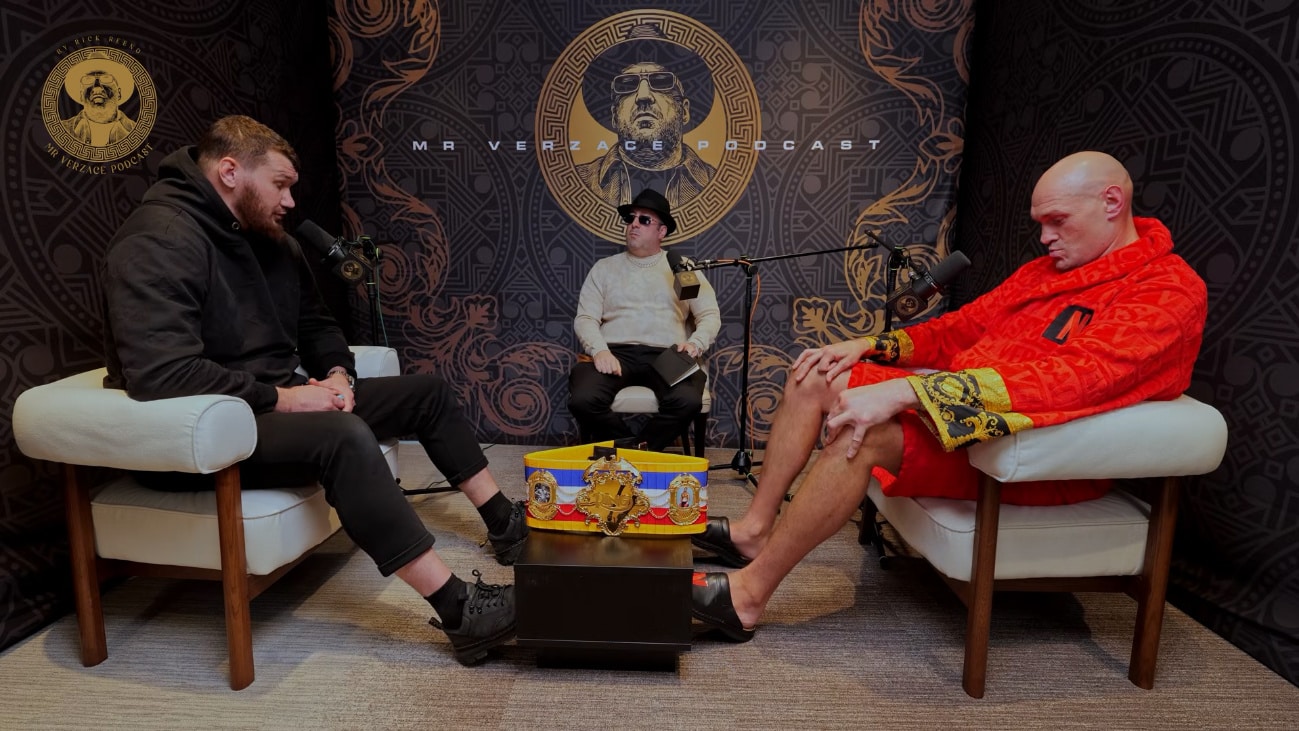


“I don’t stand up for easy fights. I can’t concentrate. They just mean nothing to me,” Fury said. “I pick a dangerous opponent, and that makes me train hard. I don’t want to be a highlight reel on anyone’s record.”
That is the case he makes, but the counterargument is just as clear. No one disputes Makhmudov’s power. He brings legitimate knockout power and a massive physical presence, especially in the early rounds. Fury himself acknowledged the challenge, noting that he was facing not an apprentice, but a top-level competitor. The respect for the challenge is clearly there.
However, critics would argue that if Fury actually wanted to test his limits, he had more dangerous options on the table. Filip Hrgovic brings a relentless engine and high volume, while Zhilei Zhang offers precise timing and a left hand that can end a night instantly. Even a younger threat like Richard Torrez Jr. forces a fighter to deal with constant movement and angles, problems that test a fighter’s boxing IQ, not just their chin.
Makhmudov is explosive and dangerous early, but he is largely a one-shot threat. We saw Agit Kabayel pick him apart with movement and pressure, proving that while Makhmudov is dangerous, he’s also predictable. He is a readable opponent whose power is formidable but manageable for a high-level technician.
Fury claims he needs fear to stay sharp, and Makhmudov provides it. In the heavyweight division, one clean connection changes everything. But there is a big difference between a pure puncher and a complete competitor who brings pressure, pace and adaptability.
That missing piece is exactly what the fans are arguing about. If Fury just wanted a reason to show up at the gym, he found it. But if he actually wanted to prove he’s still the top dog, he seems to have chosen a version of danger he knows he can control.


