




His delay at welterweight only deepened the anticipation. He was widely considered the best fighter in the division long before he officially held the title. War interrupted careers. Boxing politics stymied others. Certain figures behind the curtain decided when opportunities appeared and when they did not. Robinson endured that waiting period without surrendering his independence, which was rare in an era when independence was often punished.
The middleweight championship existed within a more complicated ecosystem. Tony Zale, Rocky Graziano and Marcel Cerdan traded the title in violent succession, and behind them stood the International Boxing Club of New York, an organization that operated with quiet authority and understood influence. Frankie Carbo, known as “Mr. Grey,” represented that authority. Champions existed within his system, whether they recognized it or not.
Jake LaMotta understood the system as well as anyone. He has grown up in his orbit and has already made compromises to secure his own opportunity. His loss to Billy Fox in 1947, widely believed to have been arranged, was the price of entry. He paid for it, and eventually became the middleweight champion.
LaMotta’s rivalry with Robinson has already produced five fights. Robinson won most of them, but LaMotta’s physicality came at a cost. Robinson’s only professional loss came against him. LaMotta forced Robinson into grueling exchanges that diminished his brilliance late in fights. Their rivalry contained friction that numbers alone could not explain.
Before their sixth meeting in Chicago in 1951, Robinson later claimed Carbo approached him privately. The instruction was simple. Win the title and then lose it back. Robinson refused. He did not dramatize the refusal. He simply walked away.
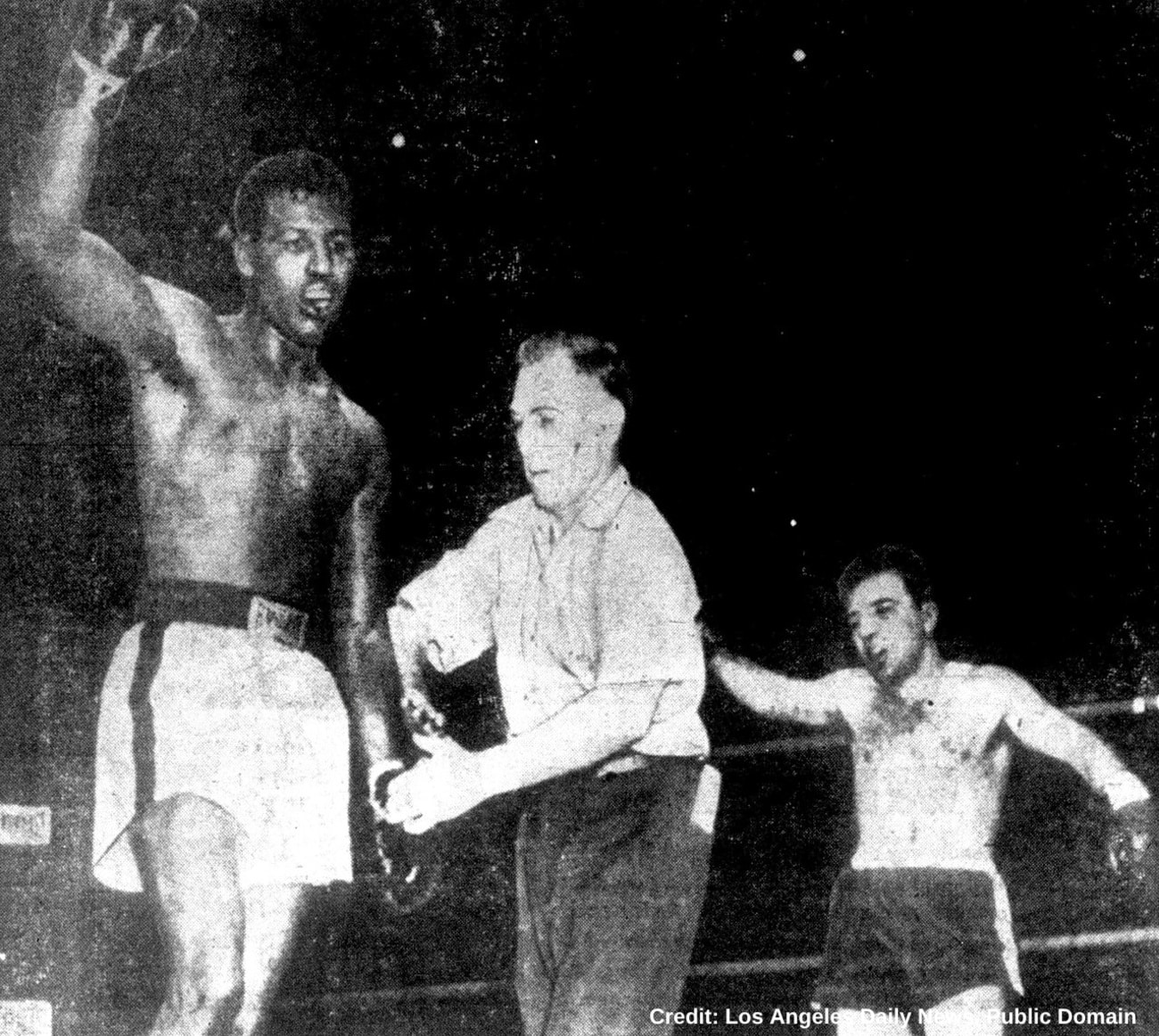
The fight itself carried the feeling of something concluding rather than beginning. LaMotta pressed forward and invested in the body like he always did. Robinson responded with distance and repetition, his jab controlling the geography of the ring. As the rounds piled up, LaMotta’s tenacity became a liability. His durability allowed punishment to continue.
By the championship rounds, LaMotta had become a participant in his own defeat. Robinson did not rush the end. He patiently applied pressure and only accelerated when resistance was already starting to dissolve. In the thirteenth round, the referee intervened. LaMotta remained standing, but standing ceased to mean competition.

The win immediately changed Robinson’s position. He vacated the welterweight title, which set the division in motion. He claimed the middleweight championship, which reorganized another division around him. Light heavyweight suddenly became a plausible destination. Robinson created movement by simply arriving.
His greatness did not announce itself at that moment. It confirmed itself. Robinson didn’t stretch boxing’s imagination. He replaced it.

