


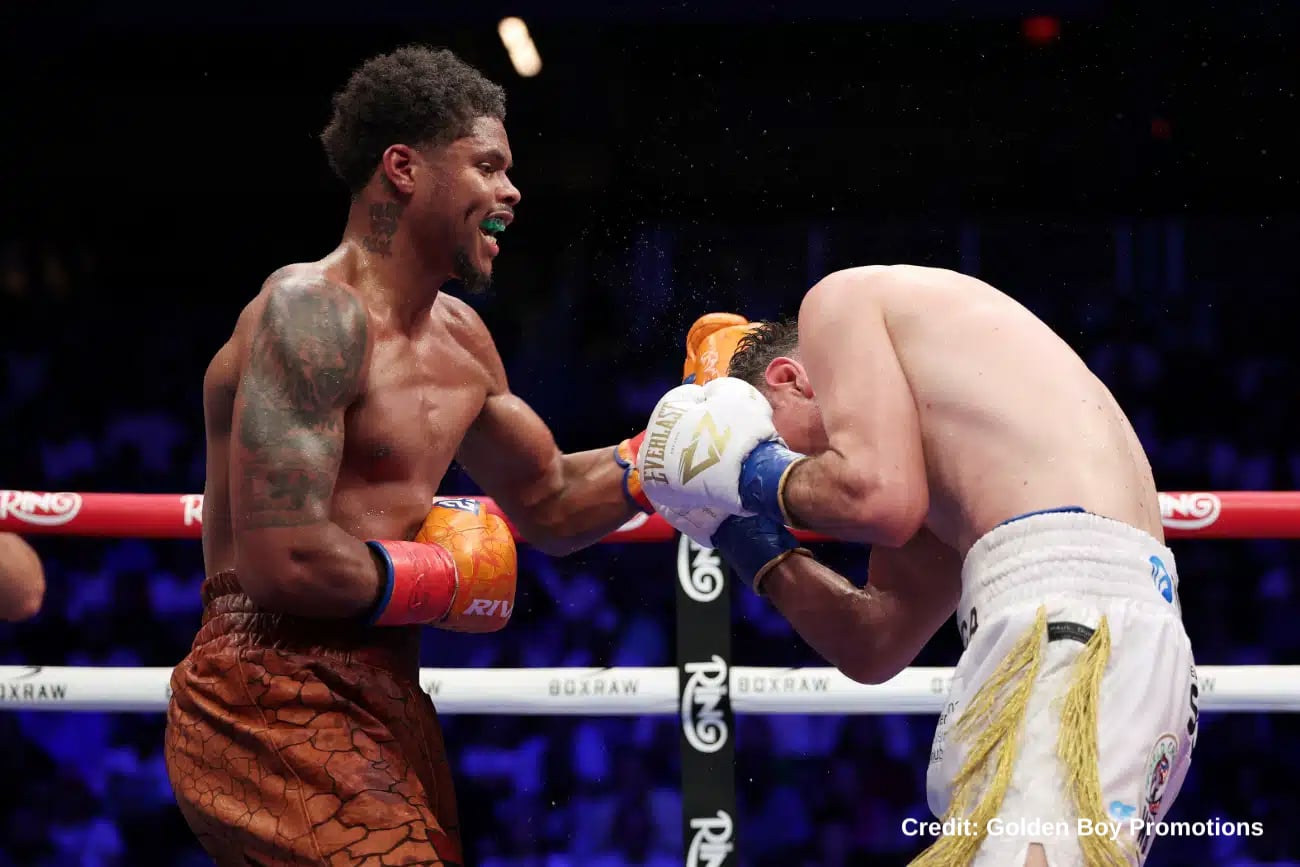
Stevenson’s case rests on motion. He won titles at featherweight, junior lightweight and lightweight. He believes that distance should carry more weight than fighters who built their stand in one division or only moved once.
“A lot of people stayed at that one weight class,” Stevenson said. “They achieved their feats there. Or they went up to one other weight. But I went up to one, two, three.”
That argument misses the point to which critics return. Stevenson won belts, but the opposition, including Joet Gonzalez, a 35-year-old Jermell Herring, and Edwin De Los Santos, was not the strongest available at the time. Those wins count, but none forced a division to react or reset him. This shaped how his run was judged.
Stevenson insists he did what the structure allowed.
“It was never my fault that the titles were vacated,” he said. “I ended up fighting the number one and number two. People complain about fighters who were emailed the belt, and then complain about a fighter like me who fought the number one and number two man.”
The criticism is about choice, as Stevenson had leverage and didn’t push for tougher opponents. At featherweight, Rafael Espinoza was available. At 130, O’Shaquie Foster was there. At 135, Abdullah Mason posed real risk. Those fights would have carried more weight than belt collection alone.
Instead, Stevenson defended titles without testing the deepest point of each division. This kept its position secure, but limited how far it carried.
As he moves to 140, the same question follows him. Gary Antuanne Russell and Richardson Hitchins remain active against opponents who carry real risk. At that weight, the standard is higher, and those are the fights that tend to change how a fighter is viewed.
Pound-for-pound lists are subjective, but they tend to reward fighters who make tough decisions. Until those appear consistently, the seventh reflects how Stevenson’s career has been managed, not how skilled he is.

