


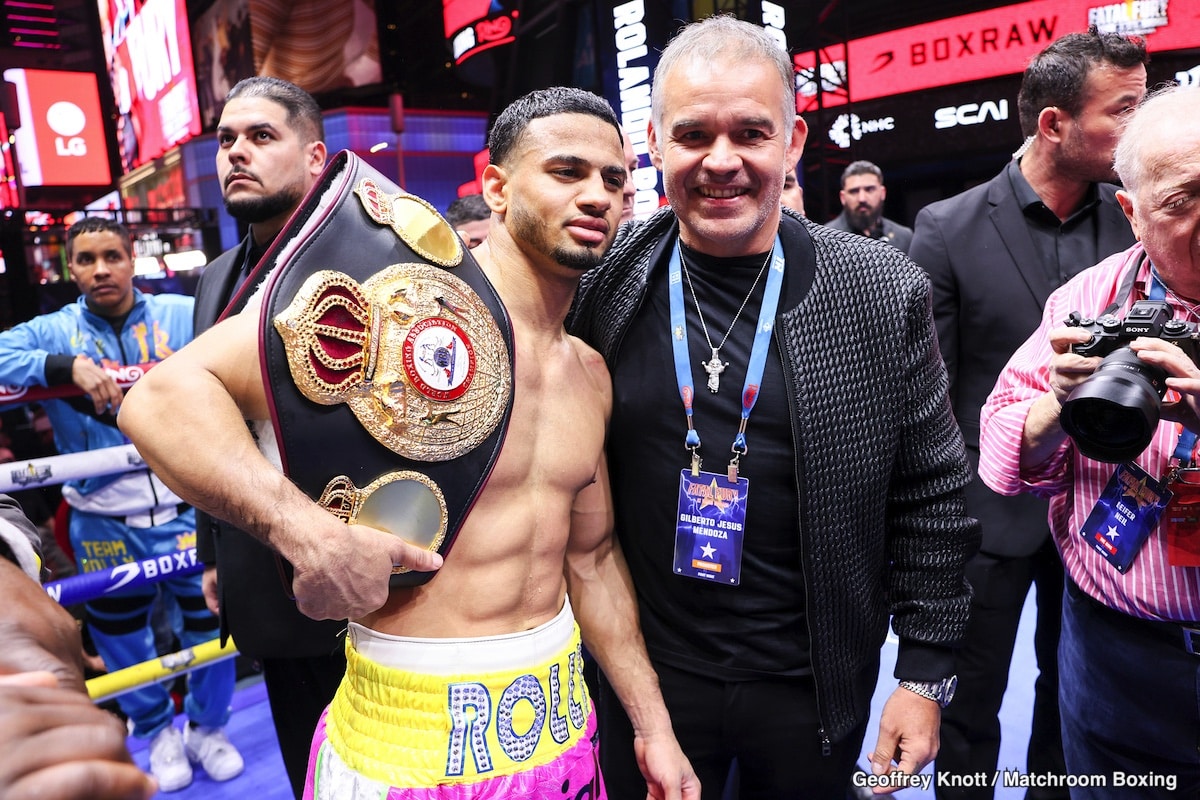


Romero fired back on social media, accusing Garcia of ducking their rematch and taking shots at Haney, insisting he would knock him out if given the chance. Haney responded that the fight could have been made months ago and called Romero “desperate,” a response that makes sense when examining the timeline.
Garcia now holds a belt after beating WBC welterweight champion Mario Barrios on February 21 and is positioned to choose his next move. Romero, on the other hand, has not fought to capture the vacant WBA welterweight title in Times Square since defeating Garcia on May 2, 2025.
Romero’s win last year should have established control. Instead, there was no immediate defense and no visible push towards the mandatory challenger.
After beating Garcia, Romero lined up a fight with 46-year-old Manny Pacquiao, looking for a bigger event rather than defending against mandatory challenger Shakhram Giyasov. When the Pacquiao fight did not materialize, Romero did not revert to the required defense. That decision narrowed his options.
Giyasov has already been passed twice for his mandate event. In May 2025, former WBA champion Eimantas Stanionis faced then-IBF champion Jaron Ennis in a unification. Later, when Garcia and Romero fought for the vacant WBA 147-pound title, Giyasov was again not placed in the mandatory slot, despite his position.
Agreeing to step aside again would mean a third delay of his title opportunity. There is little incentive for him to do so now.
Unifications are preferred under sanctioning body rules. A fight with Garcia or Haney would remove the Giyasov obligation. But those routes require cooperation from fighters who currently seem focused elsewhere.
This leaves Romero in a difficult position. Without a unification or a voluntary step aside from Giyasov, the defense sits before him.
A belt retains authority only if it is defended, and Rolly failed to do so. Boxing is performance and timing. Fighters who don’t step forward are written out of the script.

