


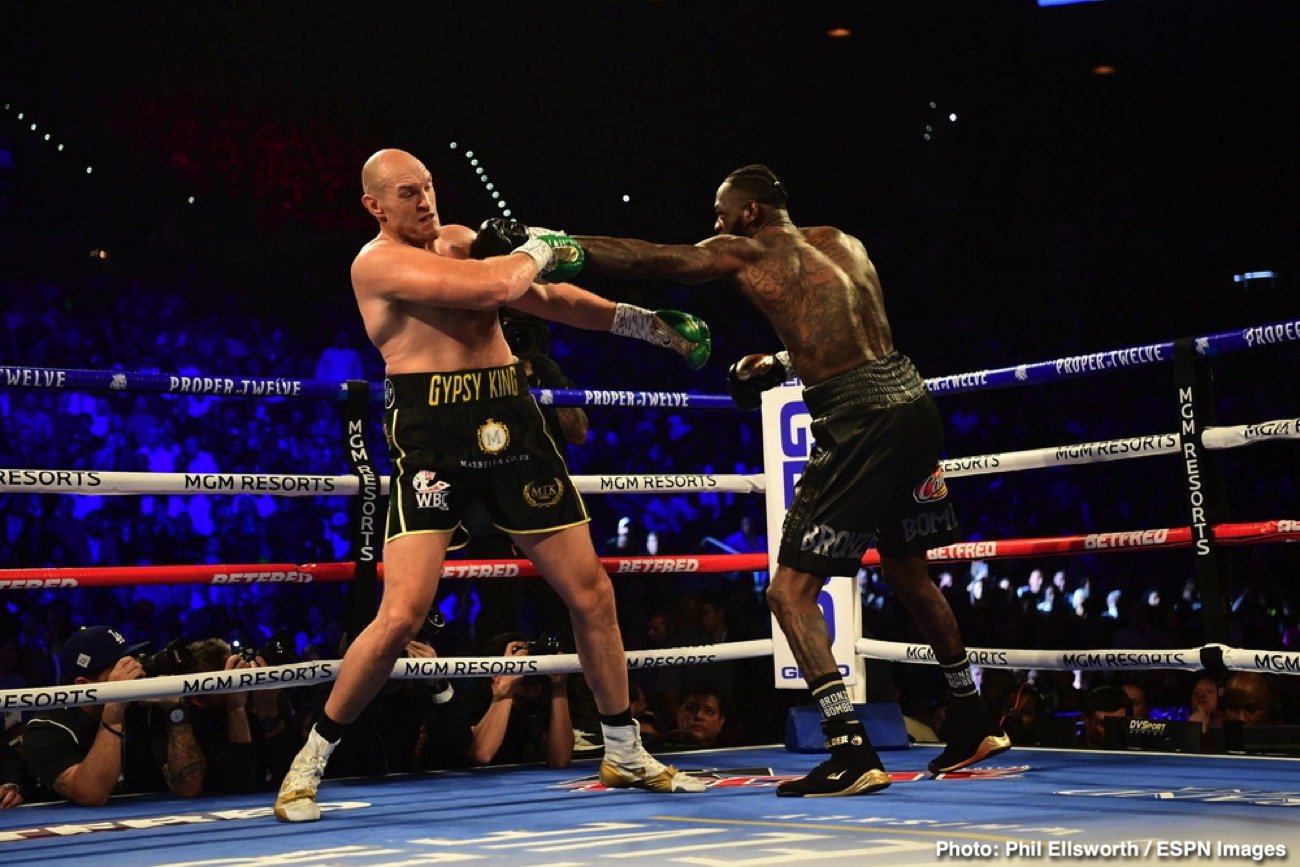
There remains a small group of supporters who believe that Wilder can still change any fight with one clean right hand. That belief is based on what he was earlier in his career. The theory is simple. If Wilder is healthy and willing to take risks, one mistake can still be punished. It’s a narrow argument, but it keeps following him.
The stylistic problem is that Usyk is built to minimize exactly that threat. As a southpaw, he keeps his front foot outside and shifts angle immediately to strike. He stays active with his lead hand, disrupting rhythm and forcing opponents to reset their feet before they can charge up. That reset puts right-handers in a dead zone where power can’t be delivered cleanly without time. Against a mover like Usyk, that time is few and far between.
Wilder’s recent form has only added to the scepticism. In his last fight against Tyrrell Anthony Herndon he relied heavily on his left hand and jab and scored a seventh round knockout without sustained right hand attacks. After the fight, Wilder said lingering shoulder problems required two surgeries and limited him for years.
That context reframes the puncher’s odds. Even if the shoulder problems are behind him, the version of Wilder seen recently is more measured and selective. Against Usyk it creates a difficult choice. Patience allows Usyk to control pace and space. Aggression forces repeated resets before the right hand can be thrown.
The fight remains in negotiations for April or May in Las Vegas. Fan preference showed elsewhere, to names like Moses Itauma, Fabio Wardley, Agit Kabayel, Joseph Parker or Frank Sanchez.
The appeal here rests on only one question. Whether a weapon that once defined a career can still function against an opponent designed to take it away. The stylistic gap is not just technical. It is temporary.

