


Timo Habighorst was the name of the referee ruling that fight for anyone wondering.
He should be examined immediately.#KabayelKnyba
— MarkusB (@markusbthegoat) January 10, 2026
The first strikeout should have been the intervention
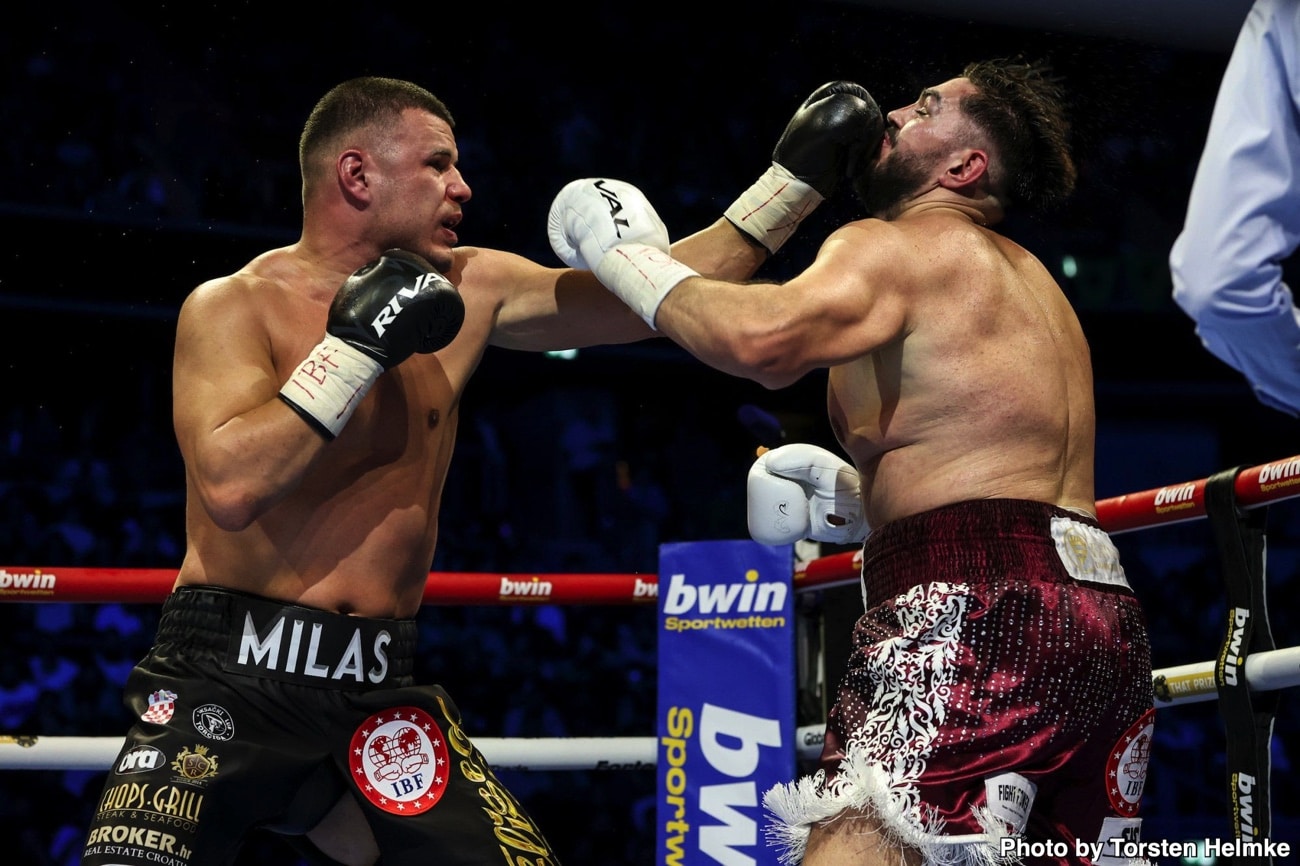
Early in the tenth, Milas dropped Shala. The knock itself was clean rather than explosive, but Shala’s reaction was the problem. He stood up without his legs under him, his balance compromised, his awareness blunted. Milas recognized it immediately. Instead of pushing forward, he turns referee Timo Habighorst and signals that Shala is in trouble. Fighters rarely do that, especially heavyweights who sense a stalemate. That signal alone should have prompted closer scrutiny.
Habighorst did a routine count and waved the fight back without any meaningful assessment. No extended look at Shala’s eyes. No pause to check stability. The referee treated the moment as procedural rather than medical.
Seconds later, Milas jumped in with a short, controlled one-two. Shala went down again. This time the damage was undeniable. Shala tried to get up by pulling himself up the ropes, his feet slipping, his high guard absent, his body no longer responding in sequence. The signs were no longer subtle.
Ref Timo Habighorst had an absolute shocker in the Petar Milas vs Granit Shala battle.
Could have stopped it after the first tee in the last round. Instead, he allowed Shala to continue and allowed him to get the absolute piss out of him instead of stopping the fight.
– Anthony Cocks – Aussie Boxing Scribe (@el_pollo_loco) January 10, 2026
Ignoring the corner removes any remaining defenses
As the count continued, Shala’s corner threw in the towel and moved to the ring. This is the final and clearest signal in the sport. The corner relinquished responsibility because their fighter could no longer protect himself. Even then, Habighorst kept up the count before finally stopping the fight.
By that point, every protection had failed in sequence. The opponent asked for intervention. The knockdown piled up. The fighter’s physical condition was clear. The corner has entered. The referee still hesitated.
Milas left with a win and a 20-1 record. Shala left after taking punishment that served no competitive purpose. The discussion about rounds won or lost before the tenth has relevance only on paper. In the ring, the important moment arrived when the referee refused to act while all available information pointed in the same direction.
Habighorst’s handling of this fight raised questions about officiating standards and inner ring control. Referees are licensed to make quick, uncomfortable decisions to prevent unnecessary damage. When those decisions are repeatedly delayed, the question inevitably becomes: how is this guy still assigned to battles of this level?


