


For all the behind-the-scenes deals that helped make LIV happen, the subtext of the league’s contract negotiations has always been public knowledge: LIV has the money and the players take the risk.
A simple financial equation explained why PGA Tour members were drawn to the new league: salary + risk = payout. To sign a PGA Tour star, LIV had to offer at least a dollar more than players estimated they could win on the PGA Tour, plus the risk cost of that star.
That strategy helped LIV get off the ground and put the PGA Tour on its feet, but it wasn’t without its flaws. First, it left open the possibility for players to change the way they assessed risk; and second, LIV funding was assumed to be unlimited.
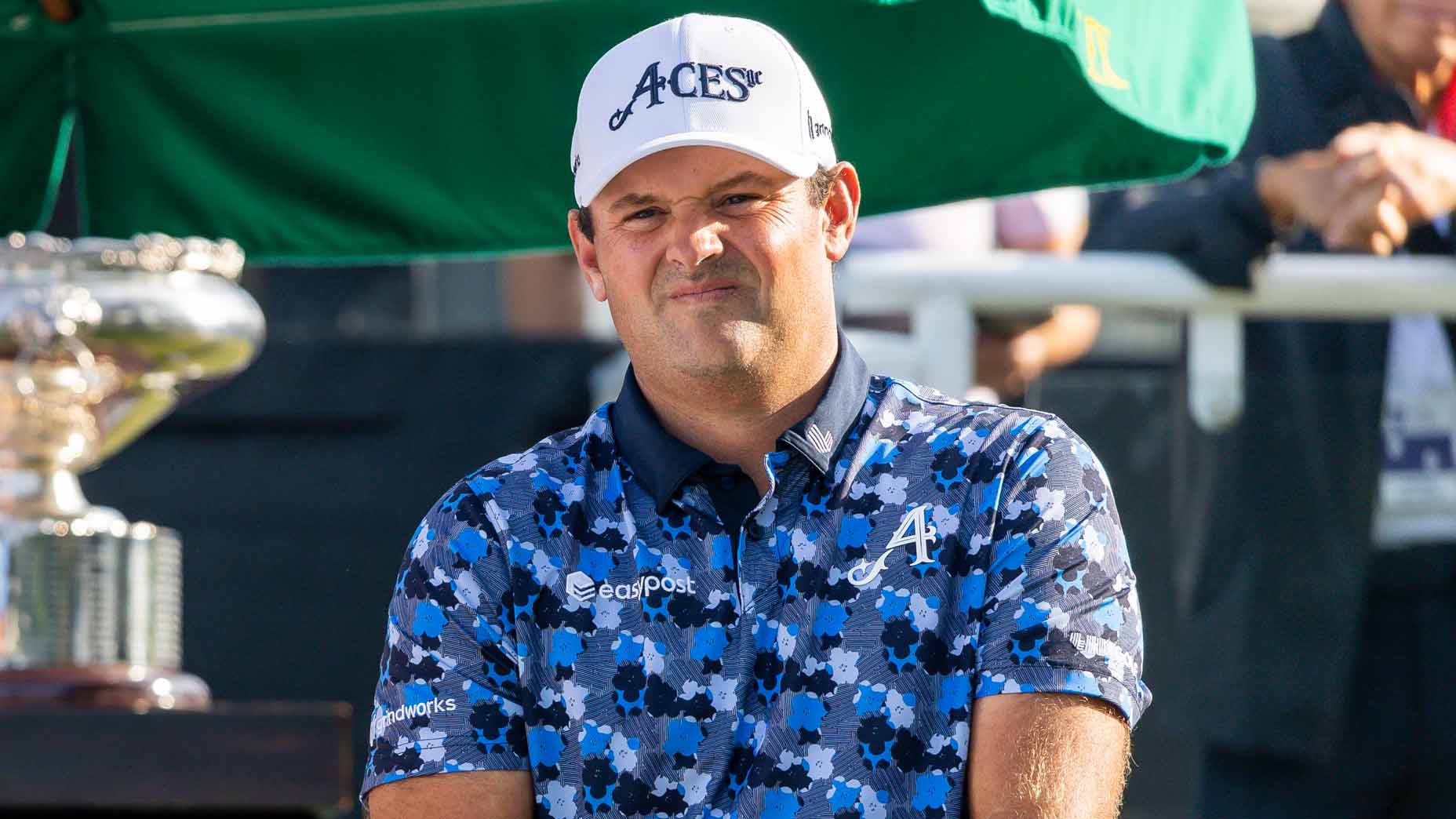
When Patrick Reed announced his surprising departure by LIV Golf earlier this week, neither he nor LIV gave a clear reason for his decision, saying only that they could not reach an agreement.
Perhaps Reed, who plans to rejoin the PGA Tour in late 2026 after an eight-month suspension, was homesick, put off by LIV’s global swing schedule, and only a massive offer would convince him to return. Maybe LIV extended an offer, but less than Reed’s initial signing bonus, and he turned his nose up. Perhaps LIV saw declining value in Reed and took an opportunity to ship him. Or maybe Reed and LIV had mutual interest, but LIV lacked the cash needed to close the deal.
Whatever prompted Reed’s decision, it likely came down to money or risk, and ahead of LIV’s 2026 season, there’s reason to believe both factors may have played a role.
Patrick Reed and the funders of LIV
For all the headlines LIV generates in the world of golf, the league represents only a sliver of the Saudi balance sheet.
Officially, the Saudi Public Investment Fund (PIF) is worth about 1 trillion dollars. Since LIV’s inception, the league has racked up a relatively small loss of $5 billion, according to LIV’s regulatory filings. Five billion dollars is nothing – but LIV brings benefits that may be harder to quantify, such as international and cultural influence and a cozier relationship with American political royalty. In short, the Saudis’ advantage is less financial than influential.
But that was when PIF money was seemingly limitless, and now that funding looks less stable.
The most famous catalyst of the Saudis “liquidity squeeze” not related to golf. Instead, it’s a place called Neom, an extremely wealthy “city of the future” under construction in the middle of the Saudi desert. For a while, Neom was the crown jewel of Saudi Crown Prince Mohammed bin Salman’s Vision 2030 – his dream of modernizing his country and diversifying its economy for the modern era. The city was the center of an unprecedented string of infrastructure and real estate investments by the Kingdom, which fueled dreams that the uninhabited desert area would one day become a center of economic and technological innovation.
Reality has been a headache. Today, nearly a decade into the project and after years of over-budget and behind schedule construction, Neom consists of a small subdivision in the desert. There is no ski resort or high-speed rail. PIF has spent more than 50 billion dollars on the project and an internal audit, according to Wall Street Journalestimated the cost to complete the city at its original scale at $8.8 trillionmore than eight times the Kingdom’s initial estimates.
At the same time, the old way of doing business in Saudi Arabia has experienced a sudden decline. Over the past year, global oil supply has exploded, thanks to increased production in the United States and several other non-traditional oil-producing countries. As a result, the cost of oil has fallen to the lowest levels since 2021, according to reports from the US Energy Information Administration. Under MBS, the Saudis have been keen to diversify their economy beyond oil, but such wholesale economic transitions take time. Much of the Saudi economy is still tied to the country’s oil interests, according to a year-end report from the International Monetary Fund, and those oil interests are currently underperforming.
The result of an oil slump and an extremely ambitious infrastructure policy? Suddenly, the Saudis are cash-strapped and facing growing deficits, THE Financial Times REPORTS.
On Sunday, the same day Patrick Reed revealed his stalled negotiations with LIV, FT reported the latest evidence of PIF’s belt-tightening: the fund had dramatically scaled back its vision for Neom, envisioning a “much smaller” final project at a significantly lower price.
“The changes come as Riyadh seeks to manage its finances as it faces a liquidity squeeze after a decade of massive spending and depressed oil prices.” Andrew England and Chris Campbell wrote. “There are also still tough deadlines to meet in the costly preparations to host the international Expo in 2030 and the soccer World Cup in 2034.
Could all this economic maneuvering have affected Reed’s contract negotiations? we don’t know. in I DO know Reed said he’d be “surprised” if he didn’t play in LIV’s season-opening event by Sunday. Three days later, he went to rivals LIV.
If the Saudis are cutting budgets for Neom, the country’s largest economic swing, it is not unreasonable to think that they may take a more restrictive approach to the remainder of the PIF portfolio, including LIV. Even if they don’t, LIV’s willingness to spend remains a key question going forward.
In the next two years, the league faces critical (and, of course, costly) contract extension decisions for stars like Bryson DeChambeau and Jon Rahm. No matching nine-digit deals (if not exceeded) the duo’s original signing bonuses, it’s hard to foresee Rahm or DeChambeau sticking around. (DeChambeau already has circled YouTube as a full-time pursuit if negotiations fail to meet his expectations.) And without superstars on LIV’s rosters, it’s hard to see a path for the league to achieve long-term sustainability.
In a statement announcing his exit from LIV, Reed called himself “a traditionalist at heart” who was “born to play on the PGA Tour.” He added that he made his decision “for our family, our children”. Reed wouldn’t be the first player to feel the strain of an LIV schedule that travels to five continents and requires long stretches on the road. He wouldn’t be the first player to worry about the long-term prospects of a league struggling to gain television viewership or significant influence in the golf world. He would be well within his right to worry about the viability of his major league future; the league has yet to receive the world ranking points needed for its players to qualify for the major championship.
For the world’s best players, the risk of joining LIV continues. LIV knows that risk costs money, and even sovereign wealth funds don’t have an endless supply of that.

