


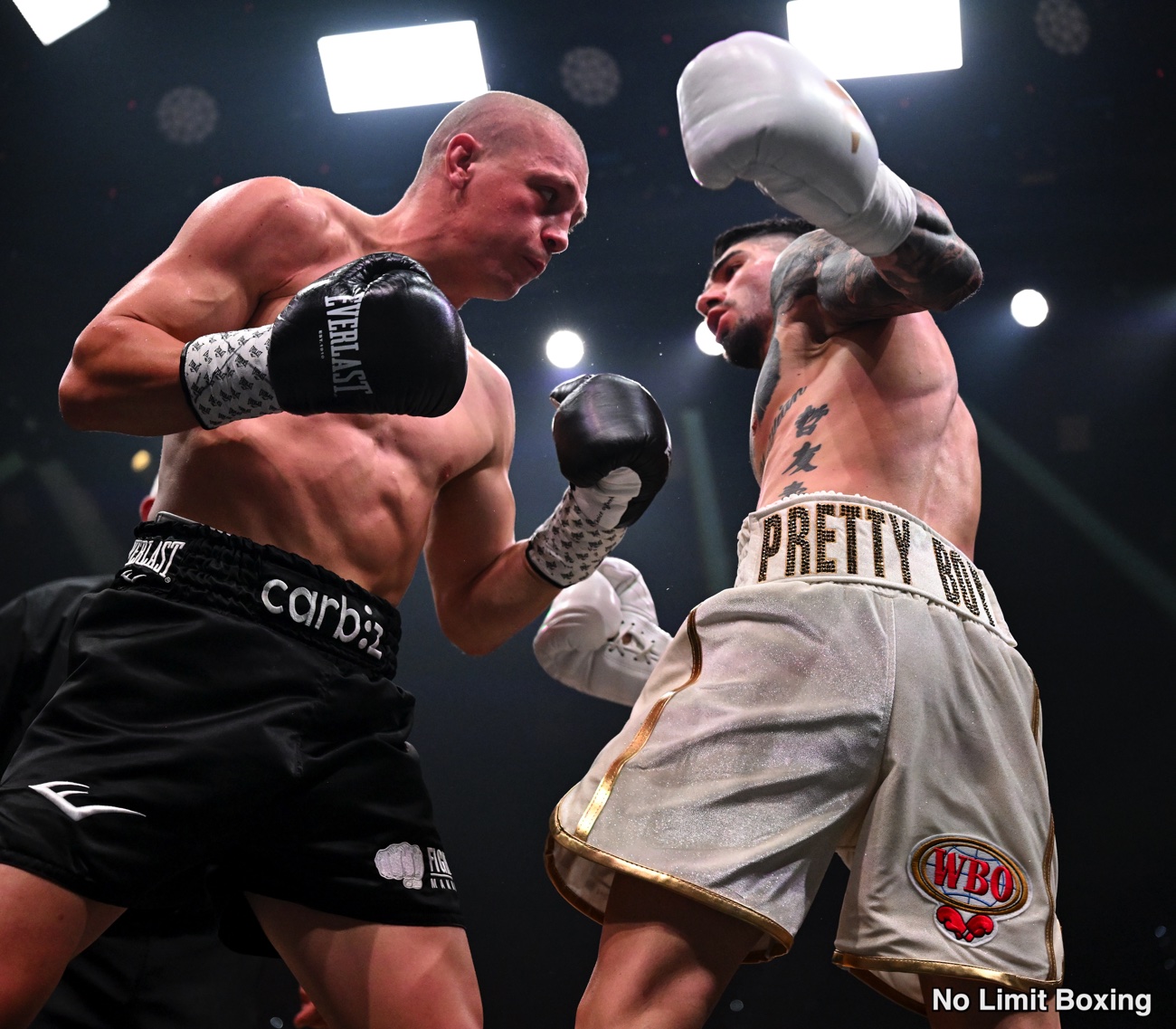

The cut was badly positioned, directly above the eye where swelling would impair vision as rounds accumulated. The doctor made the call that doctors make. But it was not a track opened by learning. It was the product of bad timing.
Zerafa: “I said it’s blurry, but it’s all good, let it go,” asked if Zerafa had told the doctor that he couldn’t see. “No, I’m ready to go. We’re going to do it again, let’s run it back,” he said.
Tszyu built momentum. His body jab was landing, and he showed patience working behind it. In the second, he began to assert himself along the ropes, finding his reach close and shaking off a counter right that briefly bothered him. The fight was even by two dead, but Tszyu seemed to be determining Zerafa’s entries.
Zerafa was the early aggressor without committing to power punches. He threw in the first combinations but struggled to land even. A brief stumble after an exchange suggested he was still finding his feet. The counter right in the second showed flashes, but it wasn’t enough to shift control.
Clashes are inevitable when orthodox southpaws meet up close. The front feet line up, the heads float, and referees can only warn. This particular clash came just as the fight was taking shape. Tszyu began to cut off the ring. Zerafa was settling in counters off the back foot. Two more rounds might have cleared everything up.
The immediate response will be calls for a third fight. It makes commercial sense. But both men should consider what this result actually tells them. Tszyu has shown he can withstand early pressure and work effectively at mid-range. After a few rounds, Zerafa demonstrated that he could pressure a younger fighter without gassing.
Demsey McKean wins
Demsey McKean added another name to his record by stopping Toese Vousiutu in the seventh round on Friday night in Australia, but did little to clarify where he stands among true heavyweights. The fight ended with Vousiutu unable to continue after sustained punishment, but the level of opposition tells you more about matchups than McKean’s readiness for anything serious.
McKean worked behind a steady jab and controlled distance against a fighter who had no business being there with him. Vousiutu showed heart but lacked the skill or conditioning to make it competitive. By the middle rounds, fatigue set in, and McKean’s cleaner, harder hitting eventually forced the stoppage. It was workmanlike, professional and unobtrusive.

Nelson Asofa-Solomona’s Quick Night
Nelson Asofa-Solomona knocked out Jeremy Latimore in the first round, which sounds more impressive than it is. Asofa-Solomona is a professional rugby player testing boxing waters, and Latimore was there to offer signs of resistance. The knockout came quickly, but against an opponent with no jab, poor footwork and hands that were held too low. This was a promotional exercise, not a competitive battle.
Ivic Edges Past Taliva’a
Stevan Ivic took a majority decision over Liam Taliva’a after ten rounds, with two judges scoring it 96-94 and one calling it a draw. Ivic banked enough rounds behind his jab and cleaner combinations to earn the nod, but the tight scorecards suggest he was unable to impose his will. Taliva’a stayed in his pocket, threw back and made Ivic work for every exchange. Neither fighter showed the footwork or ring generalship needed for significant steps.
Liam Wilson’s Power Returns
Liam Wilson knocked out Rodex Piala in the fourth round at super featherweight, showing the kind of straight-handed power that once made him a legitimate contender. Wilson set up the finish with sharp bodywork, broke down Piala and landed the finishing combination without drama. The performance was sharp but Piala offered no lateral movement and caught predictably. Wilson looked good because he was supposed to look good.

Routine wins for Reeves and Polkinghorn
Max Reeves shut out Sonny Abid 60-54 across the board at super middleweight, boxing behind a tight jab and never giving Abid room to set his feet. Billy Polkinghorn did the same with Jomar Paliwen at lightweight, also winning 60-54 on all cards. Both bouts were one-sided exercises in ring control, with neither opponent offering countermeasures or effective pressure. These were developmental battles that confirmed that neither prospect was in jeopardy.

