


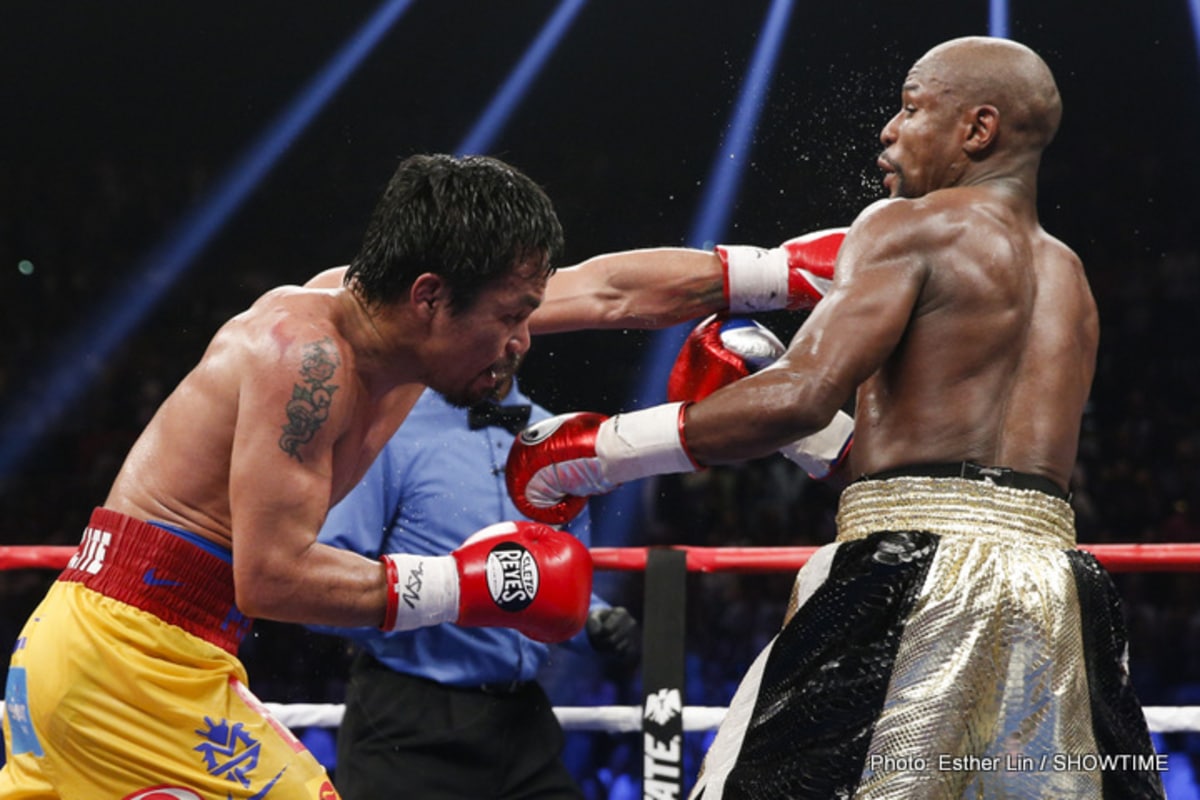
Netflix tracks popularity, a calculation that says more about recognition than the ages associated with Floyd Mayweather Jr. and Manny Pacquiao.
The comparison is awkward but direct. Mayweather and Pacquiao remain recognizable to casual sports fans across generations. Artur Beterbiev and Dmitry Bivol, despite producing two high-level undisputed light heavyweight fights with significant promotional backing, remain largely unknown outside the sport’s core audience. The gap in recognition helps explain why a rematch between two men who are nearly fifty projects to achieve a broader reach than active champions in their prime.


Mayweather and Pacquiao spent years as matches on HBO and Showtime. Their fights were repeatedly promoted and discussed across the mainstream sports media until they became culturally inevitable. Even those who tuned in only occasionally could identify them. Exposure accumulated over time.
Today’s elite fighters operate in a much more segmented landscape. One big fight appears on one subscription platform. The following is hosted elsewhere. Competing champions often belong to separate promotional ecosystems. There is no single, shared stage where the sport consistently gathers its best in front of the same mass audience. Hardcore fans follow closely. Casual viewers rarely encounter enough repetition to build attachment.
Ability has never limited the sport. Boxing remains rich in elite talent, but the path to recognition has narrowed. When champions do not consistently share space or appear before the same broad audience, familiarity becomes intermittent rather than automatic.
From Netflix’s perspective, Mayweather-Pacquiao II functions immediately. The rivalry is understood. The names require little introduction. A Beterbiev-Bivol promotion aimed at a global mainstream audience will require significant groundwork, including additional context for viewers unfamiliar with either man. Platforms built around immediate engagement tend to prefer content that works the moment it launches.
The 2015 meeting between Mayweather and Pacquiao still holds the pay-per-view record. It failed to create a sustained wave of regular viewers. In the years since, boxing’s biggest nights have become more sporadic and less culturally central. Talent remains deep across divisions. Shared visibility gradually decreased.
When active champions struggle to match the reach of retired icons, recognition is at the center of the issue. Netflix is responding to what is already measurable. The more difficult task now belongs to the sport itself: rebuilding the kind of familiarity that once grew naturally over time.
Click here to subscribe to our FREE newsletter
Related Boxing News:
Last updated on 2026/02/25 at 13:47

