


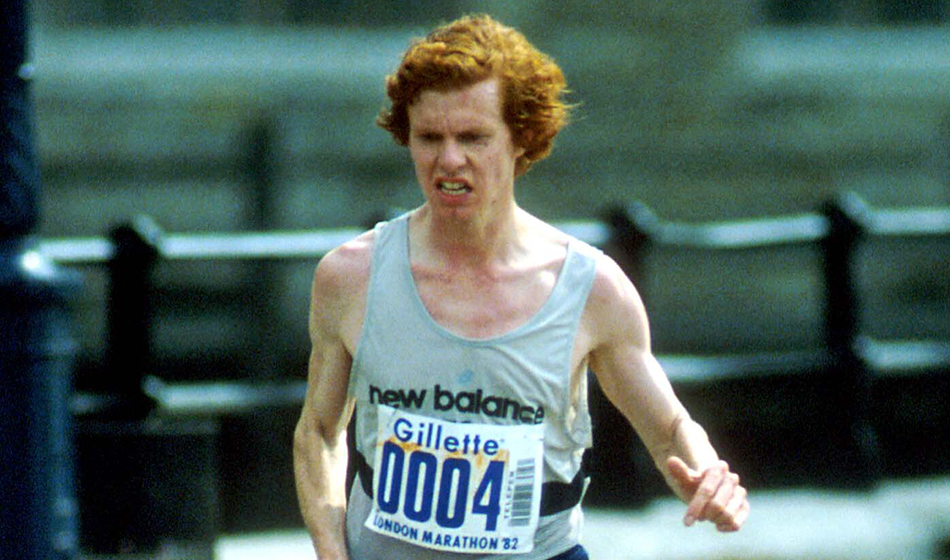
The marathon runner had a superb run to win the Rugby AAA title by two minutes in 2:14:07 in May 1981.
I had a stress fracture during the first London Marathon in 1981. I was able to get back into training by then, but I didn’t think it was worth racing when I was half fit, so it took another five weeks to get in shape for the AAAs, and I’m glad I did.
While it would have been nice to win my first London Marathon, those AAAs really mattered to me. It was then that I realized that I am a marathon runner and I can overcome the distance in international times.
The race only had a few dozen runners. It was on the back roads touring the country lanes with only the cows for spectators. Maybe a few people were there to watch, but not many. The locker rooms were in the elementary school. It was a low-key thing.
I ran the AAA last year in Milton Keynes and would have done a personal best of 2:18:56 but I lost a lot of time in the last 5km with a stomach ache so I was hoping for a new best. Up until that point I was improving every race.
I went at my pace, in the pack for the first lap and a half, and then I pulled away with Andy Holden. We were together for a while, but I made the move when there was still quite a long way to go. I found out, and I ran in fear that the stomach pain would return again, reliving the previous experience. But I finished, I won, and the time was 2:14:07, a five-minute improvement on my personal best. And the process was difficult. we had to climb a pretty steep hill three times, but that was the race that made me realize I could do it internationally.
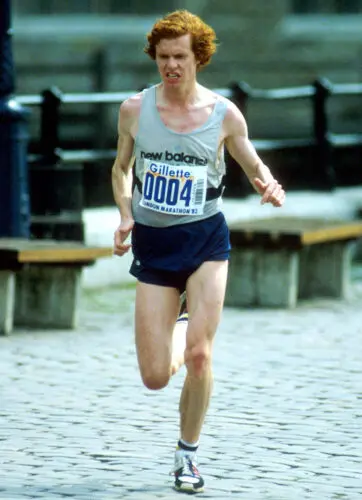
I always thought the marathon was something I would eventually be good at. Rugby was happy because it all worked out that way. And despite the fact that it was a small race and not an international, running 2:14 on that course with that improvement, I was now able to believe that I had a lot further to go in terms of personal bests.
That got me selected for the European Cup and the following year I was selected for the European Championship, but I ended up with calcification of the heel bone. I had to leave Athens due to pain and it was operated on later.
During AAA I was a student at the University of Liverpool, but I was unemployed for the best part of a year before I got a ten-month British Council scholarship to travel to Hungary. It happened later and it turned out that it was almost a year between my AAA win and my London Marathon win.
My mileage was huge compared to what people are doing now. I ran five marathons in one year, training for three months for each. I showed improvement in each of them, even if the times weren’t always faster.
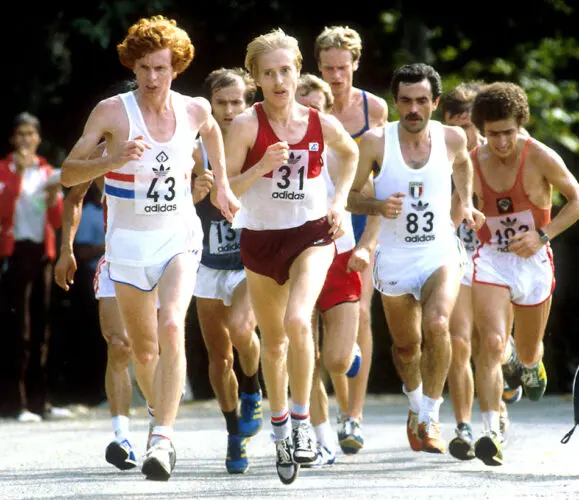
I managed New York in the fall of 1981 and moved to Budapest the following week. I trained there all the way to the London Marathon until I dropped out of the Europeans. You don’t have a strict definition of what you are required to submit at the end of the scholarship, so I spent most of my time training with the Hungarians.
I was coached by Alan Storey to the extent that I sought his advice and that got me through my first few marathons. But day after day, Hungary coach Alan was a familiar figure, and they offered their opinions throughout that year.
I went 2:16 at the European Cup in France. I got another PB when I won 2:13 in Oslo and then ran 2:10 in New York, but they found the course short. I did Tokyo the following January and then in London 1982 I got my personal best of 2:09:24.
That was the period when marathon running really exploded and I could see it coming. London had 16,000 runners in its second year and it was just growing massively. There was something similar in New York.
I didn’t get any prize money for winning the rugby, just a medal that got lost in one of my house moves. I don’t care much about medals. I know what I have achieved. I don’t need the medal to prove it.
As Mark Woods said
Documents
Was bornNovember 1, 1955
EventMarathon
PB:2:09:24
International awards
1983Chicago Marathon, second place
1982London Marathon, first place
1981New York City Marathon, third place

