


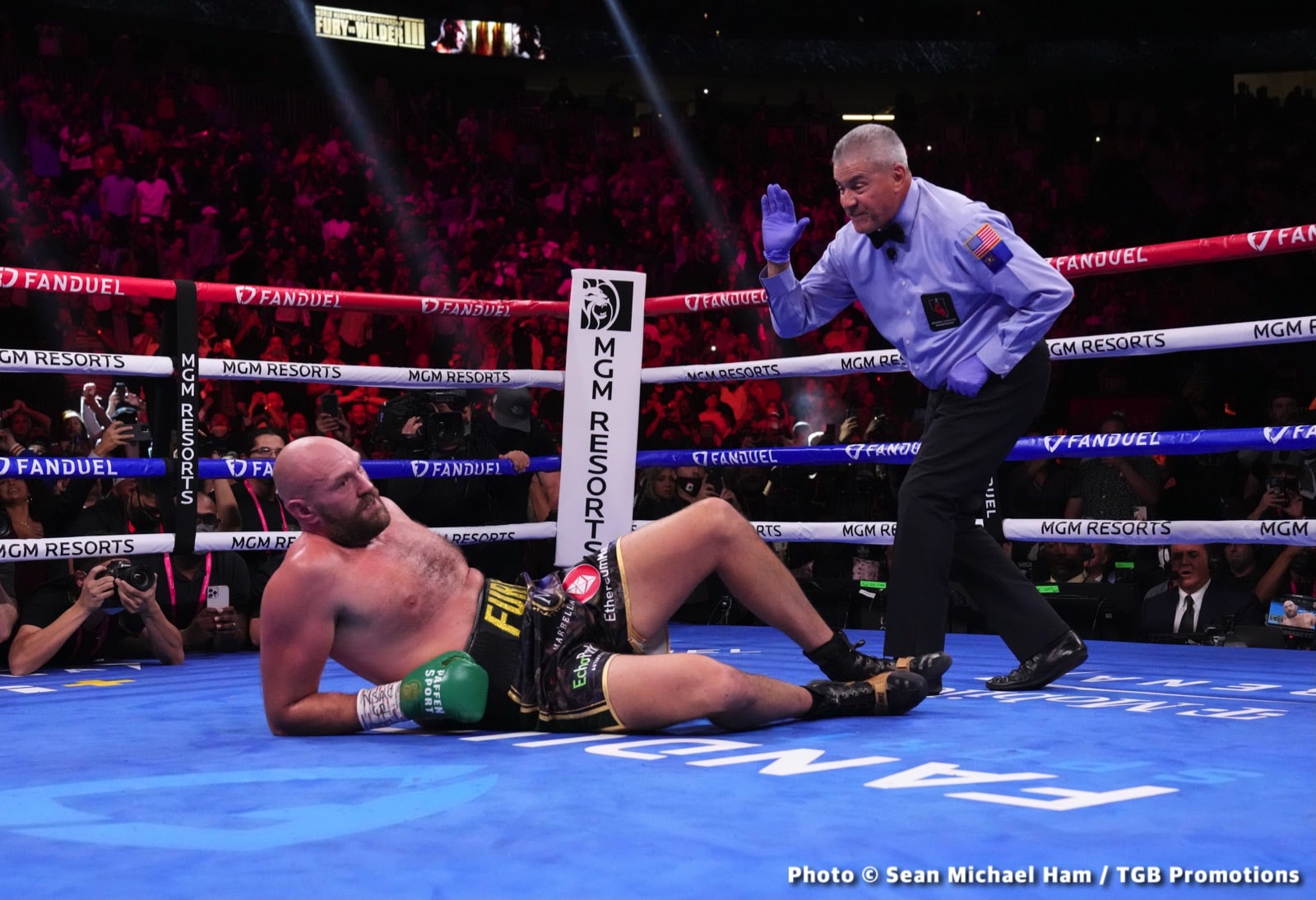
Tyson Fury is 37, coming off a losing streak in 2024 and returning from another short-lived retirement. In those fights, his legs were slow, his movement labored and his reactions blunted. He looked less like a dominant heavyweight and more like a fighter trying to summon something that no longer appeared automatically. There is nothing unusual about that, especially in heavyweight boxing, where age is quickly exposed.
Wardley doesn’t speak of Fury with any real reverence, treating him instead as a target rather than a figure to be admired. He questions whether a comeback fight would even serve a purpose for someone with Fury’s experience, and what value there is in easing back against a limited opponent when the issue is not ring familiarity but physical decline.
Fury himself has already suggested it would be difficult to step straight into a title fight after a long layoff, hinting at a later encounter instead. This indicates caution from a fighter who understands where he is physically after time away. A long absence followed by an immediate fight against a younger knockout artist is not a sensible idea for anyone, let alone someone whose recent appearances have shown visible erosion.
Wardley’s position in the division still makes some people uncomfortable because he hasn’t taken the belt from a champion in the ring. Oleksandr Usyk chose a different direction and evacuated rather than face him. That technical detail still lingers, but it doesn’t erase what Wardley presents stylistically as a younger heavyweight who’s aggressive and comfortable stepping forward with bad intentions.
Against someone like Wardley, the fight probably won’t turn into a clever twelve-round exercise because the damage tends to build up until the older fighter can’t absorb it anymore. It’s not about inventing a raw puncher. Wardley is not raw, nor is he sentimental.
Wardley noted how opinion has changed since his win over Joseph Parker, reflecting how quickly heavyweight perceptions can change when a fight ends decisively. One result changed how he was talked about, and it won’t take much for that conversation to change again.
Other names will continue to emerge, including safer names like Derek Chisora, who bring experience and familiarity without the youth. Fury sits in a different category, not because he is more dangerous now, but because people remain attached to what he was.
If Fury ever steps in with Wardley, the nostalgia will fade quickly. A younger knockout artist doesn’t need to win many rounds against an older heavyweight. He needs time, pressure and contact, and the end of that kind of fight is usually decided long before the scorecards come into play.
This is not disrespect. This is boxing as it actually works.

