


It matters more than the rivalry framework that followed.
Hearn did not question White’s intelligence or business record. He questioned his familiarity with boxing itself, whether someone who doesn’t know the fighters, the rankings or recent history can sell the sport with conviction, and whether boxing can function as a side project rather than a primary focus.
Those questions carried weight because of how Zuffa Boxing’s first night went.
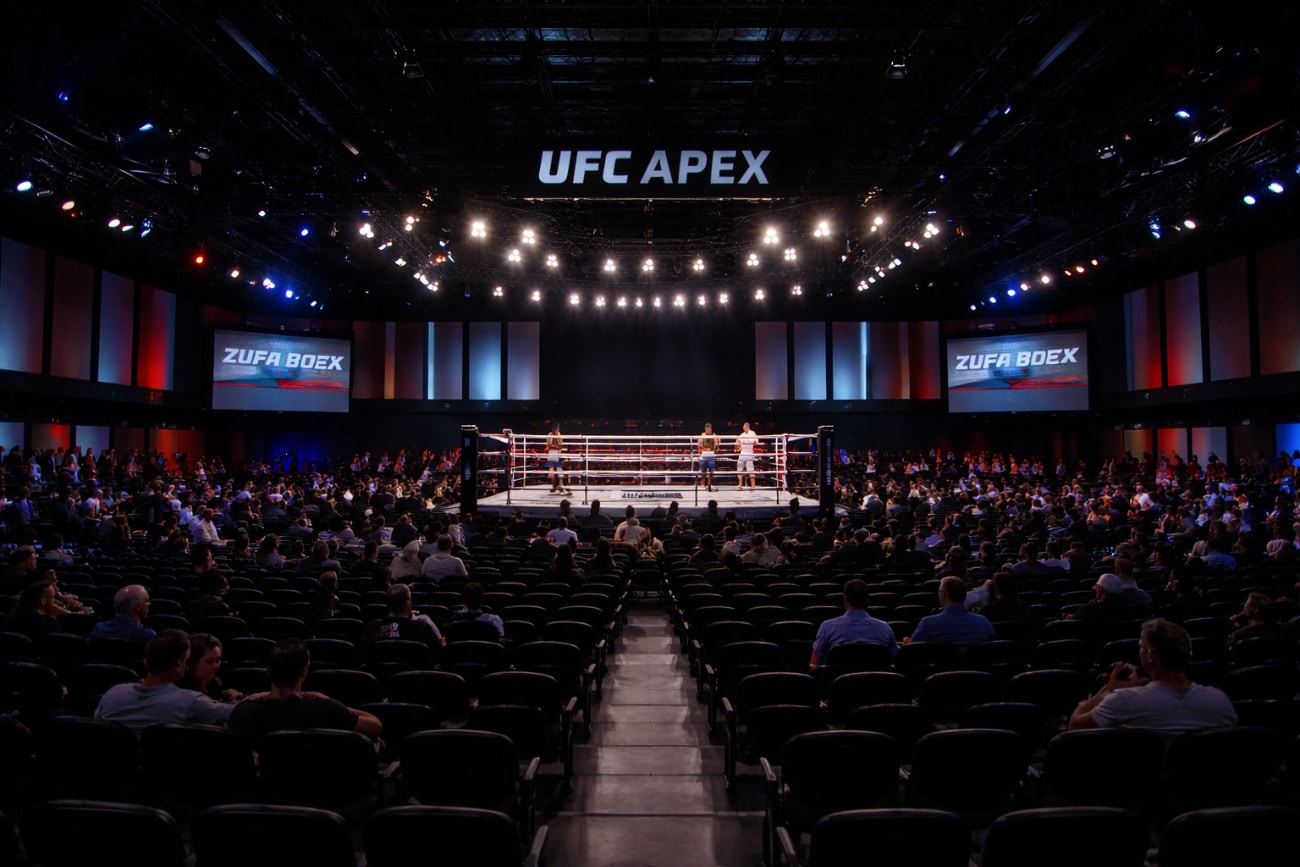
The debut at the UFC Apex was quiet, with a limited crowd and fights that passed without a moment that demanded attention. There was no urgency in the room and no clear sign of intent. For a launch backed by serious money, the night felt cautious.
That context changed how Hearn’s comments were heard.
When Hearn talks about selling as a transfer of emotion, he’s not offering a slogan. He describes how boxing usually survives. Fighters carry the interest, and promoters are judged on how well they know the fighters in front of them, a distinction that sat at the center of Hearn’s remarks. White runs a system built around structure and brand loyalty, one that doesn’t require its president to explain every competitor in detail so fans can stay engaged, because the brand itself carries a lot of that weight.
Hearn’s point wasn’t that White can’t learn to box, but that learning it while remaining fully invested elsewhere creates a gap that quickly shows when the person leading a project sounds detached from the fighters on the card. That’s why the criticism was operational rather than personal, and why Zuffa Boxing’s debut was scrutinized even though the fights themselves weren’t the problem.
Zuffa Boxing’s debut didn’t fall short because the fights were poor. Boxing has many nights that come and go quietly, especially outside of big dates. The problem was that the program didn’t announce itself. It didn’t set tone or direction, and it didn’t explain why this league exists or how it plans to stand apart.
That absence strengthened Hearn’s argument.
Box-dwelling promoters tend to overcompensate on night one. They stack moments, rely on names and press presence. The limited approach suggested caution rather than control.
Hearn has been in that position often enough to recognize it. The comments sounded more like familiarity than provocation.
He even acknowledged the obvious parallel. Putting on an MMA show would put him in the same position, talking about a sport he doesn’t watch day to day and couldn’t sell with the same confidence. The admission was not modesty. It was context.
Boxing tends to expose who stays close to it and who doesn’t.
None of this means that Zuffa Boxing can’t work. Money and access buy time, and White has previously built dominant structures. But Hearn’s comments underscore a tension that won’t go away quickly. Box responds to presence. It also notices absence.
The first night did not answer that question. It increased it.
Hearn didn’t fight. He drew a line between supervision and involvement, between box running and standing next to it. Zuffa Boxing’s next steps will show where it falls.
For now, the debut suggested boxing reacts quickly when commitment feels partial.

