


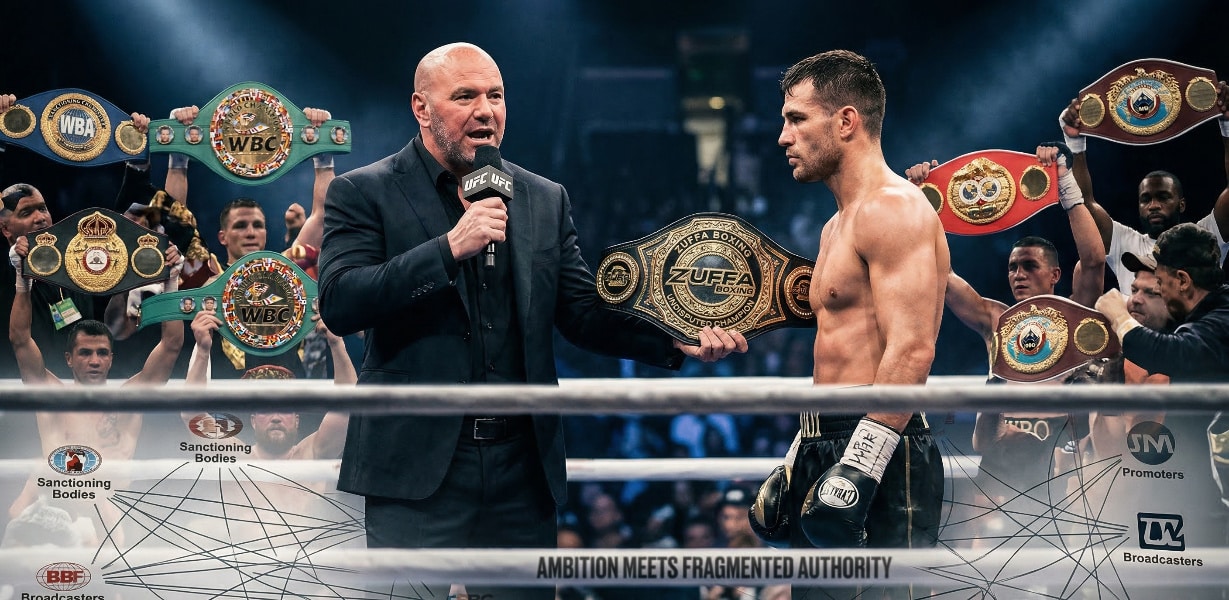


“You’ll have one champion in each weight class, and you’ll be in a situation where people can argue again about who all the champions are in each weight class,” Dana told Sky Sports.
It reflects the UFC model he helped build, with central control and clear title lines. The issue is where Zuffa Boxing enters the sport.
Zuffa Boxing is only a few shows in, and the fighters it signs arrive with goals tied to existing sanctioning bodies.
“When you have a guy like Jai Opetaia, this guy has dreams and goals and things he wants to accomplish,” White said. “When we sign these kids, we’re going to figure out how they can still achieve and achieve all the things they want to do within Zuffa Boxing. It’s not going to be easy.”
It doesn’t fit neatly with the one band idea. Opetaia’s goals sit within a system that Zuffa does not control. White has admitted this more than once.
“Everything is a work in progress right now. It’s all a work in progress.”
Zuffa Boxing enters a sport where authority is divided between sanctioning bodies, promoters and broadcasters. Changing this requires fighters to accept a different form of recognition.
As of now, White runs both lanes. He wants stadium fights at Wembley and a pipeline for new talent through a contender-style system he prefers.
“We’re going to do everything from kids you’ve never heard of to the biggest fights you can possibly make,” White said. “I like to find emerging talent, build them up and see if they can become world champions.”
That wording still points back to the belts he wants to move away from. It is not yet a takeover. It is an attempt to build alongside the existing structure and move fighters to a different model. Boxing has seen versions of this, but none have replaced the system they entered.
White is betting scale and consistency will carry more weight this time. Right now he is in the same position as anyone who has tried to change boxing from the outside. He can design a cleaner structure. He can’t let the sport follow.

