


Castro’s recent record tells the story. His three losses came against the best fighters he faced. Stephen Fulton. Brandon Figueroa. Luis Nery. Those defeats did not disqualify him from fighting, but they defined his level. He didn’t beat anyone who changed the direction of the division. He also returns from a lengthy layoff after losing a close decision to Fulton at the end of 2024. That version of Castro is capable and experienced. It is not dangerous in a way that reshapes expectations. For Carrington, that distinction matters.
At age 28, Carrington no longer works on prospect time. He is moved with a level of caution usually reserved for fighters who are still learning how to be professional. That caution became noticeable after his majority decision win over Sulaiman Segawa. Segawa is awkward and troublesome, but not elite. As the fight grew awkward, Carrington struggled to control it. He was not exposed as talentless. He was exposed as incomplete.
The reaction of his handlers was telling. Instead of walking him to a clearer test, the path narrowed. Mateus Heita followed. Now Castro. Each move reduced risk rather than answered questions.
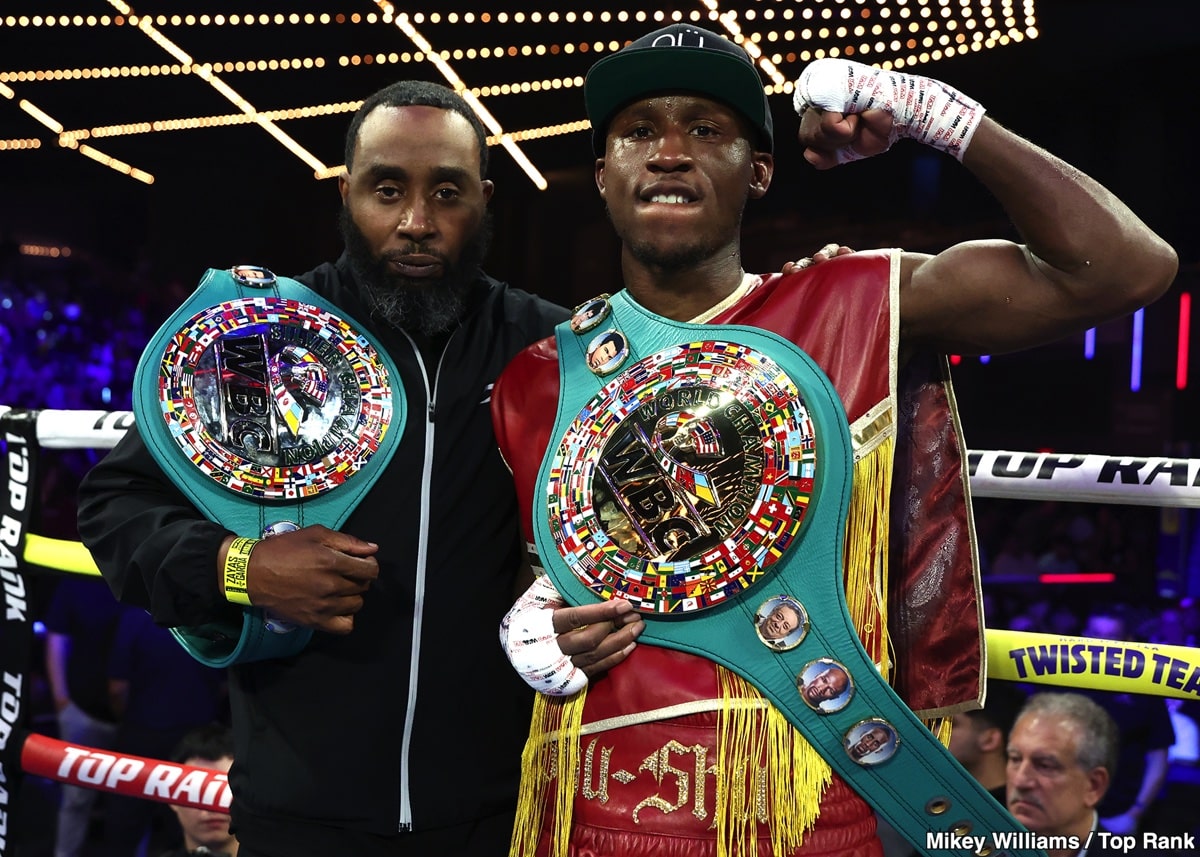
This is how you protect a warrior. That’s not how you build one. Winning a vacant title under these circumstances creates an odd outcome. Carrington may leave with a belt, but without the authority that usually comes with it. The doubt does not disappear. They simply change shape. Instead of asking if he’s ready, people will ask who he actually beat.
The frustration of fans is not about Castro being unworthy. It’s about the opportunity cost. Featherweight is full of fights that would have forced Carrington to show something concrete.
A fight with Nick Ball would have been ugly and demanding. Ball does not allow clean rounds or controlled pace. A fight with Rafael Espinoza would have tested Carrington’s ability to handle size and sustained pressure. Angelo Leo would have offered a sensible domestic comparison and a recent reference point for form.
Even a move to junior lightweight would have made more sense for someone talking about ambition. Emanuel Navarrete and Oscar Valdez represent real danger and real consequence. Those battles carry the risk of loss, but also the reward of clarity.
Instead, this title fight feels designed to end without upset. A long fight. A clean scorecard. A belt fastened without damage. It may be good business in the short term, but it does nothing for Carrington’s standing.
Titles still mean something. How they are won still matters. Carrington has ability. He moves well. He thinks in the ring. But at some point guidance turns to avoidance, and promise turns to delay.
If he wins this fight, he will be a champion on paper. The harder work will begin as soon as the final bell rings.

