


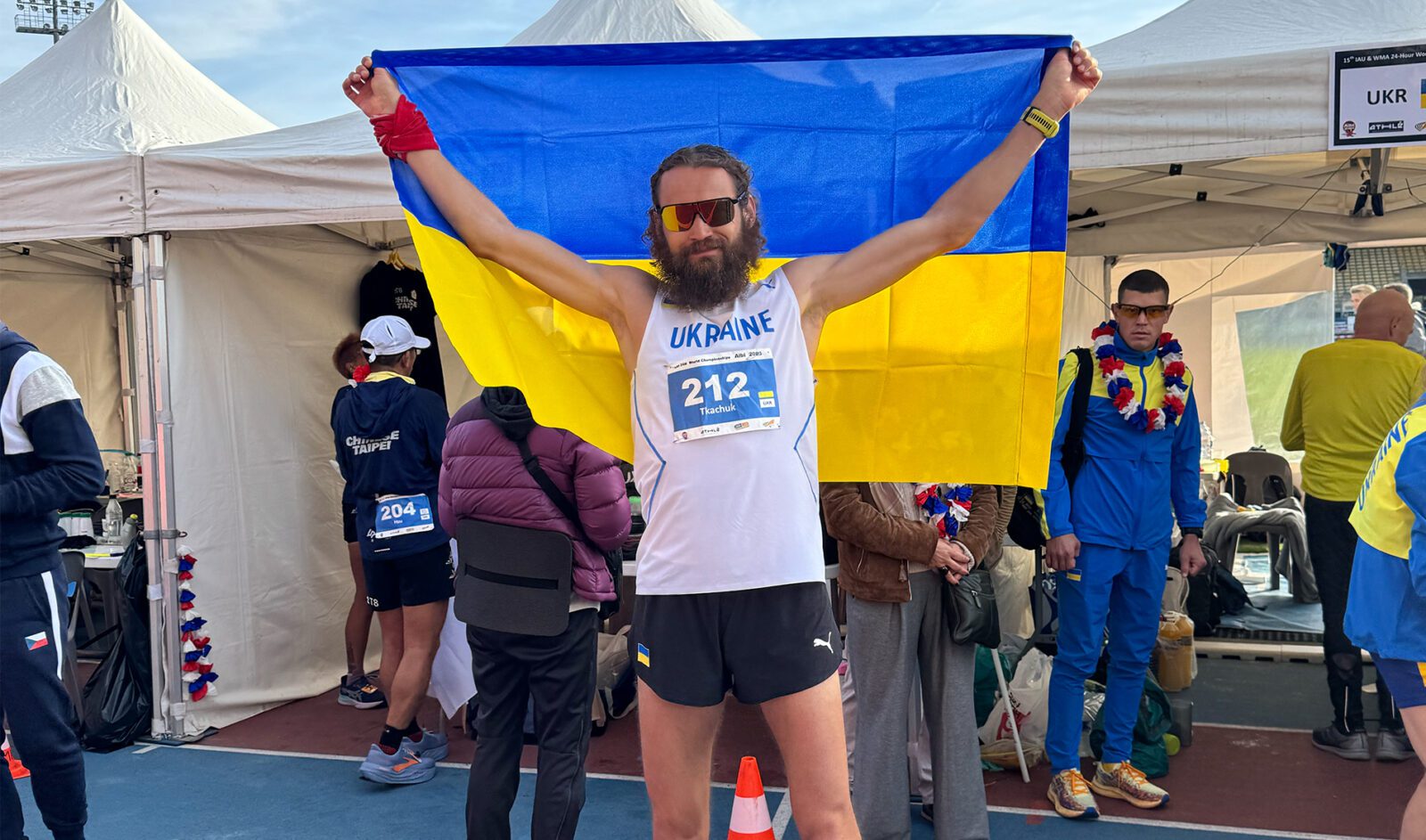
“This could be the last starting line of my life,” said the Ukrainian, who served his country in both extreme running and the war with Russia.
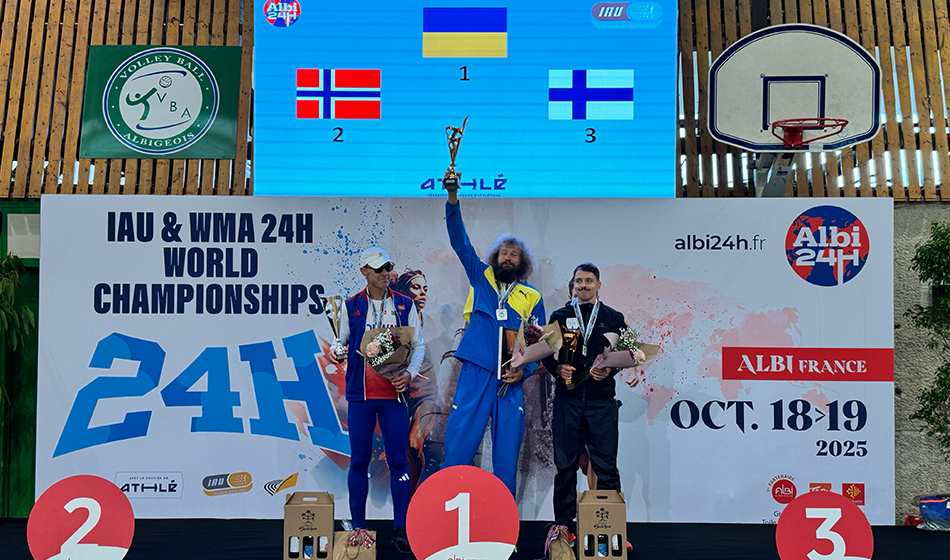
Andrei Tkachuk is no stranger to sacrifice. At the IAU 24-hour World Championships last month, he became the first Ukrainian to win a gold medal in the event’s 24-year history, running a total of 294,346 km (182.8 miles) in one day.
His victory was such that he finished nine kilometers ahead of Norway’s Jo Inge Norum, more than the difference between second and fifth place.
It was a moment that fulfilled an old dream. Since he started ultra running back in 2012; his first race was a 50km run through the Carpathian Mountains, Tkachuk envisioned himself hoisting his national flag above his head as world champion.
“I climbed the mountain,” he said in his first interview since taking the podium in Albi, France, on October 18. “I was able to achieve my dream, but the unfortunate reality is that life is still very difficult and difficult.”
Tkachuk refers to the ongoing war between Ukraine and Russia, a conflict he knows all too well, having spent 14 months of his life fighting for his country’s freedom.
Now that his ambition to become a world champion has been fulfilled, he is considering returning to the army and getting back into the heat of battle.
“This could be the last starting line of my life,” he tells AW, adding that a final decision will be made in the next two to three months.
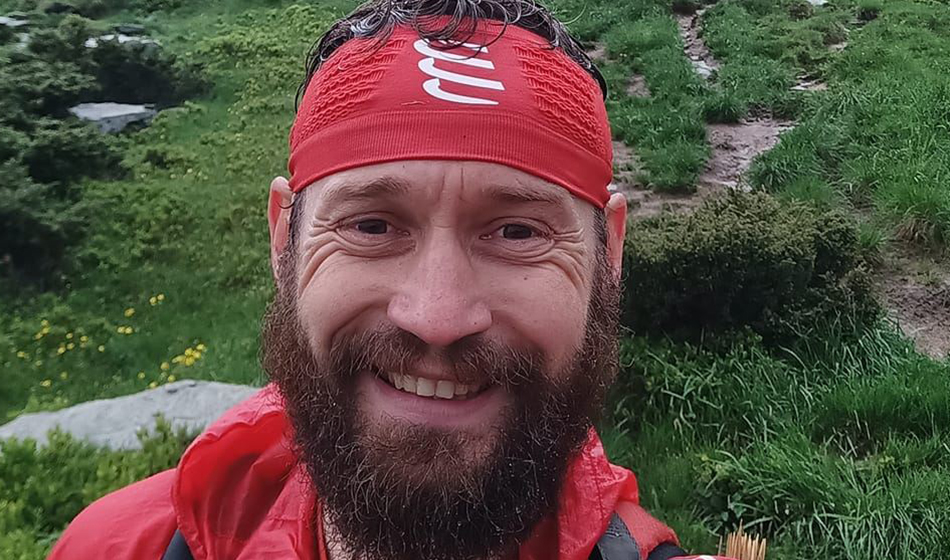
“Waiting at the border was more than 10 hours.”
Tkachuk’s preparation for this year’s IAU 24-hour World Championships has not been straightforward.
He was diagnosed with Achilles tendinitis in March and doctors told him he needed to do a range of exercises, such as swimming and cycling, to improve it. A run, however, was out of the cards.
With the October championships already on his mind, he ignored the advice and ran a total of 600km in May and then won the Ukrainian 100km Trail Championships a month later.
“When I ran in the mountains, my Achilles hurt less,” Tkachuk says.
However, his recovery was slowed when he struggled with the temperature during a 100-mile race in Ukraine in August. Victory might have been secured for three hours, but the recovery took longer than usual.
Tkachuk then decided to represent Ukraine at the World Mountain and Trail Championships in Canfran-Pyrénées, Spain in September. He finished 121st in the Long Trail category at a distance of 82 km.
Given that there are no commercial flights in or out of Ukraine due to the ongoing war, traveling to Europe is difficult. Tkachuk still lives in the one-story house that once belonged to his grandfather in Khust, a town north of Romania and east of the Hungarian border, and travels north to Poland to catch connecting flights.
Not only is it a six-hour drive to the border, but surprisingly, there are still long lines between Ukraine and Poland. “Waiting at the border was more than 10 hours when I was going to the championship,” he says.
After finally crossing the border, Tkachuk caught a flight from Poland to Toulouse and arrived in Albi just before the start of the championship. Still carrying the 20kg rucksack he packed in Khust, the Ukrainian was exhausted when he reached his accommodation, but the biggest race of his career awaited.

“I knew my competitors would eventually fail”
There were two predominant thoughts in Tkachuk’s mind when he crossed the starting line at the IAU 24-hour World Championships.
His first goal was not to stop to eat at all. “I pre-formulate my gels with a combination of maltodextrin and fructose,” he says. “I ate these while running, every half hour. Then, in between these liquid meals, I also had 200g of isotonic, cola and mineral water. I supported my friend Maria Moskalets in preparing all this.”
Tkachuk’s second goal was to survive until nightfall. He admits he first experienced a “crisis” after three hours due to the 25C hot conditions at Albi and had to make changes to his eating and drinking schedule as a result.
Starting at a pace of 4:27 per kilometer, which he says is slower than his usual training pace, Tkachuk’s aim was to reach the halfway point in one piece and then plow on.
“I didn’t pay attention to how fast I was in the first 12 hours because I knew my competitors would start at first but then slow down and eventually fail,” he tells AW.
A seven-time national 24-hour and 48-hour ultramarathon champion, Tkachuk had every right to be confident. This was only emphasized by the fact that his two main rivals, Belgian Mathieu Bon and Alexander Sorokin, did not compete.
“I realized the space was empty so I could take the title,” Tkachuk explains. Incredibly, the first toilet stop was 13 hours later, even after drinking 10 liters of fluids up to that point.
As the hours ticked by, it looked more likely that Tkachuk would secure the gold medal. Is his official distance at the end? A remarkable 294,346 km (182.8 miles).
To put that into perspective, that’s 4:54/km for the whole day. That’s the equivalent of running a 24:28 5km, 48:55 10km, 1:43:13 half marathon, or 3:26:26 marathon over 24 hours.
After collecting his achievement, Tkachuk made his way to the podium and sang the national anthem with the Ukrainian flag displayed overhead on the screen.
“I wanted to sing my anthem as a winner, not as a participant,” says Tkachuk.
“I felt like Rambo”
Tkachuk’s childhood was mostly spent reading adventure books even with poor eyesight. Although he only has two percent vision in his left eye, he was fascinated by the outdoors and new places.
Captain of the academic decathlon team, he was also fiercely competitive and was eventually signed up to ski by a neighbor.
However, the financial realities of the sport soon emerged. Tkachuk’s family was given no money, and he later worked a variety of jobs, including government and construction.
In 2016, Tkachuk, who by this time had already begun to make a name for himself in ultra running, was working in the police force and, with a deep understanding of the geopolitical climate in the region, knew that Russia was in the process of adding to its military forces.
It had only been two years since Russia invaded Crimea, and Tkachuk, eager to serve his country, had already offered to join the army. “They asked me to be taken as a soldier, but they refused because of my eyesight,” he says.
Six years later, he tried again. On February 24, 2022, Russia launched a large-scale invasion against Ukraine. Tkachuk knew he had to fight.
“It was an easy decision to sign up and fight for my country,” he says. “This wasn’t just about running, it’s about the existence of Ukraine, this was a bigger goal.”
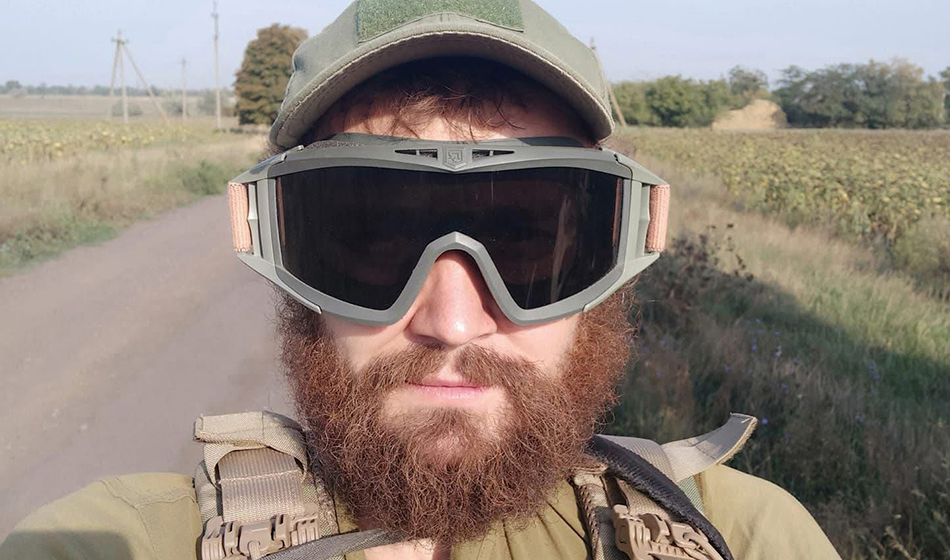
Just a week after Russian tanks rolled into Ukrainian territory, Tkachuk moved into Zaporozhye as part of the 128th Mountain Assault Brigade. The town, just east of the Dnieper River, was shelled and he ended up in a village called Mali Shcherbaki.
Filled with adrenaline and holding an anti-tank rifle, Tkachuk, along with a number of other Ukrainian soldiers, positioned himself at the edge of the village. They waited and waited for the advancing Russians.
“I felt like Rambo,” he jokes. “Thanks to my eyesight, I was very good at shooting the gun from the right side. The Russian army was so well armed, but we were fighting for our country.”

“It was almost impossible to hide from the Russians.”
Tkachuk witnessed many horrors on the front line, but the sound of Russian helicopters overhead still remains in his mind. One of the biggest problems he and his fellow soldiers had to face was the difficulty of finding cover, as most of the village’s infrastructure was already destroyed.
“There were no hills or mountains and it was plain,” he explains. “There were several trees that once protected the crops from the wind in the fields, they remained standing. It was almost impossible to hide from the Russians.”
For hours, Tkachuk and his brigade expected attacks, but they never came. Russian helicopters came and went. An eerie silence filled the air.
But then a Russian helicopter spotted the men and they were hit by “120mm guns” and “cluster bombs”.
Tkachuk, who was in the barn when this happened, was shot in the arm and hit by shrapnel in the arm. He was also concerned about his heart at this point, given that he had Wolff-Parkinson-White syndrome, a birth defect that causes a dangerously fast heartbeat.
“I’ve had the condition since I was 15,” she says, adding that she underwent five-hour surgery in April 2023 to help fix the problem. “Because of the stress during the war, I paid more attention to my heart problem. I actually felt like I might die because my heart stopped. My main concern was that if I die, I won’t be able to help other people.”
After the explosions ended, a car came to evacuate Tkachuk and the wounded in his brigade. However, there was not enough space for him, and priority was given to soldiers with leg wounds.
In sub-zero temperatures, Tkachuk and several others hiked through the night and eventually stopped in an open field to rest and await evacuation in the morning.
“We don’t want to just survive”
During the 14 months Tkachuk fought for Ukraine, he never lost hope of competing for his nation on the world stage again.
Such was his will to run for Ukraine that even during his military service, he woke up at 4 a.m. to increase his study load.
After successful surgery for Wolff-Parkinson-White syndrome, Tkachuk was even more motivated and quickly set his sights on the 2023 IAU 24-hour World Championships in Taiwan.
At this stage of the war, he had moved back to his home town of Khust to work in the army recruiting office, but was initially told by a supervisor that he could not travel.
However, after lobbying the government, the defense minister’s office allowed him to go to Taiwan and represent Ukraine. Tkachuk did not leave his country.
He finished third behind Sorokin and Greece’s Photios Zisimopoulos with a total of 284.540km, becoming the first Ukrainian to finish on the podium in the championships.
His gold medal will follow this year, and while he’s happy to inspire his fellow Ukrainians, he’s well aware that there’s a bigger problem at hand.
READ MORE. Sarah Webster set a 24-hour world record
“It’s an amazing feeling that I’m inspiring people not to give up, especially considering that it’s still really hard in Ukraine,” he says. “This is an existential question for our country, and we don’t just want to survive, this is about victory. So I thought about joining the army again. The war doesn’t seem to stop, and it’s a logical step for me to return to the front line.
“If I had a message for the people of Ukraine, it is that at some point all wars end. And at that point we can enjoy sports and normal life again.”

