


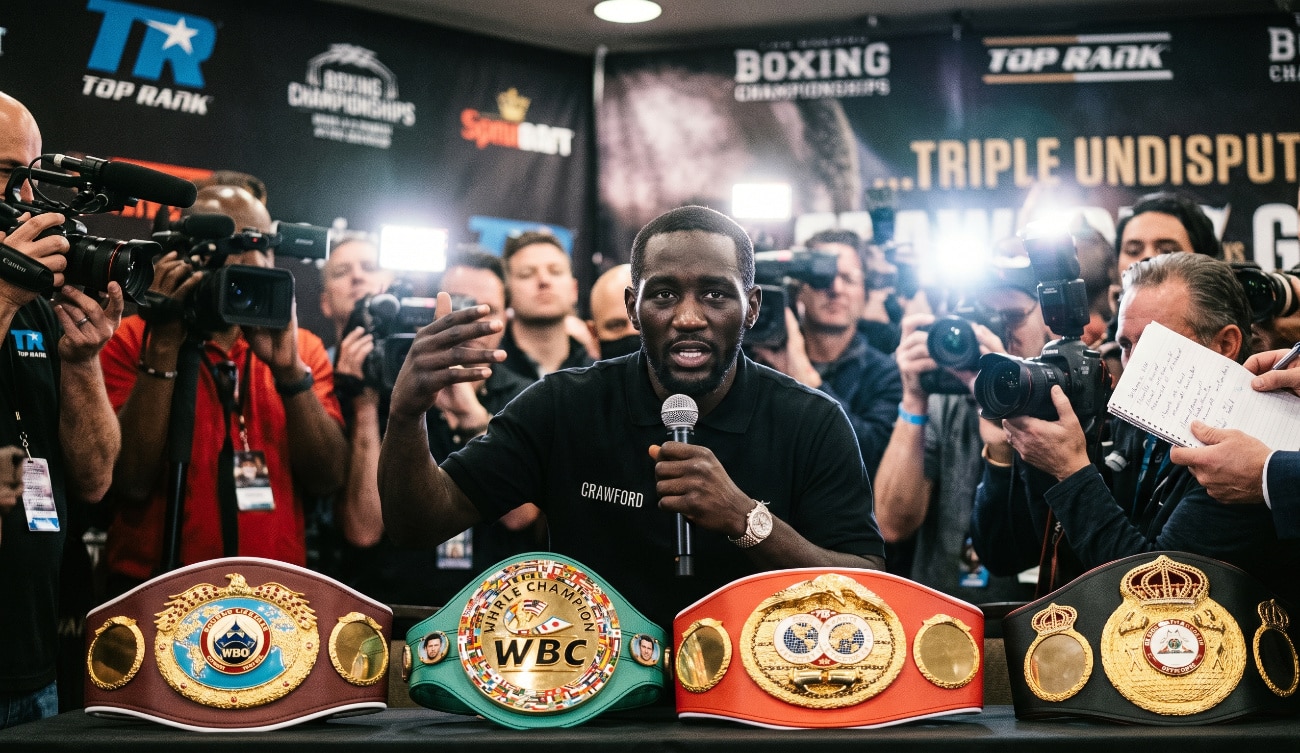


“What’s better than being Undisputed? Being Undisputed twice. What’s better than being Undisputed twice? Being Undisputed 3 times in three different weights. Now argue with your mom.”
Crawford clearly sees it differently. His argument is simple. To go unchallenged once is rare. Doing this twice puts a fighter in special company. Doing this three times over three divisions gives him a resume that doesn’t need much defense.
That was Crawford’s response to anyone who questioned the timing of his retirement.
Some fans believe that Crawford came out at the perfect time, before Ennis could become more in demand and before the top super middleweights started calling for him. Ennis is only part of it. Crawford’s retirement removed him from a lineup of contenders that would have forced those fights next.
While Crawford points to his three sets of belts as proof of greatness, a vocal segment of the boxing world sees those titles as shields rather than trophies.
The argument is that being indisputable today is as much about promotional maneuvering and sanctioning body politic as it is about being the best. To these fans, Crawford’s exit seems like a calculated retreat. By walking away now, he avoids a hungry Jaron “Boots” Ennis and a gauntlet of talented fighters 168 who have been ignored by Alvarez for years.
Crawford was allowed to fight for Canelo’s undisputed championship at 168 without facing any of the fighters at 168: Osleys Iglesias, Christian Mbilli, Lester Martinez, Diego Pacheco and Hamzah Sheeraz.
A large part of the fan frustration lies in the “skip the row” culture. Fans argue that superstars are allowed to move into title fights without facing the established contenders who have honed in on the mandatory positions. When Crawford beat Canelo, he took over the throne, but he didn’t necessarily clear the room.

