



An examination of recreational runners showed that NMN supplementation improved key measures of endurance over six weeks. The evidence is more nuanced than the endurance industry would have you believe, but more promising than most runners realize.
There is a certain type of supplement that should alert any serious runner. one that promises to transform performance without the inconvenience of getting the job done. NMN (nicotinamide mononucleotide) has attracted more than its share of such coverage, especially within longevity, where enthusiasm often tends to outstrip evidence.
But a randomized, double-blind, placebo-controlled trial was published in 2013 Journal of the International Society of Sports Nutrition found measurable aerobic improvements in recreational runners taking NMN alongside regular exercise. For Matt Stuckey, an amateur ultra runner who took NMN for two years and went on to found British supplement company Longevity Formulas, the study confirmed something he had already observed in his training.
“I started taking it for recovery, not performance,” he says. “Claims about aerobics always seemed harder to do. But the Guangzhou study changed the way I thought about it, and it also changed what I was seeing in my own numbers.”
Who was studied and how?
The trial, conducted by researchers at Guangzhou Sports University, recruited 48 amateur Guangzhou Pearl River runners aged 27 to 50 who had one to five years of regular training.
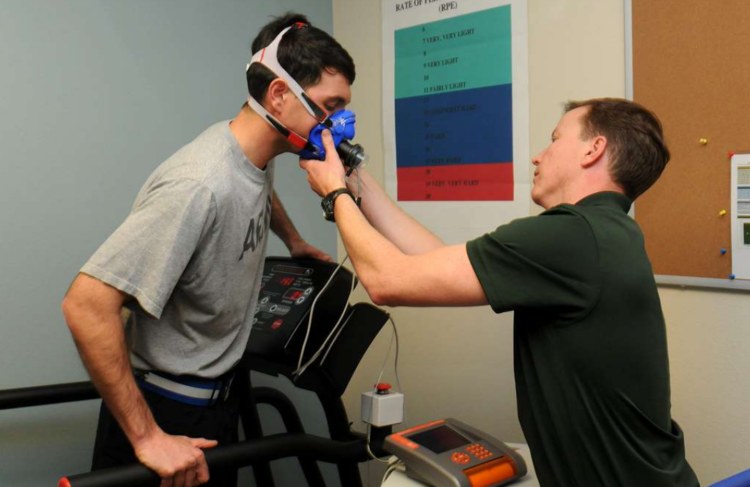
Participants were divided into four groups, a placebo group and three NMN groups, taking 300 mg, 600 mg or 1200 mg daily for six weeks. All trained five to six times a week, mixing 40 to 60 minutes of running and cycling sessions. Cardiovascular exercise testing, the gold standard measure of aerobic capacity, assessed each runner before and after the intervention.
What did the data show?
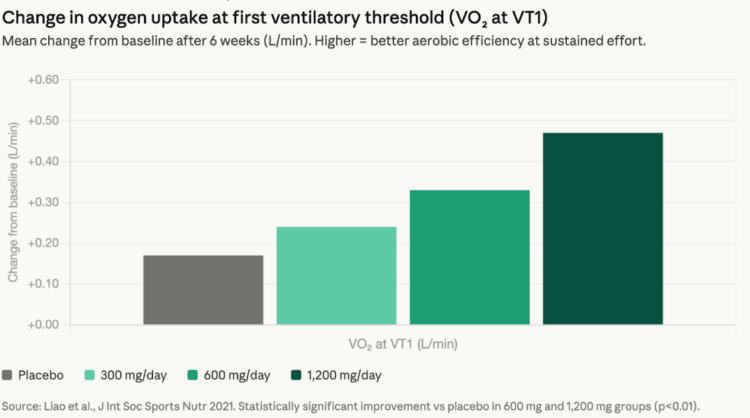
The headline finding was the improvement in ventilatory threshold in the mid- and high-dose groups. Specifically, VO2 at first ventilatory threshold (VT1) and power at second ventilatory threshold (VT2) were both significantly increased compared to placebo in runners receiving either 600 mg or 1200 mg daily. The effect was dose-dependent, with the 1200 mg group showing the greatest gains.
Threshold ventilation is the point at which breathing moves from controlled to labored, the point at which sustained effort becomes difficult. Raising that threshold means the runner can hold a stronger pace before making that transition. For an amateur racing longer distances, it’s the difference between cruising through the second half of a race at a target pace and falling behind when it matters most.
VO2 max, a measure of the ceiling for how much oxygen the body can use at maximal effort, did not change in either group. Not O2-pulse, peak power, not body composition. The researchers concluded that the improvement appeared to come from enhanced oxygen utilization in skeletal muscle rather than any change in cardiovascular output. NMN does not expand the engine. It makes the fuel burn more efficiently.
Why is mechanism important?
NMN works by increasing levels of NAD+, a coenzyme central to cellular energy production that declines with age. That decline gradually impairs mitochondrial function and weakens the body’s ability to respond to exercise. Stuckey’s Company Longevity formulas produces it NMN supplements specifically formulated to address that decline.
What the Guangzhou study adds is evidence that in actively exercising runners, NMN may specifically enhance exercise-induced muscle adaptations by improving how efficiently working muscles use the oxygen they receive, rather than increasing how much the heart and lungs can deliver.
The implications go beyond race performance. VO2 max is the strongest predictor of long-term health and all-cause mortality that we can reliably measure. Anything that helps runners maintain and develop aerobic capacity over time has a durability argument alongside a competitive one, which is why NMN has generated serious scientific interest outside of sports.
Warnings worth noting
The Guangzhou study is a single trial with 48 participants. That’s no reason to reject it, the design is rigorous and the controls are adequate, but it’s a reason to draw the conclusions proportionately. Participants were tested on a cycle ergometer rather than a treadmill, which the researchers say is a limitation for runners in particular. The trial lasted six weeks, so what will happen over longer periods remains an open question.
Stuckey is straightforward about limitations. “It’s a single study with a modest sample. You cannot overestimate it. But the design is solid and the effect plausible given what we understand of how NMN works, so it’s worth taking seriously rather than dismissing it because it doesn’t fit the description of a typical supplement.”
Dose detection is also of practical importance. The low-dose group, taking 300 mg daily, did not show a statistically significant aerobic improvement over placebo. Significant results were at 600 mg and above. For runners who consider NMN primarily based on price, getting an underdosed product means not replicating the conditions that produced the results.
What the data show is improved performance at intensities below the VO2 max ceiling, particularly in zones 2 and 3, where most amateur training actually occurs and where the reported improvements in ventilatory threshold are most relevant.
What does it feel like in practice?
Stuckey noticed a difference in about three to four weeks, about halfway through the duration of the study, and the change wasn’t where she expected.
“It wasn’t on a long run. This occurred on back-to-back training days, keeping a slightly higher pace for the same effort. Tempo sessions began to feel a little less breathless at the intensity that would previously have allowed me to work noticeably. Nothing dramatic, but consistent enough that I continued to pay attention.”
He tracks HRV with an Amazfit T-Rex 3 watch, using it as his main indicator of whether a training block has actually landed or if fatigue is building up without adaptation. “When I take NMN consistently, my HRV goes up 10 to 15 percent more than when I don’t. It’s not controlled evidence, I know that, but it’s consistent with what the study describes. better cellular energy production and more efficient response to exercise stimulation”.
Stuckey is careful not to overstate the impact. “It’s not a step change in form. What I hear from runners who use it, especially those in their 40s and 50s, is that they can get through tougher weeks without the deep fatigue that would normally hold them back. That’s what the study describes. not a higher ceiling, but a better ability to work closer.
Where to start if you want to try?
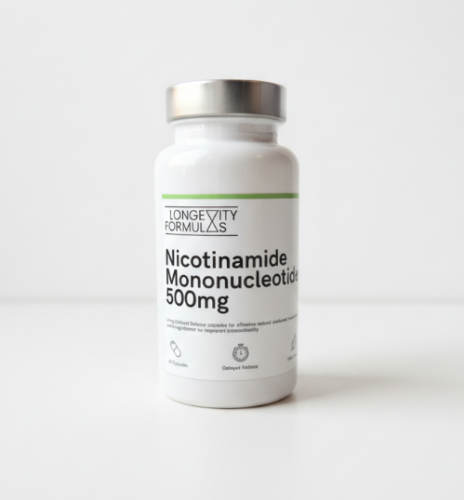
The dose-response findings of the study are worth considering when choosing a product. The results were significant at doses of 600 mg and higher, and how well NMN survives the digestive process affects how much of that dose actually reaches the bloodstream. Longevity formulas NMN supplements uses delayed-release capsules and comes in 500 mg doses with locally published certificates of analysis. Two capsules give you 1000 mg, which is in the most effective range.
The study is early and the sample size is modest. But for runners who train seriously and want their recovery to match their ambitions, the evidence is now meaningful enough to pay attention.
Study link: Liao B, Zhao Y, Wang D, Zhang X, Hao X, Hu M. Nicotinamide mononucleotide supplementation increases aerobic capacity in amateur runners. a randomized, double-blind study. J Int Soc Sports Nutr. 2021; 18:54. doi:10.1186/s12970-021-00442-4

