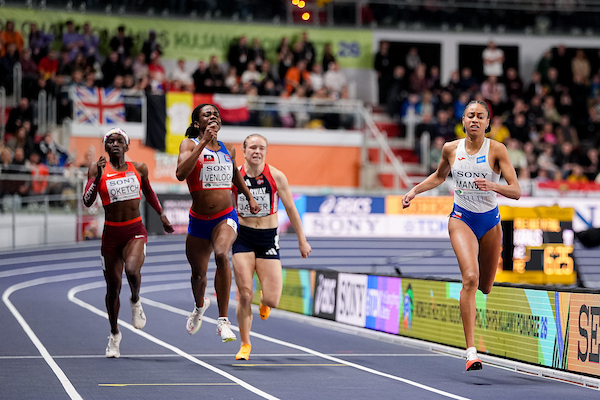
Thoughts on the 400s
Our sport is arguably the purest and easiest to understand. You have a race and whoever finishes first, throws the farthest and jumps the highest wins. Of course, tactics as well as ability contribute to the outcome, but overall the best athlete wins. This is less true on a closed track, with tighter turns, with the outer lane generally favored over the inner lane. The powers that be make adjustments and experiment to make the event more interesting for spectators or fairer for the athletes.
The 200m was removed from the major championships program because it was considered inherently unfair due to the advantage of the inside lane over the outside lane. On the track, 400 meters are run in lanes. Indoors, it starts in the zones where the athletes break and run the second (200m) lap as a free-for-all.
It The 400s were handled differently at the World Indoors in Torun, aiming to make it as fair as possible. we will return to that question. The first thing is that the format was not easy to understand. Taking the women’s 400 as an example, in the first round, 30 athletes were split between 7 heats, four or five in each. The top 2 in each season qualified for the semi-finals, along with the two fastest athletes who finished outside the top 2. (The reason for this format was that lane 1 and lane 2 athletes were at a disadvantage with the narrow bends. However, in both seasons with 5 athletes, the athlete had to run in zone 2.
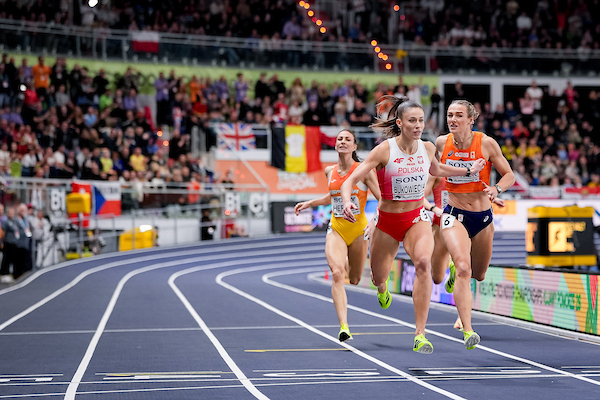
There were 4 semi-finals, each with four athletes. The four winners, along with the next 4 fastest athletes from the four semi-finals, advance to the semi-finals. Yes, the two finals are called Co-Finals with places decided in due course. The first final is played and the top three are sitting waiting for the second final.
Lourdes Gloria Manuel was the fastest in the first round with 51.08, the “slowest” qualifying result was 52.30. In the semifinals, Henrietta Yager was fastest in 50.95 and Manuel was second in 50.96. In fact, the four semi-final winners were the four fastest in the semi-final. The fastest overall in both finals was Manuel (50.76), who won the second co-final. Natalya Bukovetska, the winner of the first semi-final, took second place with 50.83 results.
Overall, it can be said that Manuel was the dominant athlete and deserved to win, but the excitement of the final was lost when the spectators and athletes were not sure if the victory in the co-final was enough.
“I won the first race, I set a national record, but at that moment I didn’t know if I should be happy or not, I should wait for the second race. If the six of us had run together, I could believe that the gold would have turned out differently.
Bukovecka lost the time trial, but thought that if he was in the same race as Manuel, he could have won. The crowd was denied a “race”.