

Updated on March 11, 2026. We were asked about a proper warm up for sprinters and we pulled this from our archives. We also recommend that coaches attend their state and regional coaching clinics to educate themselves on proper warm-ups and cool-downs.

Warm-up and cool-down for sprints
By Roy Stevenson
The warm-up prepares the sprinter’s muscles by increasing their muscle contraction force and speeding up their muscle contraction rate, giving them more power and speed in a sprint. Warming up also helps nervous young athletes stabilize their adrenaline rush before competition, helping them better control their nervousness before the event. Here’s how sprinters should warm up for races and training.
Phase one. Start your sprint warm-up with 10-15 minutes of jogging to get your body temperature up, slow and easy.
Second stage. This should follow immediately after the second phase and consists of 10-15 minutes of dynamic stretching exercises to reduce muscle stiffness. Dynamic (ballistic) stretches work best through a wide range of motion, as they are closer to the athlete’s actual movements in competition; and research shows that static stretching exercises do not mimic the movement of fast running and can actually lead to decreased leg strength.
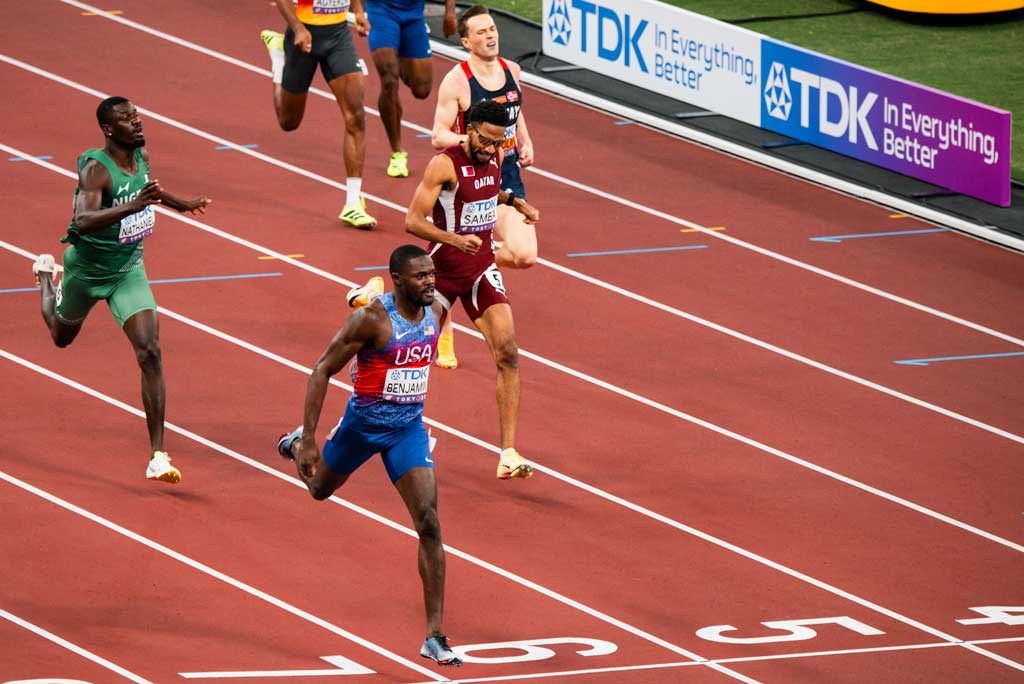
The third stage. The sprinter goes through 10-15 minutes of general and event-specific exercises. These specific exercises are the finishing touches to the warm-up and prepare the athlete for sprint training. Exercise usually involves leg speed exercises, and this is where race and pre-workout warm-ups differ.
A few (3-6) easy sprints over 50 meters (but no longer than this) are needed to warm up before the race. Follow these accelerations with a few practice starts. This phase should be completed 5 minutes before the start of the race and until then the runner should only do a walk/jog to warm up. The pre-competition warm-up must be controlled so that it does not deplete the sprinter’s high-energy phosphates ATP and PC.
When warming up for exercise, a runner can prepare more rigorously. A typical sprint warm-up includes 5-10 x 50 meters or 5-10 x 100 meter “acceleration step transitions” where the sprinter focuses on proper running technique and staying calm while maintaining quick foot turnover. These should be done with rolling starts, where the sprinter gradually increases his pace after running slowly for the first 10 meters. Each step should be slightly faster than the previous one, and the last step should be at about 95% of maximum speed. If your sprinters complain that these accelerations tire them out for the main workout, adjust the reps down.
After these quick steps, many coaches give their runners a series of general drills. With these exercises, the coach is limited only by his imagination and the many volumes of books on the subject. Here are some examples: sidesteps or jogs (aka carioca), running backwards, quick leg turns with stairs and other ladder exercises, cone running for agility, short exercises for high knee raises (walking or running), heel exercises, forward jumps, lateral lunges, calf walks, jumping jacks, 20 meter jumps, running plyometrics, calisthenics such as squats thrusts, short uphill sprints, downhill sprints, etc. – you get the idea.
There are entire books devoted to these exercises. You don’t have to do all of these exercises in every warm-up, in fact it would be impossible. So just choose a few different exercises for each warm-up to keep it varied, interesting and fun. The number of repetitions for each of these exercises will vary depending on the length and difficulty of each exercise. In general, you should expect your sprinters to complete each exercise 5-10 times before moving on to the next. A sprinter’s warm-up drill should last 10-15 minutes and longer at the beginning of the season.
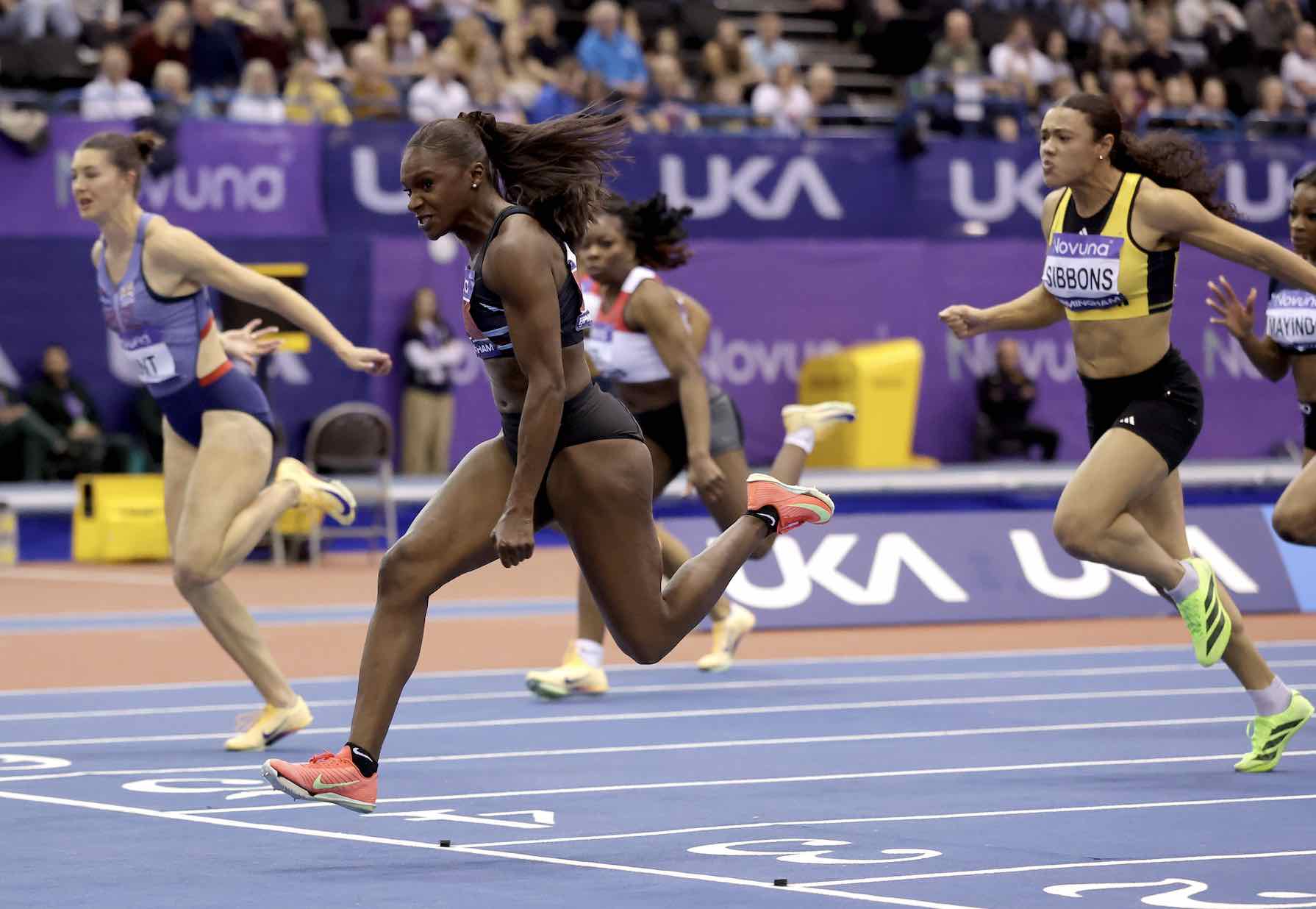
Use one of your more skilled sprinters to demonstrate each exercise to the rest of the sprinters before they attempt them. After practice sessions, a sprinter can move on to practice starts with a long recovery between each and the main workout.
Final notes on warm-up.
If the temperature is very cold, passive rewarming, where external heating agents such as hot tubs, hot water bottles, and hot showers are applied, can be very effective before going outside for active rewarming.
That’s enough
Cooling down is an often overlooked part of training and is just as important as warming up. It consists of reduced heating. i.e. Easy 5-10 minutes of jogging followed by static stretching.