

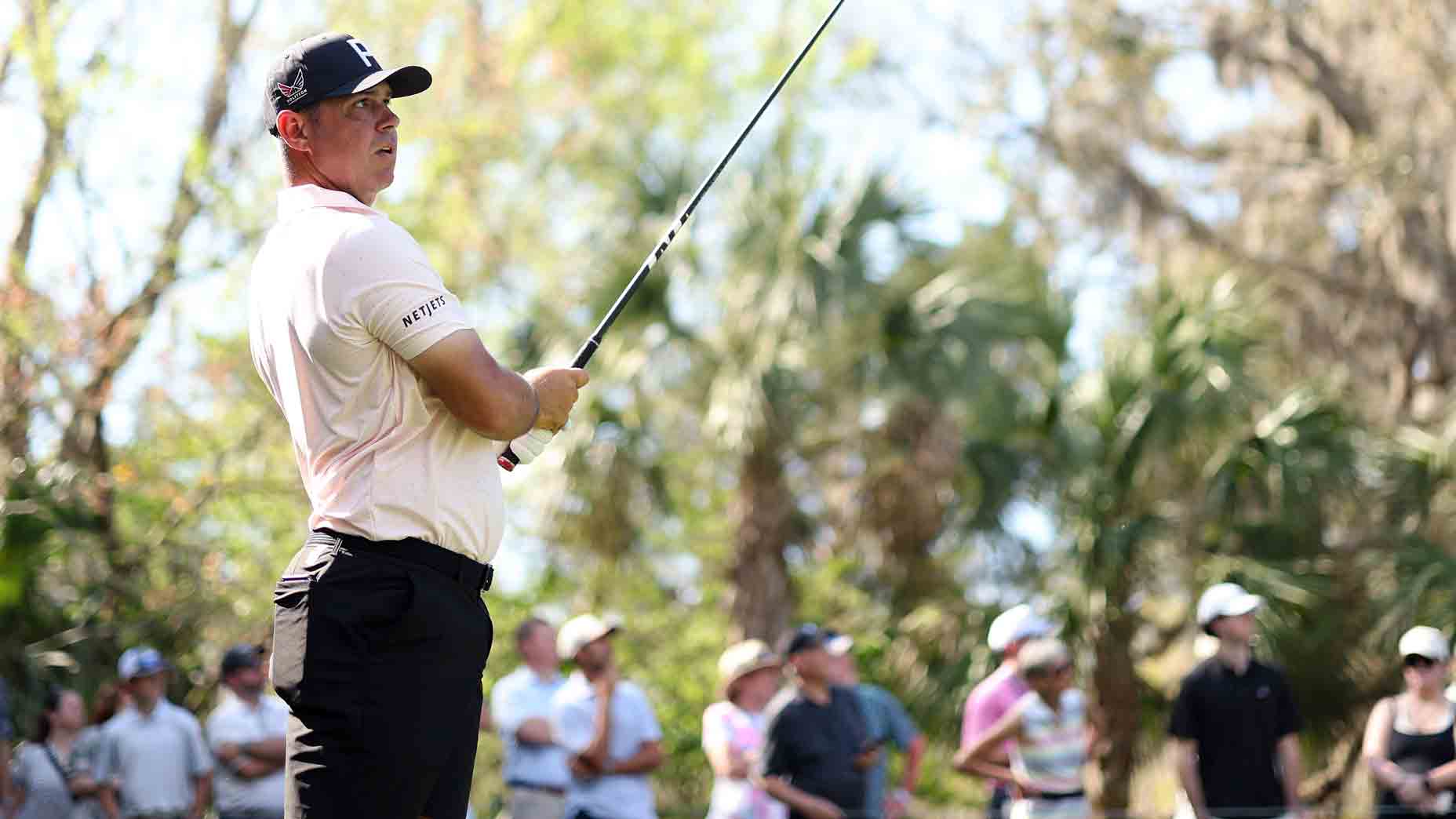
Gary Woodland says he has been diagnosed with PTSD after a brain procedure in 2023 and that doctors have told him that “in an ideal world”, the 2019 US Open winner probably shouldn’t play.
The revelations came in an emotional interview with Golf Channel’s Rex Hoggard, which was published on Monday, three days before the start of the Players Championshipwhere Woodland is slated to make his sixth start of the season. It will also mark a year, he said, since he was diagnosed with post-traumatic stress disorder an operation that removed part of an attached lesion in his brain that had been leading to seizures and fearful thoughts.
In the interview with Hoggard, which you can watch in full hereWoodland said he continued to struggle with symptoms created by the lesion, however, and that he chose to come out now because he didn’t want to “waste any more energy hiding this.”
“I’ve been blessed with a lot of support here,” said the 41-year-old from Kansas. “The tour and everyone has been just amazing. Every week I go out and everyone is so excited and happy to be back. And I hear that every week — ‘It’s great to see you after this, it’s great to see you 100 percent.’
“And I appreciate that love and support, but inside I feel like I’m dying and I feel like I’m living a lie and I don’t want to spend any more energy on this. I want to focus my energy on me and my recovery, my dreams out here, my family. I don’t want to spend energy hiding this.”
Below are three more takeaways from the interview:
Gary Woodland’s moment in Napa
Asked how his fear manifested itself on the course, Woodland described a moment from last year Procore Championshipwhich was doubling as a Ryder Cup tune-up for the US team. Woodland, an American vice-captain, was playing in the event and on the second day, he said he was “surprised” by his group’s top scorer.
“I pulled Butchie, my caddy (Brennan Little), said. “Butch, these things are hitting me, man. You can’t let anybody go after me,” Woodland said in the interview. “And the next thing you know, I couldn’t remember what I was doing. My vision started to blur. And the hole later, I said, ‘Butch, I can’t take it,’ and I started screaming in the middle of the fairway. It was my turn to hit, I couldn’t hit, and Butch said, ‘GW, let’s go in.’ I said, ‘No, man, I’m here for these guys, I can’t leave them here with two of them. i don’t want I want to fight. I want to get over this.’
“He gave me sunglasses to hide it. I went to every bathroom to cry the rest of the day. When I was done, I got in my car and got out of there. I just can’t hide it anymore. Days when it’s hard, I’m crying in the recording trailer, I’m running to my car when I’m done just to hide it, just because I don’t want to live anymore. I’m feeling something, I want to let it out, I want to let it go, because I’m getting better.”
Since that event, Woodland said he has spoken with the PGA Tour and that protocols have been put in place where he said he feels safe. Woodland also said the Ryder Cup, played two weeks after Procore, “was probably the most confident I’ve felt this whole trip because I was with the guys and I didn’t have to hide it.”
“They’ve helped me,” Woodland said, “more than I can say.”
Gary Woodland’s speech at the WM Phoenix Open
The Players Championship 2026: TV schedule, broadcast information, how to watch, match times
Kevin Cunningham
Hoggard asked Woodland if he believed he could “work through” his situation — and Woodland said no. He then described a moment last month in the WC Phoenix Openwhere he was paired with a security officer who told him on the last day of the tour that he was a military veteran who himself had battled PTSD.
“And he said that being with me that week brought back a lot of memories for himself and he could see my brain analyzing, looking for threats all the time while I was playing,” Woodland said in the interview.
“And I wasn’t aware of that.”
The security officer, Woodland said, then asked if he could offer any advice.
“I said please, please,” Woodland said. “And he told me a few things. He said this is going to take time. And he said, take each day for what it’s worth. He said if you have a good day, it doesn’t mean you’re done. And if you have a bad day, it doesn’t mean you’re stuck in this forever. But put your head on the pillow every night and be proud that you made it.
“And then the second thing is, he said I don’t care how strong you think you are, you can’t do this on your own. And I needed to hear that because there have been times when I’ve put together days where I’ve thought I’ve gotten through this, and there’s been days where I’ve had bad days in a row, and I’ve thought I’m never going to get out.”
‘I will play’
Woodland said in the interview that doctors have told him that “in an ideal world,” he probably isn’t playing and that he probably isn’t “in a stressful, overstimulating environment.” To this, however, he said he says this:
“My answer was, in an ideal world, I don’t have that. This is my dream and this is what I’m going to do, and no matter how hard it is, I’m going to play.”
Woodland also said there was a reason behind doing the interview.
He said he hoped it would help him.
“I want to live my dreams and I want to be successful here, but I also want to help people, but I understand that now I have to help myself first.”
Editor’s Note: To view the full Golf Channel interview with Woodland, please click here.

