


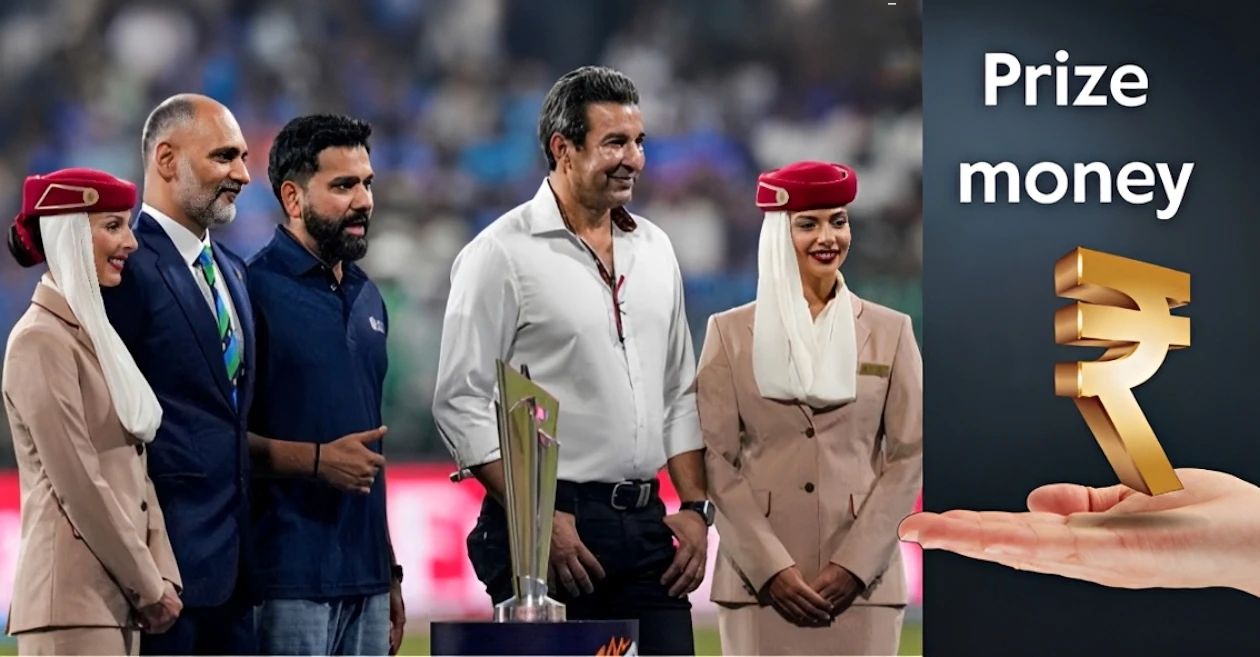

as India and New Zealand prepare to meet ICC Men’s T20 World Cup 2026 Final There is more to the Narendra Modi Stadium in Ahmedabad than just the trophy.
The International Cricket Council (ICC) has announced a huge prize pool for this year’s tournament, making it the most lucrative edition in the history of the T20 World Cup. The total prize money is $13.5 million (approximately ₹120 crore) reflecting the growing global popularity and commercial success of T20 cricket. The champions will earn a staggering $3 million (approximately ₹27.5 million), the highest prize ever awarded in the tournament.
The record prize fund underlines the growing popularity of T20 cricket
This year’s prize pool has increased by 20 percent compared to the 2024 edition, when total prize money was $11.25 million. When India lifted the trophy in 2024, they received $2.45 million for the victory. That means the winners of the 2026 tournament will earn about $550,000 more than previous champions.
The increase reflects the growing commercial appeal of T20 cricket. With record broadcasting deals, strong sponsorship partnerships and a massive global following, the game’s shortest format continues to expand its financial reach. Co-hosted by India and Sri Lanka, the tournament has attracted massive audiences both in stadiums and online, adding to its value.
Therefore, the stakes in the final are high. The title-winning team will walk away with $3 million, while the runners-up will still get $1.6 million (approximately ₹14.6 million). The difference between winning and finishing second is $1.4 million, which highlights how important the final match is not only for prestige, but also financially.
The teams that advance to the semi-finals already have a healthy prize money. The four semi-finalists each receive $790,000 (approximately ₹7.2 million) for reaching the final four of the competition.
Meanwhile, the fifth- and twelfth-placed teams that advanced to the Super Eights but failed to make it to the semi-finals were each awarded US$380,000 (approximately ₹3.48 million). This group includes several well-known teams like Pakistan, Sri Lanka and West Indies.
Pakistan’s profit from the tournament is a good example of how the prize structure works. Despite being eliminated at the Super Eight stage, they still managed to earn more than $500,000 (approximately ₹4.6 million). Their total includes the main prize for advancing to the second round and additional bonuses from victories won at the beginning of the tournament.
Also READ: IND vs NZ – Michael Clarke predicts Player of the Match in T20 World Cup 2026 final
Financial prizes for each participating team
One notable feature of the prize distribution is that all 20 teams participating in the tournament receive financial prizes, ensuring that even teams that are eliminated early still benefit from the competition’s commercial success.
Teams finishing 13th to 20th in the group stage receive US$250,000 (approximately ₹2.29 million) each. This category includes some surprising early performances, including Australia’s failure to get beyond the opening round.
In addition to the main prize money, the ICC also introduced performance-based bonuses for match wins in the group and Super Eight stages. Each win in these rounds earns the teams an additional $31,154 (approx. Rs. 28 lakh). This system ensures that even teams with little chance of making the playoffs remain motivated to compete in every match.
For example, the United Arab Emirates (UAE), who finished fourth in their group, earned a base payment in addition to a bonus for their win against Canada, bringing their total tournament earnings to $140,000.
An increase in prize money is also important for the development of global cricket. For associate nations and smaller cricket boards, these earnings provide valuable financial support that can be invested in infrastructure, local programs and player development.
The increase in prize money is mainly due to the huge popularity of the tournament. According to ICC data, the 2026 T20 World Cup has already crossed 10 billion video views across digital and social media platforms and is expected to surpass the record engagement levels set during its 2024 edition.
| Circle reached | Prize money |
|---|---|
| Winner | $3 million (approximately ₹27.48 million) |
| Second | $1.6 million (approximately ₹14.65 million) |
| Semi-finals (losing teams) | $790,000 (approximately ₹7.24 million) each. |
| Super 8 (eliminated teams) | $380,000 (approx. ₹3.48 crore) each. |
| Group stage (eliminated teams) | $250,000 (approximately ₹2.29 million) each. |
Several matches have attracted extraordinary interest from fans. India’s Super Eight clash against West Indies generated more than 500 million digital viewers, with even unofficial matches attracting strong audiences in stadiums.
All this sets the stage for a dramatic finale in Ahmedabad. as India and New Zealand take the fieldthe prize in question is not only the T20 World Cup trophy but also a $3 million salary and a place in cricket history.
Also READ: Ravichandran Ashwin picks to start for India in T20 World Cup 2026 final against New Zealand

