


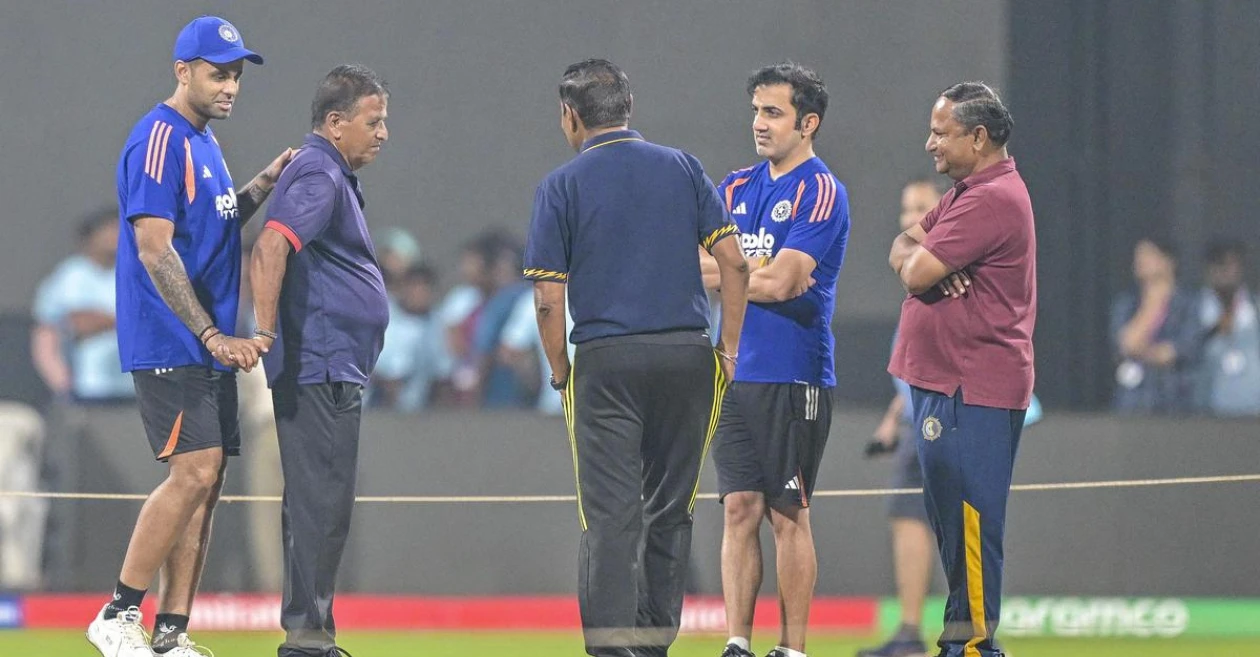

All eyes will be on Mumbai as champions India prepare to pick up England in the second semi-final ICC Men’s T20 World Cup 2026 Thursday, March 5 at the famous Wankhede Stadium. With a place in the final at Ahmedabad’s Narendra Modi Stadium eagerly awaited, the stakes couldn’t be higher. Naturally, most of the focus was on the pitch – a crucial 22-yard strip that could shape the outcome of this blockbuster knockout encounter between two cricketing powerhouses.
Wankhede raising eyebrows
There is already a sense of curiosity surrounding the Wankhede surface. During India’s fielding session under floodlights on Tuesday evening, the pitch remained under cover and players and observers speculated on what conditions might play out on the day of the match. According to reports, the strip currently looks greener than what is usually seen at the Wankhede – even by first-class standards, T20 Internationals.
The unusual grass cover is mainly due to the rise in temperature that Mumbai has been experiencing for the past few weeks. Underground workers deliberately kept more grass to prevent the surface from drying out or rotting too quickly. The big question now is how much grass will be cut before the game starts on Thursday.
Interestingly, while being the head coach of India Gautam Gambhir took a brief look at the pitch before being covered, none of the Indian players checked him closely. This may indicate that the team is happy to assess match day conditions, perhaps learning from the two matches already played on this surface earlier in the tournament.
This red dirt wicket previously hosted England’s clash against West Indies on February 11 and Nepal’s match against Italy the following day. In both cases, the pitch provided some help to the spinners, especially as the games progressed and the surface started to slow down a bit.
What does the Wankhede surface usually offer?
Historically, the Wankhede Stadium has been synonymous with thrilling T20 contests. Its proximity to the Arabian Sea means that sea breezes often become a factor in both swing and dew conditions during evening matches.
The pitch usually offers a balanced contest between bat and ball. Once the batsmen settle in, they enjoy real bounce and pace that allows them to play their shots freely. The relatively short square boundaries (about 62 and 64 metres) also encourage aggressive stroke play and make high-scoring matches quite common.
Fast bowlers often get help early, especially with a new ball that can travel both in the air and off the surface. As the match progresses, the spinners come into the picture during the middle overs, with the pitch offering some grip and turn at times.
The stats also reflect the reputation of the Wankhede as a batting venue. Here, the total number of first shots on average is about 197. Interestingly, the chasing teams have had slightly more success, winning five of the nine T20 Internationals played at the venue – suggesting that bowling first may offer a slight tactical advantage.
India have the highest record at Wankhede
The Indian team has enjoyed considerable success at the Wankhede over the years. In the seven T20Is played at the venue, the hosts have registered five wins and just two losses.
One of the most memorable matches here came on February 2, 2025 when India posted a massive 247 for 9 against England. That match witnessed a breathtaking knock by Abhishek Sharma, who scored 135 runs off just 54 balls – the highest individual score ever recorded at the ground.
England, in reply, crumbled under pressure and were bowled out for just 97, posting their lowest ever T20I innings at the Wankhede. Mohammad Shami bowled, picking up 3 wickets for 25 runs as India cruised to a crushing victory by 150 runs. Notably, the fast bowlers claimed 12 of the 19 wickets that fell in that match, highlighting the early help available to the pacers in this venue.
Among Indian players Virat Kohli He holds the record for most runs at the Wankhede in T20Is, scoring 197 runs in just three matches. Meanwhile, Shami tops the wicket charts with five scalps from two outings.
As India and England prepare for yet another high-voltage encounter at this historic venue, the pitch and how it performs under pressure could be crucial in determining who advances to the finals of the T20 World Cup 2026.

