


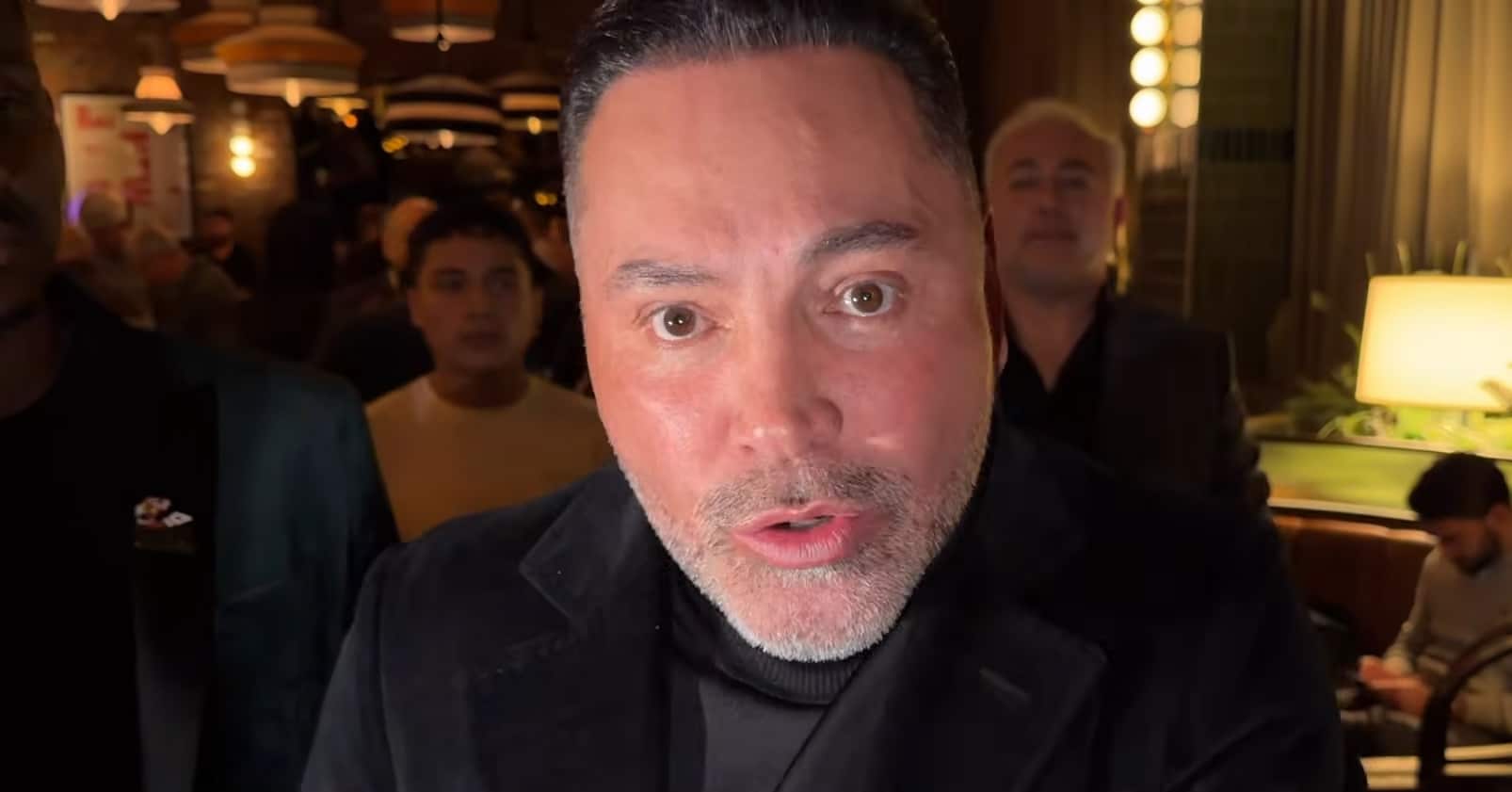


Speaking in Las Vegas during fight week, De La Hoya did not soften his views when asked about Stevenson’s decision.
“Shame on him. Shame on him,” De La Hoya told Fight Hub TV. “Because he knows that as a child all he dreamed about was fighting for the green belt.”
Stevenson’s position has drawn attention because sanction fees are a standard requirement in title fights, with champions expected to pay a percentage of their purse to the governing body. Some fighters have questioned the system in recent years, especially as purses have gotten bigger, but De La Hoya has made it clear that he believes the obligation remains part of being champion.
“It’s not about just paying sanction fees,” said De La Hoya. “You’re going to pay for the kids’ medical. You’re going to pay for the doctors out there who are going to take care of you. You’re going to pay for all these programs that continue to help the sport.”
De La Hoya’s response reflects his own experience chasing and defending world titles during his career, when the WBC belt held deep meaning for fighters trying to establish themselves. He described the belt as something fighters want long before they reach the championship level.
Once a fighter reaches that point, he said, the responsibilities associated with the title should not be optional.
“If you don’t want to pay the sanction fee, shame on you,” De La Hoya said.
Sanctioning bodies usually charge a percentage of a fighter’s purse in title fights. In return, they provide ranking structure, mandatory enforcement of challengers and the authority to order wallets if negotiations get stuck.
Stevenson built his reputation as one of boxing’s most accomplished champions, but his decisions outside the ring sometimes drew criticism from promoters and observers. De La Hoya’s comments show that, in his view, the role of champion includes honoring the structure that gives the title its value in the first place.


