


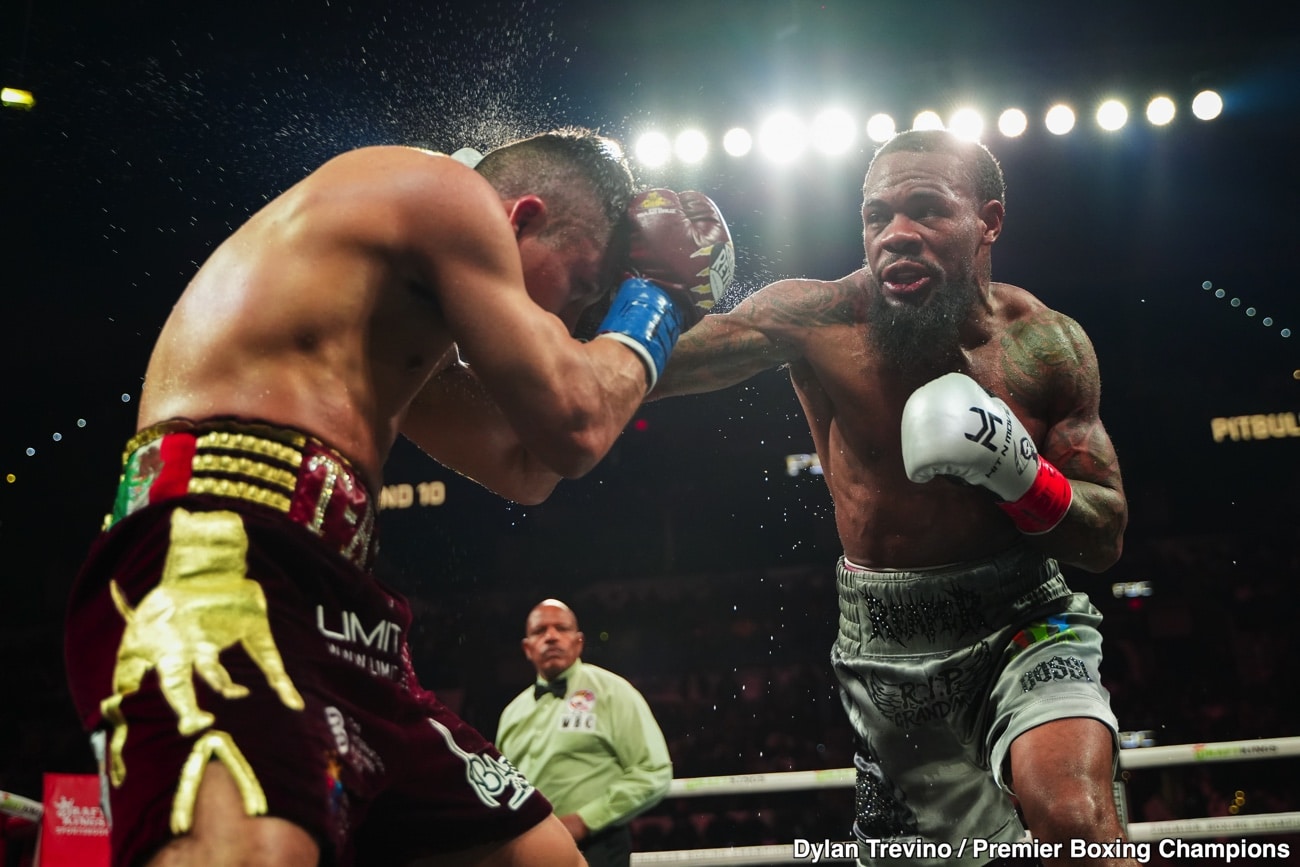


Before Roach’s second straight draw, the game was living in a plausible competitive lane. Both fighters operated around lightweight, both leaned heavily on defensive control, and neither had the kind of momentum that forced another conversation. This shared positioning allowed the fight to be sold as a technical yardstick rather than a concession to either side.
That lane closed the moment Stevenson defeated Teofimo Lopez and claimed the WBO title at 140 pounds. A fighter who has just taken a belt in a higher division does not benefit from stepping back in a style heavy fight that offers little commercial upside. For Stevenson, the Roach fight now represents risk without reward, a return to a type of competition he sought to move past rather than repeat.
Roach’s insistence remained visible on social media, presented as respect rather than agitation. His exchange with Stevenson earlier this week was friendly, even respectful. Stevenson responded warmly, praising Roach for remaining authentic and expressing confidence that the fight could happen.
“Yes, sir brother… Respect that you did not move like a fool for influence,” Stevenson wrote. “We certainly made it happen.”
Roach responded in kind, calling it the best fight at 135 and hailing Stevenson’s ability. The tone indicates mutual respect, not tension. However, public goodwill does not create leverage or dictate divisional movement.
The problem is structural, not personal. Roach enters this stretch without a win in his last two outings, but neither draw has materially lowered his position at lightweight, especially given how the first was received, and movement at the title level has created openings rather than clarity. Stevenson steps in as a newly crowned champion in a higher division with broader options and greater leverage. Those realities pull in opposite directions.
A defensive, low-output fight against Roach does nothing to advance Stevenson’s ranking at 140 pounds. It does not open new doors. It does not expand its profile. It simply revisits old debates about safety-first styles that it is trying to leave behind.
Roach’s persistence is understandable. Opportunities narrow quickly at this level, and familiar names feel safer than waiting for a division to turn. Still, the longer Stevenson remains positioned above lightweight, the harder it becomes to justify a fight that now reads like a step back rather than a challenge forward.
The public respect remains genuine. At lightweight, opportunity has not disappeared. Stevenson simply doesn’t represent it anymore.

