


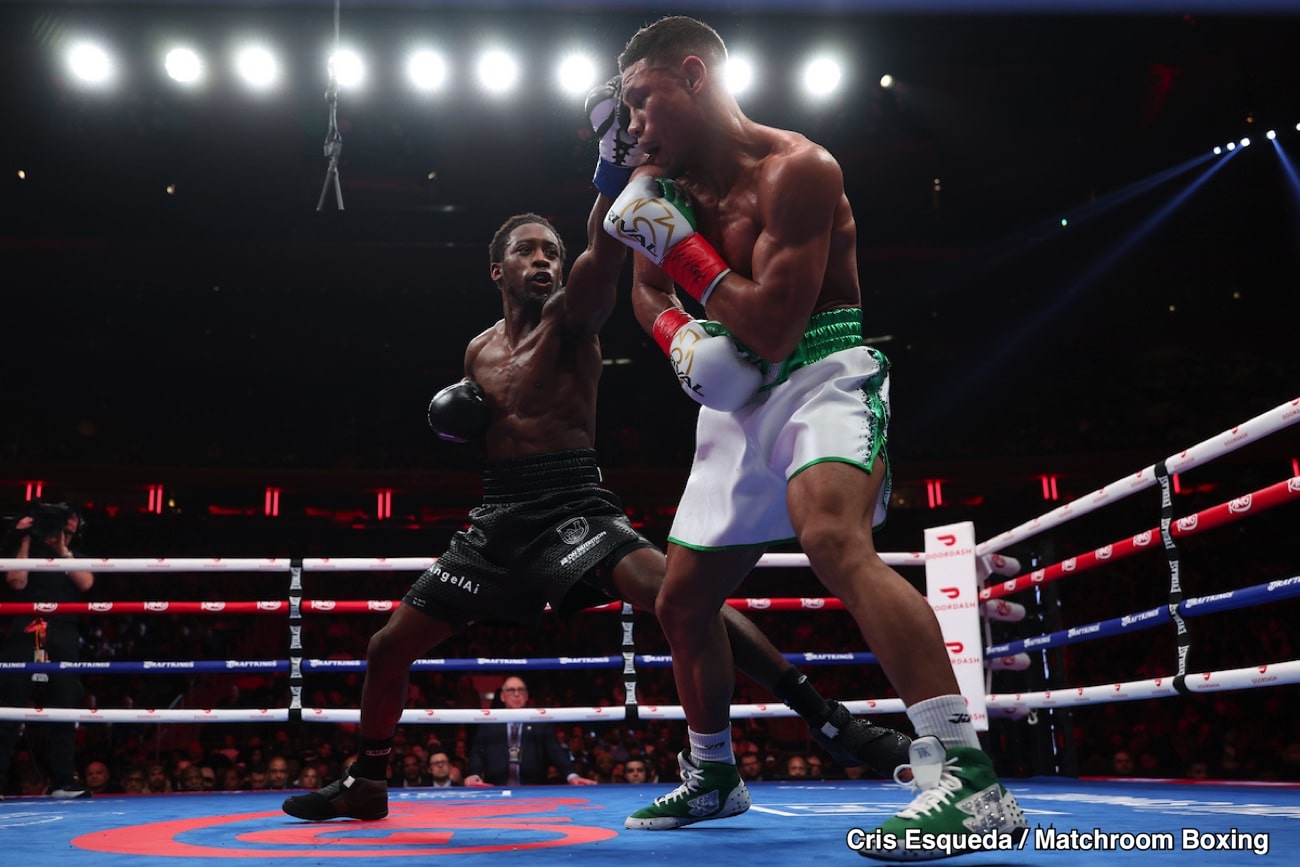



In the days since the fight, Keyshawn has spoken like someone who chooses options rather than waiting for access. He mentioned moving up in weight, called champions by name, and dreamed up future fights around money and timing. The language suggests a fighter who believes the negotiation phase has already tipped his way. At this point, those conversations still function as requests, but not outcomes.
The clearest example is his interest in Devin Haney. On Davis’ part, the appeal is clear. Haney remains a recognized name, and the fight would immediately raise Davis’ profile with casual fans. On Haney’s part, the incentive is much thinner. He’s not relying on a challenger without a belt, without a division cleared, and without proven independent traction to shape his next move.
The same imbalance occurs in the talk of an immediate title fight at junior welterweight. A trip to the UK to challenge Dalton Smith reads as ambition and playing well in public. Behind the scenes, champions and promoters operate from incentives. Smith would put a home belt, a home crowd and his own schedule on the line against a visitor who doesn’t bring a title and doesn’t control broadcast terms. That comparison rarely favors the challenger.
This is where Keyshawn’s rhetoric begins to move faster than his position. Strong performances build faith, but faith alone does not grant authority over divisions or schedules. Authority comes through belts, market pulls or coercive pressure. Davis has momentum and talent, but he has yet to enforce either of those conditions. Until that changes, the fighters he calls remain the ones making choices.
None of this diminishes what Davis showed in the ring. The Ortiz win was controlled and ended cleanly. It showed maturity and discipline, especially over a long night. These qualities are important as the opposition improves. They do not in themselves force the sport to rearrange its plans around him.
Many elite fighters go through a phase where their internal certainty moves faster than their external standing in the sport. The gym reinforces that belief, the band backs it up, and the crowd reaction adds to the feeling that momentum is building. When the microphone stays open a little longer than usual, it becomes easy to confuse confirmation with authority, even though the structure around the fighter has not yet changed.
The distance between confidence and authority is often where careers slow down, as the sport decides how far it wants to carry a fighter. That stretch is often where fighters either quickly move forward or find themselves waiting longer than expected for the sport to catch up.
For Keyshawn, the next steps will carry more weight than the exclamations. Securing a belt, enforcing an obligation and making himself inevitable are the steps that move a fighter from contender to necessity.
Right now, Davis sounds ready to talk like a star. The sport has yet to see him operate like one before it starts giving him control.

