


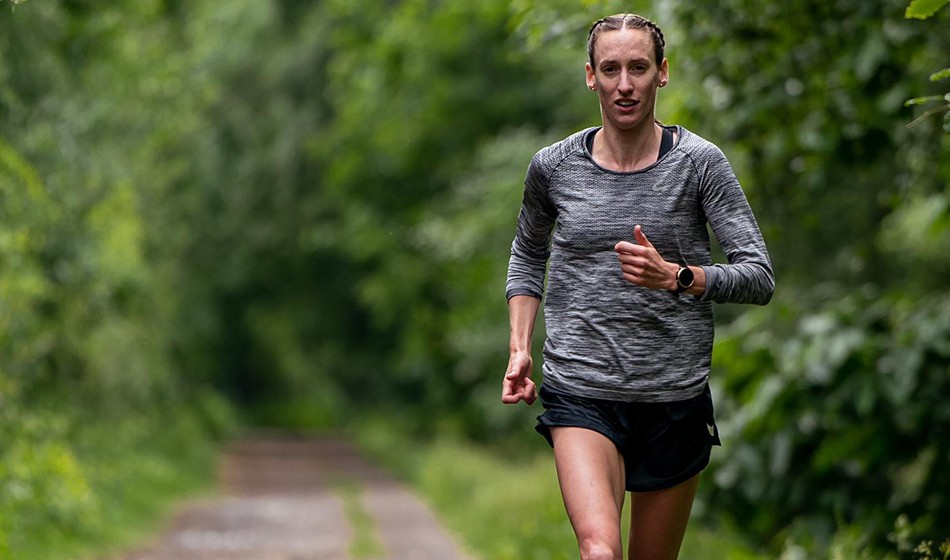
Katie Barden talks to the two-time Olympian about starting a career in coaching after an abrupt end to middle distance running.
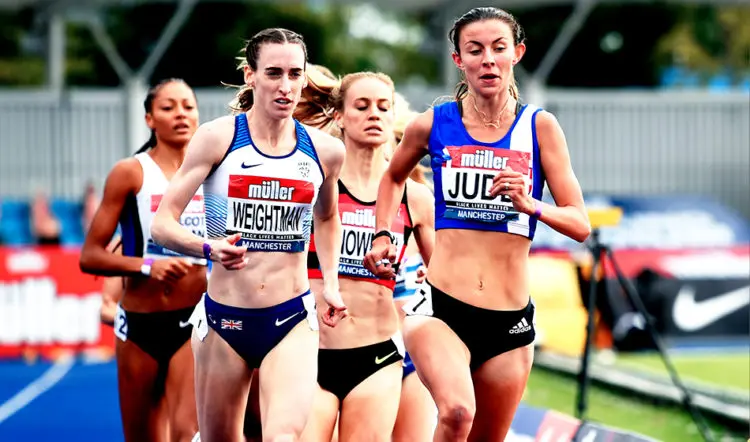
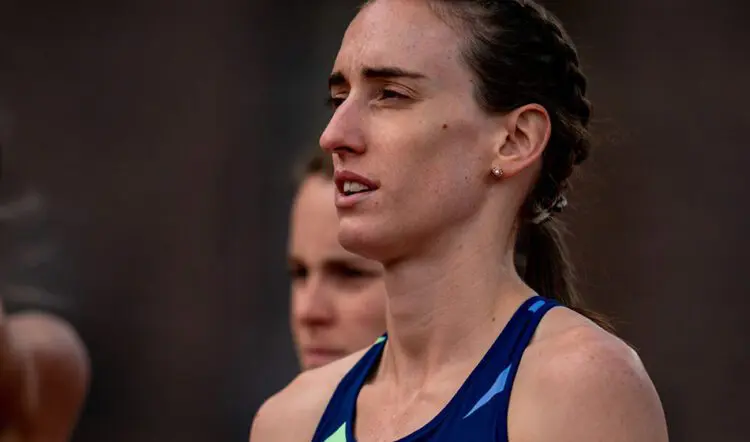
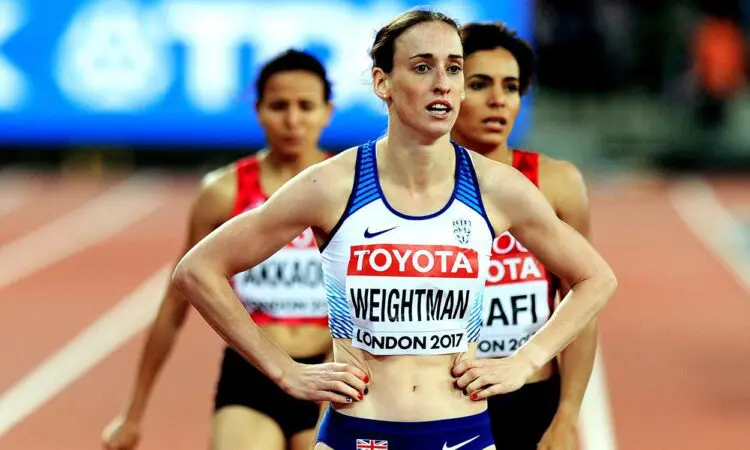
Double Olympian Laura Weightman, multiple medalist over 1500m and 5000m at the European Championships and Commonwealth Games, retired from competition in September 2023 after a difficult few years of injury, surgery and extensive rehabilitation.
A Sport and Exercise Science graduate from Leeds Beckett University, the 34-year-old now works as an endurance coach at the Leeds Talent Center and as a Junior Athletics Coordinator (leading the Leeds Beckett-based athletics program for 8-16 year olds), in addition to supporting athletes in the Northern and Great Britain Talent Team. training camps and championships.
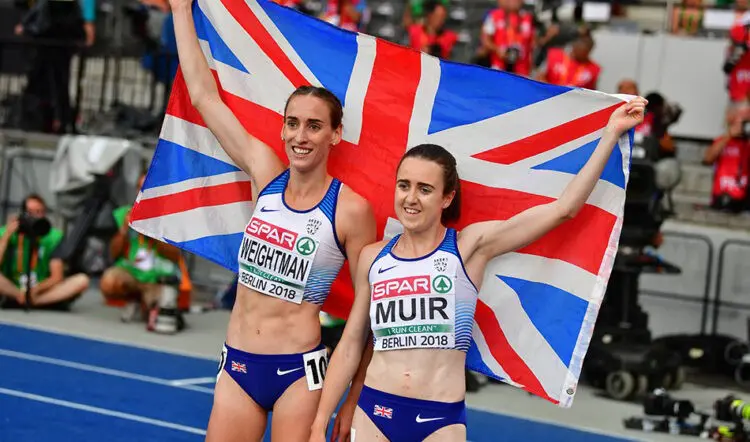
A member of the Coaching Great Britain Women’s High Performance Coaching Programme, Weightman currently coaches athletes including Olympic 1500m silver medalist Laura Muir and Great Britain and Northern Ireland age group internationals Sam Mills (ski and cross-coaster) and Isla Patterson (mountain running). He also applies his passion for sport and people through working as a performance lifestyle consultant, supporting athletes to balance their sporting ambitions with education and life outside of sport.
How did you first get into coaching?
I was still living at home (in Alnwick) at the time and Alnwick Harriers started the junior division. I did my first qualification focused on coaching children in athletics before going to university. I think that’s what sparked my interest in the qualifying process.
I did my assistant coaching qualification through On Camp with Kelly (a mentoring and education initiative for junior middle distance athletes founded by Kelly Holmes) around 2010 and a few years later I got my full coaching licence. I was just interested in helping people and I was interested in the sport itself. As a full-time athlete, it was a real privilege to have the time and space in my week to do this, and I felt it was really important to prepare myself for the opportunity to step into coaching.
When I got my qualification I started helping some of my university friends who asked for a little advice and guidance. I kept it at club level at the time because I was training and competing myself so I wasn’t around all the time.
In the latter part of my career I got the chance to coach in the England Athletics Youth Talent Programme, which I really, really enjoyed. Alongside this, I completed my performance lifestyle qualification which gave me additional insight and knowledge and facilitated a more holistic approach to coaching. Those experiences were really valuable as I transitioned from athlete to coach.
Did you always plan to go into coaching after retirement?
Throughout my career, I have always been someone who naturally wanted to help others. Even when I was training and competing myself, I found myself talking to other athletes and wanting to help and support them if they had questions about training sessions or races.
I never imagined myself not being involved in athletics or sports after retirement, although I wasn’t sure exactly what that role would be. I prepared myself by following things I was passionate about, doing my performance lifestyle qualification, my sports science degree, my coaching qualification. I wanted to give myself a platform of experiences that would allow me to get into something that interested me.
How would you describe your coaching philosophy?
At this stage, I learn so much every day that my philosophy is constantly evolving. The most important thing to me is putting the person first before the athlete, and I will always want to help the individuals I work with, no matter who they are and what their aspirations and goals are. I love spending time with people and having conversations, so it’s not just about athletics, it’s more of a holistic approach to life and coaching.
In terms of my broader coaching philosophy, I’ve had some big influences throughout my career, but I’ve also been in a unique position where I’ve spent time traveling around the world racing and training, and in doing so I’ve been able to observe many different coaches in different environments. I feel like I’m already training a little differently than how I used to train because I’m learning from those around me.
My coaching philosophy will continue to grow and develop and I want it to. At this stage in my coaching journey, I want to be an open book and learn and absorb as much information as possible. Every day I have different conversations with different people in different sports and I really enjoy the opportunity to connect and grow as a coach and then apply that to my coaching. I’m just really excited to keep learning.
Who has been your biggest coaching influence?
I’ve been lucky enough to have had two coaches during my career, Mike Bateman, my club coach at Morpeth Harriers, and Steve Cram. Mike taught me a lot. He started me on the path to becoming an athlete and taught me to work together in a fun club environment. I spent Monday night with my friends running around the residential area doing relays; the session would be hidden in the relays so it taught me how training can be fun and how all abilities can work together.
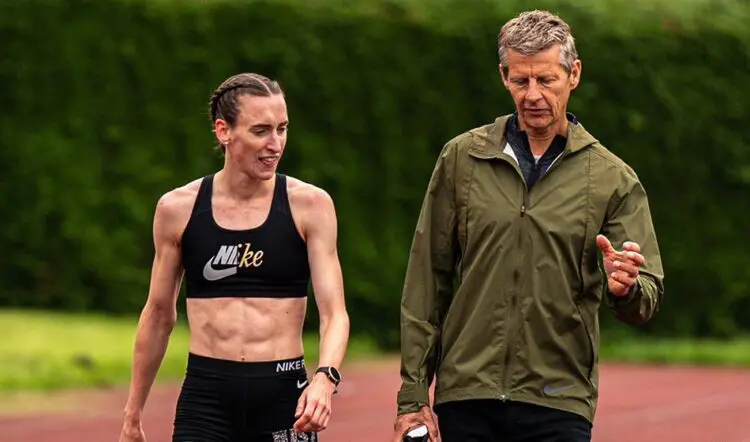
And I’ve been so fortunate to work with Steve and learn from everything he’s done throughout his career and how he’s applied that to working with me. We both learned so much from that process, like how as a female athlete I couldn’t exactly replicate what he did as a male athlete, and that’s something I’ve applied to my coaching now.
I also look and think about the impact of my wider Leeds team. My sports psychologist had a significant impact on my career then, but also now as a coach in terms of how I think about things. I see it as a really valuable asset in my coaching toolbox. Andy Henderson (Leeds Beckett Head of Athletics and Leeds Talent Hub Head Coach) and Andy Drake (Leeds Talent Hub Manager) have also been very supportive and have given me the opportunity to grow and develop as a coach in the Talent Hub environment.
Each coach and each person on your support team brings different strengths and skills. I have worked with a predominantly male team throughout my career, but have had a female physio (Alison Rose). Working with Alison was really important to me because I needed some support from her with some things that maybe others couldn’t. It is important that athletes feel they have the right support from the right people when they need it.
You train a variety of athletes with varying levels of experience, how do you bring them all together?
It was such an interesting process. Obviously Laura (Muir) is a former team-mate and she’s one of the best in the world, while Isla (Paterson), 15th overall and the first British woman (U20) at the 2025 World Mountain and Trail Championships, is a young student who is still a pretty raw talent. They are very different, but they are still people before athletes, so it was important for me to understand what they need from me. Isla in particular was new to getting to know him.
Isla and Laura have spent some time together this year, which has allowed them to bond; they may not do trailer sessions together, but they will warm up and do drills and moves together. Isla can learn from Laura and there are other people Laura can train with too, so it makes for a really nice atmosphere of camaraderie and shared learning. We can all connect and work together in different ways, and I think creating environments where it doesn’t matter who you are, what you’ve achieved or what stage you’re at in the sport can benefit everyone.
How have your own experiences as an athlete benefited you as a coach?
I feel so lucky to have had the career I’ve had, but I also feel lucky to have had the experiences I’ve had, and I apply those experiences to my coaching every day. While I understand the highs that athletes go through, I also understand the lows very well, and that really helps when you have tough conversations with athletes when things don’t quite go to plan.
It might be empathy or trust that I’ve been there and they’ll get through it, but that lived experience can bring the conversation to life and help the athletes better understand what’s going on.
Did you face any challenges in the sport as a young coach?
I think sometimes there’s an assumption that as a retired athlete (or as a woman) you’ve been given an opportunity or an unfair advantage, but you have to do the work behind the scenes to be able to coach successfully in different environments. I feel like I’ve earned the opportunities I’ve been given because I’ve followed the right path and gained the right experience. A good athlete does not necessarily become a good coach. it’s a very different skill set.
What is the most valuable lesson you have learned so far in your coaching career?
It was a real privilege to be able to retire, still be in the sport and say the job is coaching. It’s challenging, it’s rewarding, it’s emotional, it’s challenging, it’s all the different emotions you can feel as an athlete, but in a completely different way.
I think the most valuable lesson I’ve learned so far is to take a step back when things go wrong and remind myself that I can’t always control things, like when an athlete gets injured or a race doesn’t turn out the way we hoped.
It just takes a moment to stop and think and not be too hard on myself. We can’t control every little thing that happens, and that’s okay. There will inevitably be mistakes and things don’t always go well, but that all becomes part of the learning process. I’m constantly learning every day and I think that’s the most important thing for me to keep learning and never stop.

