


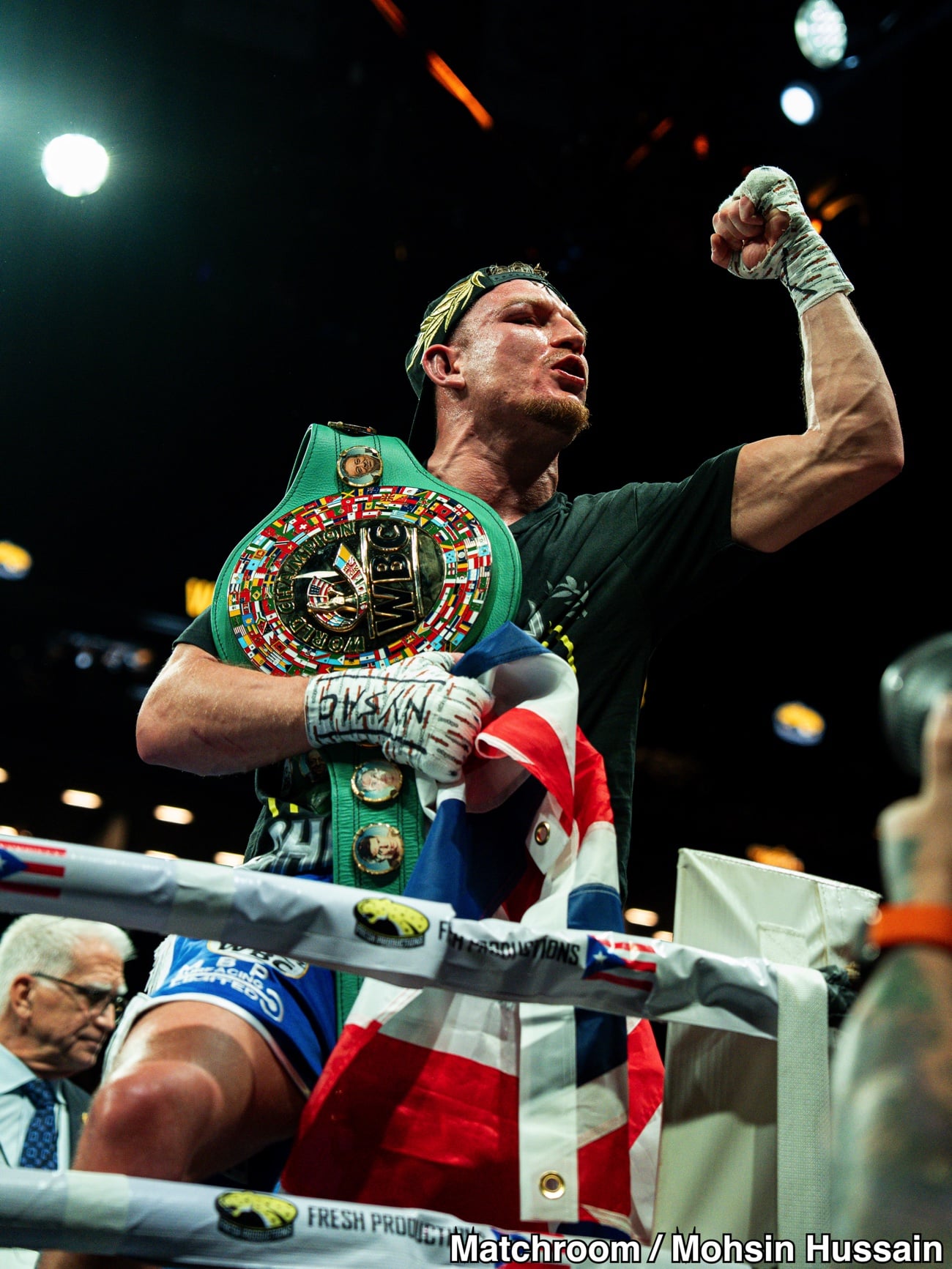
It worked. Matias never settled down. Smith controlled the chaos and finished him in five. That night belongs to him. But it also left a question that doesn’t go away just because a belt changes hands.
This approach is built to blunt pressure fighters. It’s not built to go after potshot boxers who refuse exchanges. Fighters like Teofimo Lopez, Shakur Stevenson or Richardson Hitchins don’t run into clinches or empty the tank to overwhelm you. They let you reach. They miss you. They let you work at a pace that exposes conditioning rather than hiding it.
Smith says he will be on the sidelines at Madison Square Garden later this month, watching Lopez and Stevenson with interest.
“Yes, I’ll be there,” Smith said The Ring. “Even as a fan, I’ll watch it. It’s one I’ll be watching now.”
Being present is easy. It is more difficult to enforce a unification. The politics are obvious. The styles are worse. There isn’t a heavy escape route against fighters who are happy to win rounds from the outside and make you recover over and over again.
Smith also said he believes he belongs in those fights. That faith is earned to a point. He took a risk against Matias that others avoided. He won it cleanly. But the leap from surviving pressure to solving elite movers isn’t automatic, and belts don’t close that gap on their own.
Right now, Smith has leverage because he’s new and interesting. He also has exposure because his last fight showed exactly how he survives when the pace rises. If a unification happens, it will not be decided by force or grit. It will be decided whether Smith can maintain form without holding on.

