


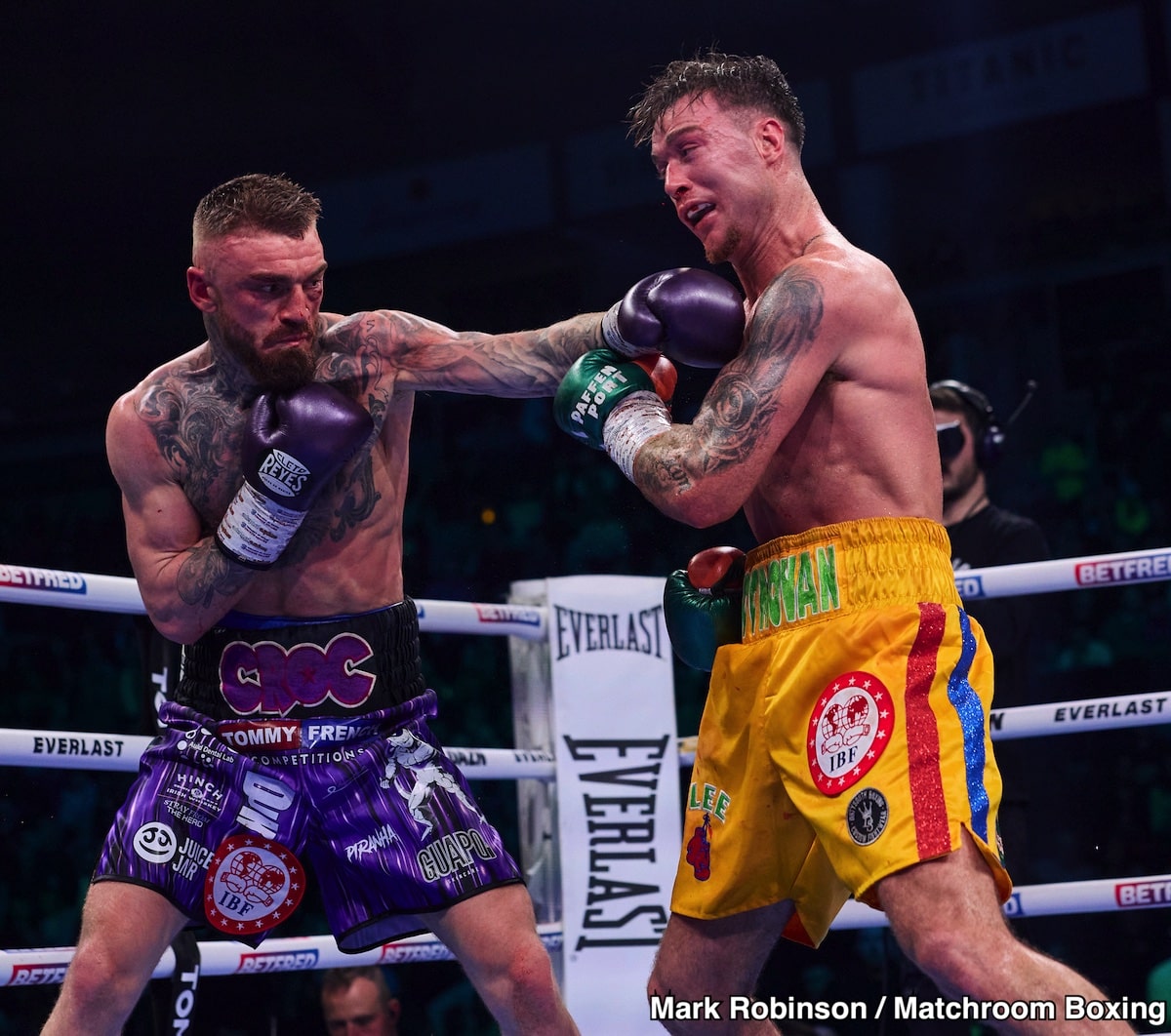
Crocker hoped to move in a different direction. A rematch with Conah Walker was one idea, built around unfinished business and local interest. He also spoke publicly about the appeal of a unification fight with Devin Haney, a fight that would have instantly clarified his position. None of that survived contact with the IBF’s calendar.
The sanctions body denied Crocker’s request for an optional defense in April, citing the mandatory March 13 deadline. With that decision, the road narrowed. The champion now has one direction, and it is not of his choosing.
The problem is not the concept of a mandatory defense. The problem is the challenger.
Paro moved up to 147 after losing his IBF junior welterweight title to Richardson Hitchins by split decision in December 2024. Since then, he has fought twice at welterweight. Both wins came against opponents with no profile, no draw and no relevance to the top of the division. These were not positioning battles. They were maintenance fights.
That matters because Crocker isn’t defending a belt he inherited through attrition. He won it in a hard-fought, competitive battle against Paddy Donovan, and he did so expecting the title to open doors. Instead, he is being asked to risk momentum against a challenger whose recent resume does not justify the position he now holds.
Paro did not beat a contender at 147 to earn this spot. He advanced because Donovan withdrew from a planned knockout, and the IBF filled the vacancy with the highest available name. This is process, not proof.
On Crocker’s side, the upside is limited. Beating Paro won’t answer any questions, create any leverage, and do nothing to get Crocker closer to the fights he actually wants. However, losing would be catastrophic.
This is the kind of mandatory that tests patience more than skill. Crocker may get away with it, but it’s hard to see how it helps him. For a champion trying to establish credibility, boxing in a low-yield defense this early is not a step forward. It is simply the price of holding the belt.

