


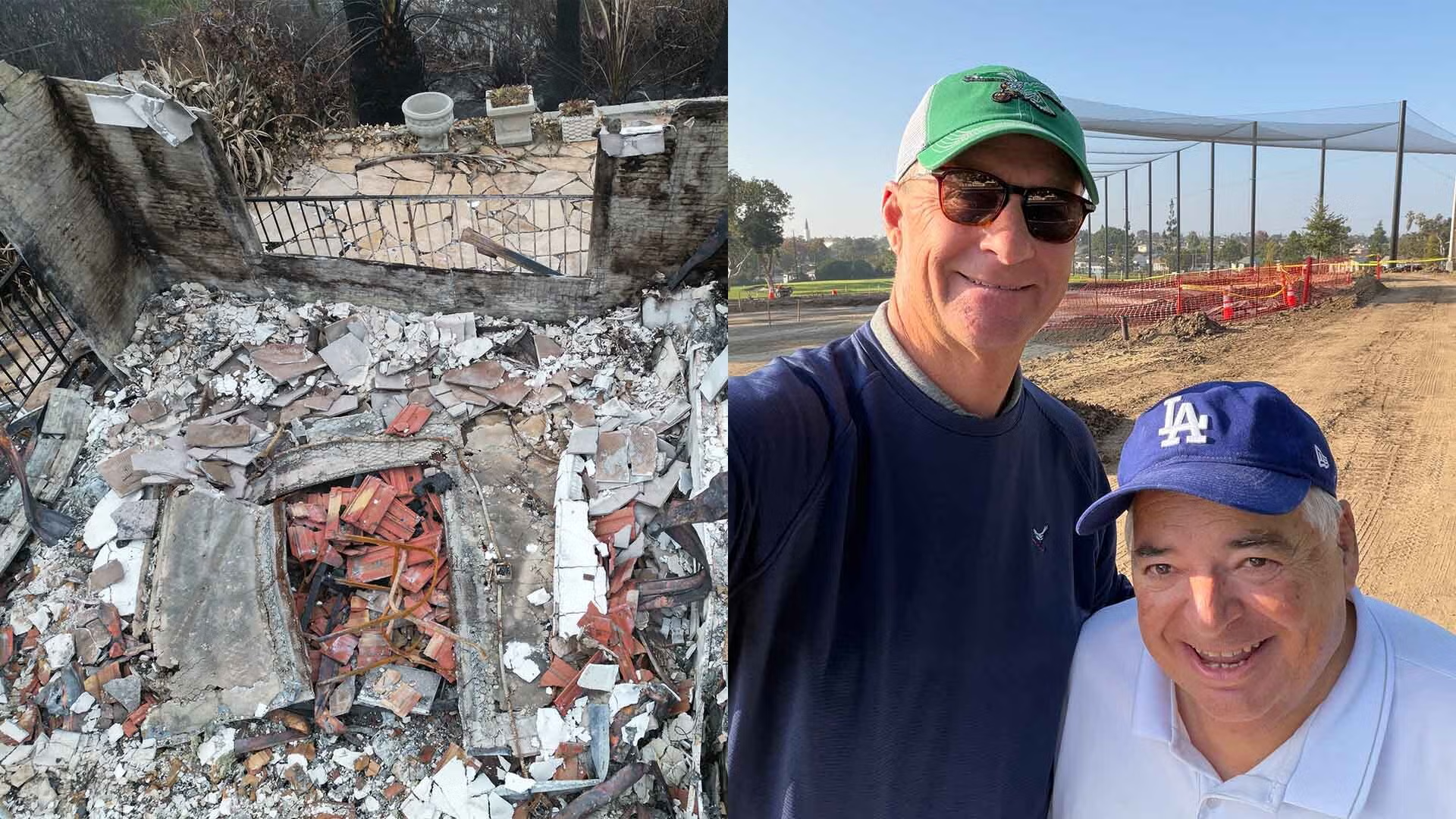
“I kept reminding myself that it was just stuff,” he says. “But some of those things were irreplaceable.”
Among the losses were twelve guitars he had collected over the decades, along with amplifiers, backstage passes and memorabilia. There was no more Ozzy Osbourne autograph. This is a picture he had taken with Cheap Trick. His library of golf books — about 500 titles, many of them first editions — had burned. The favorite was a copy of “The World Atlas of Golf,” an important compendium he had bought for $10 at Price Club in 1979, around the time he fell well behind the game.
Although he didn’t take up golf until he was 20, after leaving home to work as an electrician, Naccarato made it his life’s passion. Union work paid the bills, but golf — and golf design in particular — fueled his curiosity and artistic interests. He became an early voice in online architecture chat rooms, building relationships that eventually led to opportunities. Since the early 2000s, he’s been something of a Swiss Army knife for Hanse and Wagner, contributing everything from research to graphics to troubleshooting in the field.
“Tommy is one of those guys who brings so much passion to what he does,” says Wagner. “He’s exactly the kind of person you want in a job.”
Golf is a global game, but a small world. Word of Naccarato’s losses spread quickly. Adam Lawrence, a golf architecture writer, started a GoFundMe campaign that has raised nearly $80,000. Ron Wright, a former superintendent and fine guitar builder, built him a replacement Telecaster. Other offers of support poured in.
“That’s been the coolest thing that’s come out of this,” Naccarato says. “It really brought home how many incredible people there are in golf and how many great friends I have.”
Chief among them were Hanse and Wagner, who trusted Naccarato to help complete the Maggie Hathaway project.
First opened in 1962 as the Jack Thompson Golf Course, Maggie Hathaway is a nine-hole par-3 layout with a small footprint and a big legacy. In 1997, it was renamed for the actress and civil rights activist who helped integrate public golf in Los Angeles. A longtime center for junior players and an affordable entry point to the game, the course attracted support for its renovation from Los Angeles Country Club and the USGA—the heavyweights that lend their names to an unassuming structure.
;)
Tommy Naccarato
At 66, Naccarato lives comfortably between those worlds. His work connects him to elite clubs and powerful institutions, but his instincts are rooted in accessibility and community. Maggie Hathaway, he says, speaks to the “soul” of the game. “It’s a course for everyone.”
He returned to work about a month after the fires and stayed at it throughout the year, clocking as many hours as his body would allow alongside project manager Pat Gradoville. The effects of the shock persist. Naccarato’s gait can be unstable. He sometimes stops mid-sentence, looking for words.
However, he kept showing up. In an otherwise chaotic time, he says, the work gave him purpose and strengthened his focus. Maggie Hathaway’s work is now done. A grand opening is planned for March 27. The revamped course will be modest but revamped: realigned and resurfaced holes, rebuilt greens with fresh contours and delicate surrounds, sharpened bunkers, improved views. Green fees will remain at $9.

