


Over those four contests, Inoue delivered a balanced mix of performances. Two wins came by stoppage, two by decision, against opponents whose combined record stood at 93-4-3 when they faced him. His year was capped off with a win over previously undefeated David Picasso, allowing Inoue to go 4-0 in 2025 while maintaining full control of his division. For voters who value consistency, volume and sustained championship excellence, his case is simple.
Other leading contenders present a very different profile. Oleksandr Usyk, the unified heavyweight champion, fought once, but did so against the sport’s heavyweight division. Remaining undefeated at 24-0, Usyk stopped Daniel Dubois in their rematch, cementing his position at the top of the heavyweight division. Although his activity has been limited, the importance of a heavyweight championship defense still carries significant weight in year-end discussions.
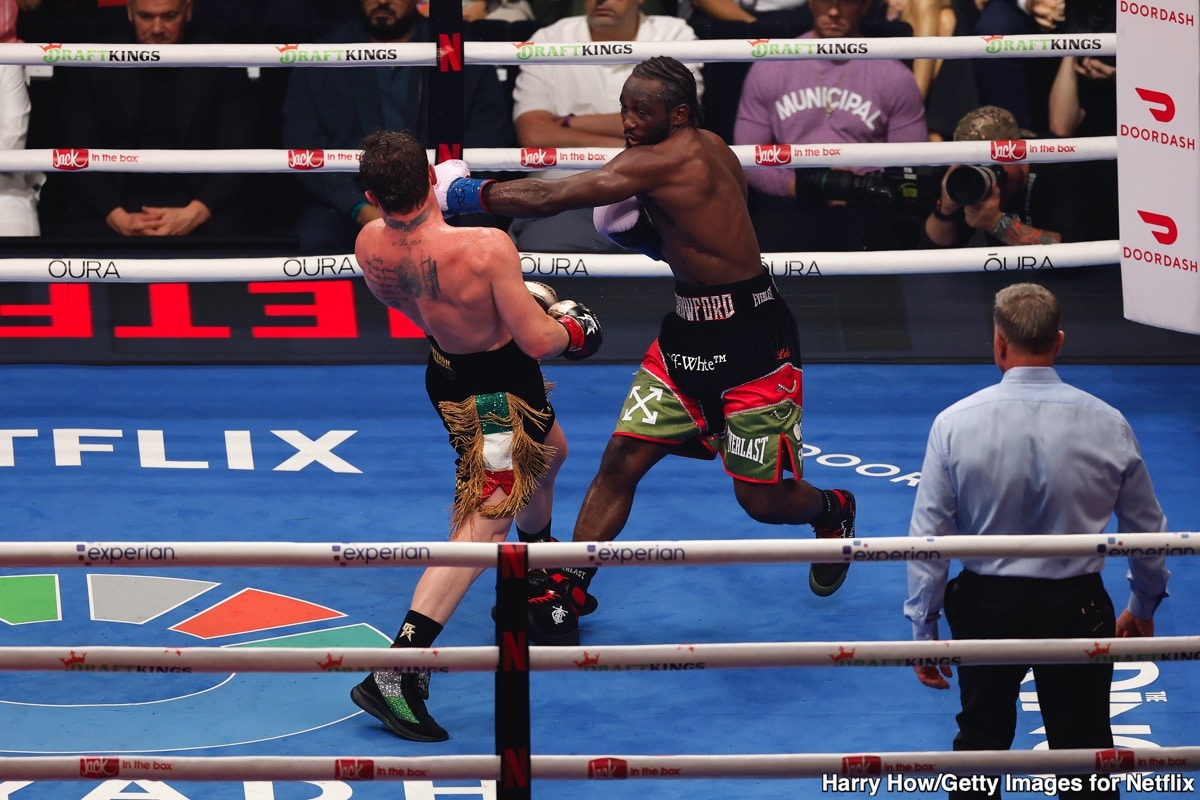
Then there is Terence Crawford, whose single appearance was perhaps the most striking performance of the year. Crawford moved up two divisions to defeat Saul Canelo Alvarez, earning a decisive and one-sided victory before announcing his retirement. No rematch ensued, a decision consistent with both the outcome of the fight and Crawford’s long-stated career plans.
Crawford’s victory inevitably invites comparison. It came against the same Canelo who had previously been defeated when he moved up to light heavyweight to face Dmitrii Bivol, highlighting the level of difficulty involved. Some hoped that Crawford would go on to chase another title, but that path was never realistic in the game.
Ultimately, the debate comes down to emphasis. Is Fighter of the Year about sustained excellence and activity, or about a single, defining performance on the biggest stage? Inoue, Usyk and Crawford each represent a different answer to that question.

