


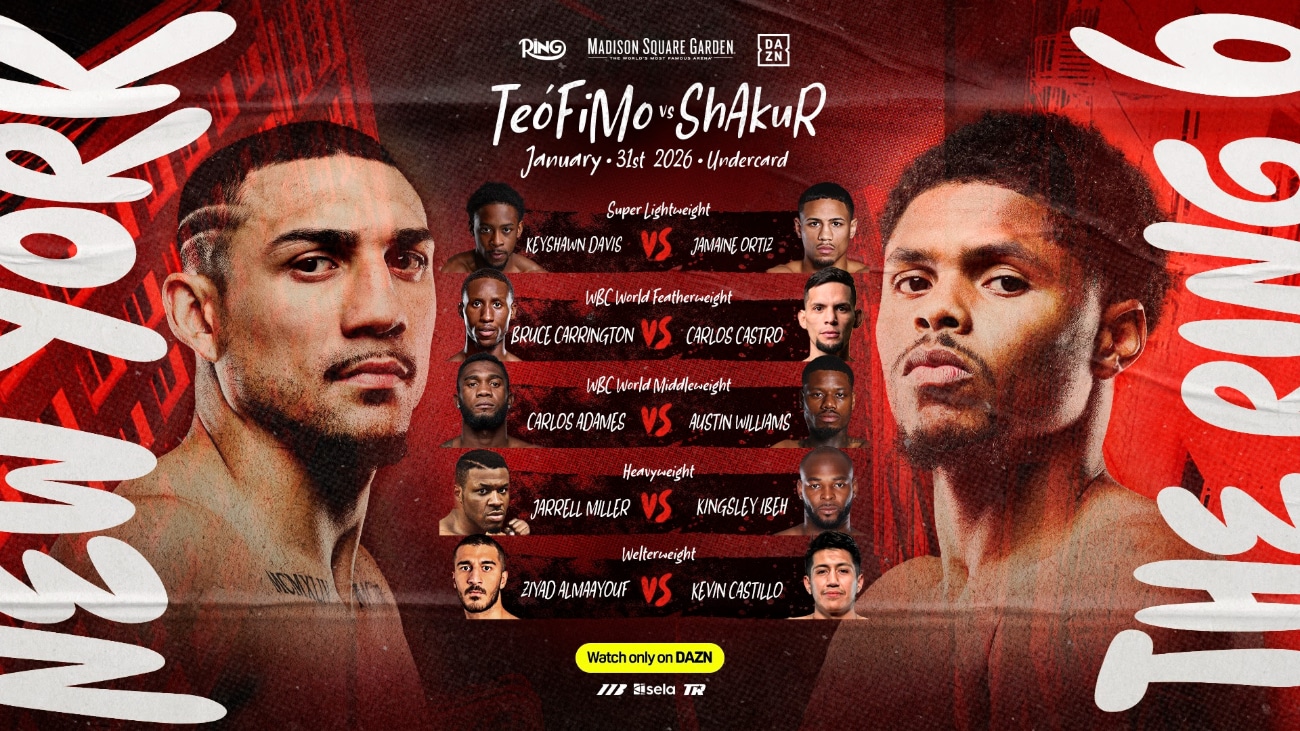
For weeks, Ortiz was discussed as a potential opponent in that track. Instead, he is now across from Davis.
It matters.
It’s not a busy return for Davis after nearly a year out of the ring. Ortiz is not a tune-up, and he is not a name for optics. He’s a tough, disciplined fighter who doesn’t get walked over and doesn’t make fights easy to sell or win. That’s exactly why he keeps turning up in serious matchmaking conversations.
Davis has not fought since last February, when he beat Denys Berinchyk in New York. Since then, his name has remained hot, but the division did not wait. January is about re-entry, and Ortiz is a deliberate choice if the plan is to move straight back into title positioning rather than circling it.
Ortiz’s resume explains why these aren’t soft matches. His only losses came against top level fighters, and even those didn’t come easy. He was competitive, durable and difficult to part with – traits that tend to expose fighters who aren’t ready for the next step.
For Davis, this fight does two things at once. It answers the inactivity question, and it puts him right back into relevance without the protection of a showcase opponent. If he wins cleanly, it solidifies his standing as a legitimate title threat. If he struggles, that conversation changes quickly.
The fight now sits on a card headlined by Teofimo Lopez vs Shakur Stevenson, but the Davis-Ortiz fight is one of the few on the lineup that feels like a true benchmark rather than a promotional add-on.
Ortiz has been discussed elsewhere as a problem opponent. Instead, he is now the test for Davis. This shift alone makes this one of the more telling fights on the card, regardless of where it lands on the poster.
This fight is about where Keyshawn Davis really is — and whether he comes back as someone who’s ready to be pushed, or someone who still needs to be protected. Davis will fight at junior welterweight for the first time.
‘THE RING 6’, JANUARY 31, FULL CARD:
Bruce Carrington vs. Carlos Castro
Carrington looks like a fighter built for the long game. Good feet, clean lines, understand scope. But it also makes him predictable when he starts to drive instead of imposing. Carlos Castro doesn’t mind looking neat. He squeezes, bumps, leans and forces exchanges where structure breaks down. If Carrington keeps circling and flicking, Castro will walk him to the ropes and make it physical. The danger is not stopped. It’s losing rounds while you think you’re in control. Featherweight fights turn quickly when the jab stops commanding respect.
Carlos Adames vs. Austin Williams
Adames hits like a man expecting the other guy to fold. This is usually enough. But Austin Williams doesn’t fold cleanly. He absorbs, recovers and returns with interest. It becomes dangerous the moment Adames charges up and starts chasing moments instead of positioning. Williams will have him handed over and then go behind the counters. If Adames can’t match himself, it turns into a fight where the harder puncher seems to be slowing down every round. That’s how belts quietly slip away.
Jarrell Miller vs. Kingsley Ibeh
This is a heavyweight grind, not a showcase. Miller leans, chokes, drains. This is his entire economy. Ibeh isn’t fast, but he’s solid and willing to hang in ugly spaces. If Miller can’t break him early, it turns into a labor job. Heavy legs, heavy arms and very little room for error. Once fatigue sets in, technique quickly disappears at this weight.
None of these fights are about style points. They are about who can still think when the lungs burn and the plan stops working. That’s where records are rewritten.

