


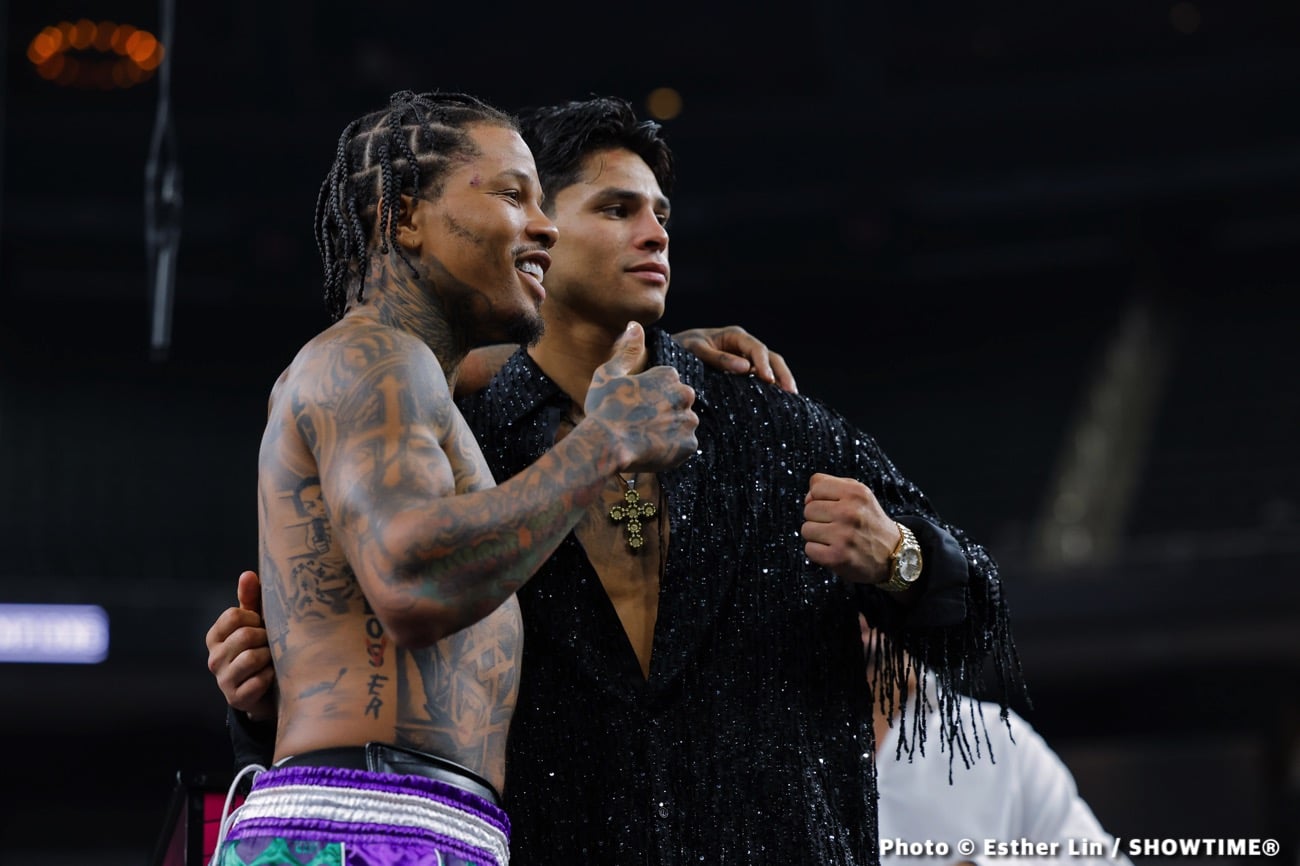
A career that is losing shape
That matters because nothing about Garcia’s current position resembles the one he held when he fought Davis.
Since that loss, his career has steadily drifted off course. He was stopped by Rolando Romero, a defeat that landed with a bang given Romero’s reputation and limitations. Before that, Garcia served a year-long suspension that removed him from the sport at a time when he could least afford inactivity. Momentum never returned. Direction never reappeared.
Why Barrios is not a reset
Now, he’s scheduled to face Mario Barrios at welterweight on February 21, 2026 – a fight widely seen as a safety first attempt to stay relevant without confronting the division’s real dangers. Even that is far from a guaranteed victory. Barrios may be considered the weakest link among the champions at 147, but Garcia’s recent form does not warrant confidence. He can lose. Many people expect from him.
This is the context that is missing from the rematch call. Garcia is not calling from a strong position. He calls from a place of erosion.
Big names, soft landings
At this point, Garcia is no longer moving like a fighter climbing to the top. He moves like a brand-managed decline. The names Garcia keeps calling follow a pattern. Devin Haney. Conor Benn. Gervonta Davis again.Davis again. Big names. Big platforms. Great guarantees. None of them require Garcia to rebuild credibility the hard way.
What he consistently avoids are the fights that define real welterweight careers – the hungry contenders, the pressure fighters, the young men who come from poor countries with nothing to lose and everything to take. Those fighters don’t bring celebrity buzz. They don’t manage social metrics. However, they beat fighters who are half committed, immersed and no longer desperate.
Garcia is now very rich. His fortune is usually estimated at around $50 million. He trains largely at home in a mansion in Southern California, supplementing with compound gym work and first-class sparring. This is not a frivolous preparation – but it is isolated. Comfortable. Management.
It matters in a sport that still rewards hunger more than image.
Comfort over urgency
There’s a reason why fans are increasingly describing Garcia as an existence in the celebrity fighter realm. Not because he isn’t talented. Not because he never worked. But because his career priorities shifted. Boxing has become something he does, not something he needs.
That’s where the awkward comparison begins to emerge. Jake Paul sits further down that path, but the direction is similar. Controlled matches. Narrative-first promotion. Brand Retention. The difference is that Garcia still works in the actual boxing ecosystem — but only selectively.
The Davis rematch post makes sense through that lens. “We brought back OG super fight for one night,” Garcia wrote. That line is not about future competition. It is about cultural memory. It’s about relevance. It’s about reminding fans, promoters and broadcasters that he once mattered at the highest level — and can again, if the right opponent is willing to meet him there.
Memory as strategy
But boxing doesn’t work on memory alone. Not for long.
Garcia doesn’t seem capable of beating the top welterweights as currently constructed. His style has not evolved. His discipline did not tighten. His physical resilience at 147 remains unproven. The sport has moved on, and the division has filled with fighters who don’t care how many followers he has or what night once belonged to him.
Run the latest version
That’s why the reruns feel empty. Davis showed no interest. There is no leverage. No road. No urgency on the other end. This is one fighter talking to the crowd while the crowd is talking back – loud, nostalgic and without consequence.
Ryan Garcia is not chasing Gervonta Davis. He is chasing the last version of himself who took boxing seriously. And unless something changes quickly — not on social media, but in the ring — that version isn’t coming back.

