


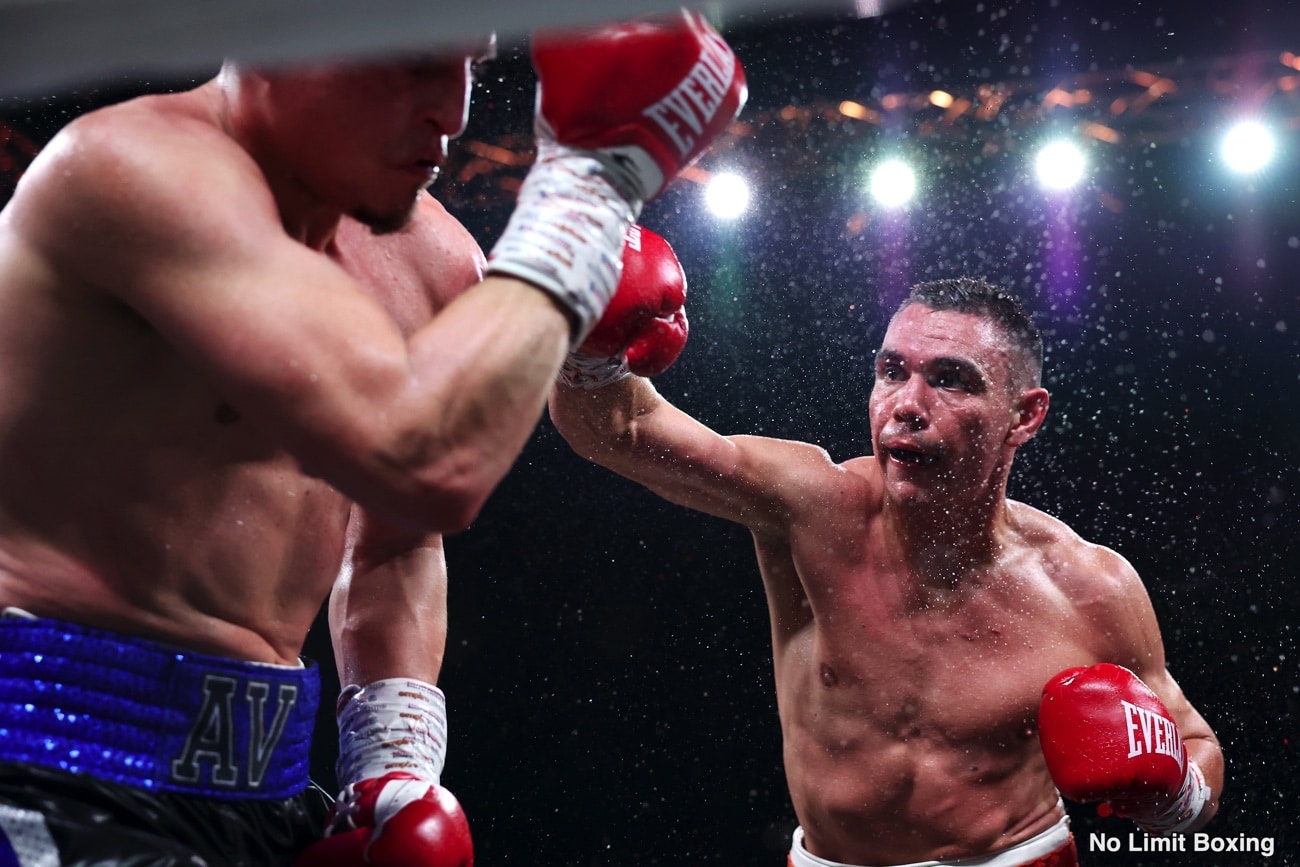
The performance was measured, careful and functional — and for a fighter once marketed as a wrecking ball at junior middleweight, it raised as many questions as it answered.
It was Tszyu’s first fight under a rebuilt structure. Pedro Diaz was in the corner. Jeff Fenech hovered in an advisory role. The team that carried Tszyu through his rise has been stripped away after a brutal series of losses at the world level, including two losses to Sebastian Fundora and a damaging stoppage against Bakhram Murtazaliev. The reset was overdue. What followed, however, seemed less like evolution and more like survival.
Takeaway no. 1: The win stabilized Tszyu — it didn’t promote him
Tszyu fought as if the priority was not to lose rather than to reassert himself. He remained disciplined, reduced risk and avoided long trades. The approach made sense in theory. After the damage he had taken over the past two years, recklessness would have been irresponsible.
But boxing rarely rewards half measures at the elite level.
A skilled but limited opponent, Velazquez was allowed to remain present throughout the fight. Tszyu controlled regions without imposing himself. The urgency that once defined him—the sense that pressure was not only his weapon but his identity—never fully emerged. The result stabilized his record, but it didn’t re-establish his threat level in a division that wasn’t waiting for him.
Takeaway no. 2: The Diaz reset is real – but it’s incomplete
The presence of Pedro Diaz complicates the evaluation. Two months is not enough time to fully reform a fighter, especially one whose instincts have been forged by aggression. Diaz’s track record suggests patience, structure and control – qualities that Tszyu clearly tried to implement.
The problem is that elite boxing doesn’t stand still while a fighter learns to think differently. Adaptations must occur in real time, against live opposition, under pressure. Tszyu looked like a warrior in mid-transition, caught between old habits and new instructions, neither fully committed nor fully abandoned.
That tension showed. He was safer, but also smaller. Cleaner, but less authoritative. The blueprint may be sound, but it has yet to produce a version of Tszyu that can compete with the division’s current standard bearers.
Takeaway no. 3: Activity can hurt more than help
Reaction to the performance reflected that doubt. Michael Zerafa, never shy in matters involving Tszyu, questioned whether the approach would hold up against higher-level opposition. Rivalry aside, the criticism reflected a broader concern: caution without authority is not a sustainable style.
Tszyu has talked about staying active and returning quickly, with a possible February date in Las Vegas floated in the wake. The instinct is understandable. Fighters coming off setbacks often believe that momentum can be rebuilt through volume.
History suggests otherwise.
At 31, Tszyu no longer has the luxury of developmental detours. Another loss at this stage wouldn’t simply set him back—it would redefine him. The junior middleweight division is deep, unforgiving and increasingly consolidated around fighters with momentum and clarity. Tszyu currently does not have one.
None of this erases what he accomplished. He reached the top through consistency, pressure and the ability to impose himself physically. Those qualities don’t disappear overnight. But if this rebuild is to succeed, it will require more than self-control. That would require a re-establishment of authority — a version of Tszyu that could be safer without being smaller.
This fight did not let him down. It served its purpose. It showed that Tszyu can still function at a professional level while taking much less punishment. What it didn’t show is that he’s ready to re-enter the conversation he once dominated.
For now, Tszyu is stable. The recovery has begun. The danger has subsided.
The question is whether the next phase brings progress — or merely lengthens the distance between who he was and what the division now requires.

