


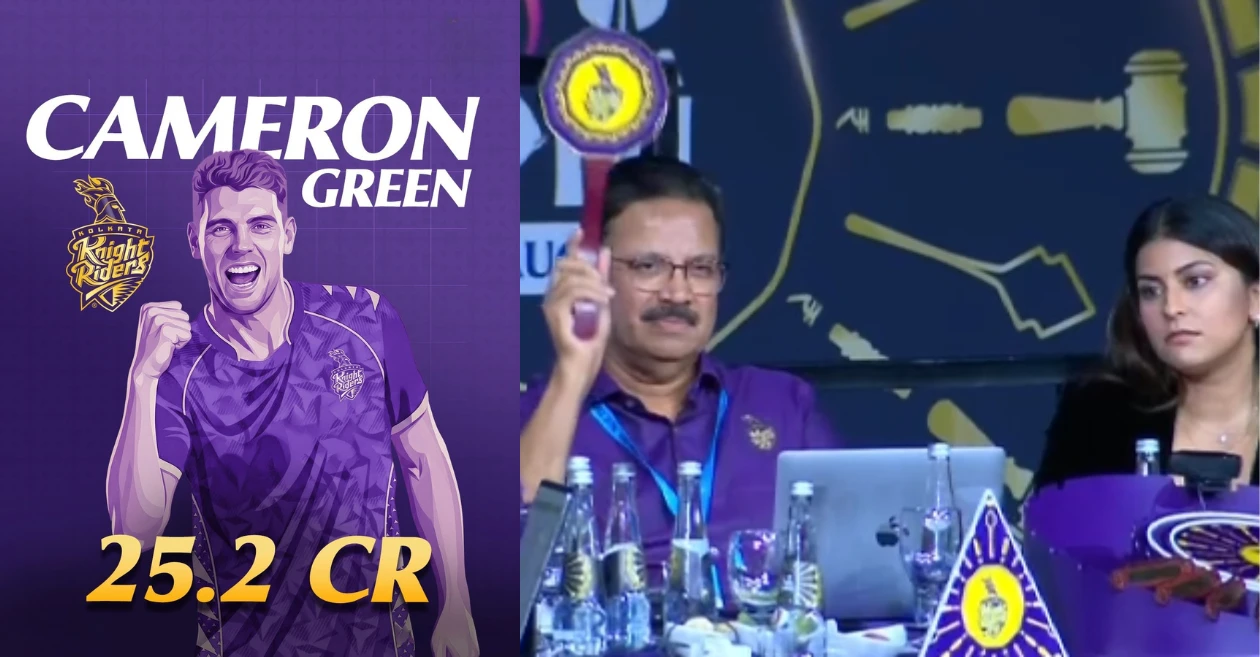

A record-breaking ₹ 25.2 crore deal for Australian all-rounder Cameron Green Kolkata Knight Riders (KKR) grabbed the headlines, but the latest installment tells a different story.
BCCI’s new overseas player cap reshapes IPL 2026 auction economics
According to BCCI’s newly introduced ‘maximum payment’ rule for overseas players, Cameron Green Despite being the costliest buy in the IPL 2026 auction, he will fetch just ₹18 crore from the contract.
The revised regulation, aimed at curbing uncontrolled spending in mini-auctions, marks a significant change in how foreign players are compensated even as franchises continue to spend aggressively to secure elite talent.
What is BCCI’s new maximum payment rule for overseas players?
The salary cap is tied to the save plate and previous mega-auction record
Under the revised IPL framework, the BCCI has put a ceiling on what overseas cricketers can personally earn from the mini-auction. The rule states that a foreign player’s salary will be limited to the lower of two figures:
- Highest player retention board, currently ₹18 crore or
- The highest price paid in a previous mega auction
While Rishabh Pant fetched ₹ 27 crore in the last mega auction, the retainer board is lower, meaning ₹ 18 crore becomes the effective limit for overseas players in the 2026 mini-auction.
Consequently, no foreign player can take home more than ₹18 crore under this rule, no matter how high the bid.
Why is KKR still losing ₹25.2 crore from its purse?
While Green’s personal earnings are limited to ₹ 18 crore, KKR still has to fork out a full ₹ 25.2 crore from the auction purse. This figure represents the cost of the franchise offering to secure their services and is calculated entirely on their salary cap.
The remaining ₹7.2 crore that Green did not receive is not returned to the franchisee. Instead, it is transferred to BCCI’s players’ welfare fund under the new rules.
This mechanism ensures that teams feel the financial impact of aggressive bids, while also preventing disproportionate payments to individual overseas players.
Why did BCCI introduce overseas player cap?
Mini-auction inflation control
The new cap was introduced to address mini-auction inflation, where a limited pool of high-profile overseas players led to bidding wars that often far exceed market value. With franchises competing for immediate impact players, the supply-demand imbalance has allowed several foreign stars to command big paydays.
By fixing the maximum salary for foreign players, the BCCI aims to:
- Encourage more balanced spending
- Maintain franchise wallet management
- Reduce last-minute financial distortions in team building
Also READ: IPL 2026 Auction – Fans go wild as Cameron Green becomes costliest overseas player in league history
Indian players are not affected by BTSO’s new rule
Local stars can still earn the full bid amount
Importantly, the new rule only applies to overseas players. If an Indian cricketer is bought for more than ₹18 crore in the mini-auction, they are eligible to receive the entire bid without salary cap.
The distinction reinforces the league’s focus on rewarding homegrown talent while also allowing franchises to pursue international stars — albeit under tighter financial controls.
Also READ: IPL 2026 Auction – LIVE Updates

